



AXIS Q1728 Block Camera Test
Contents
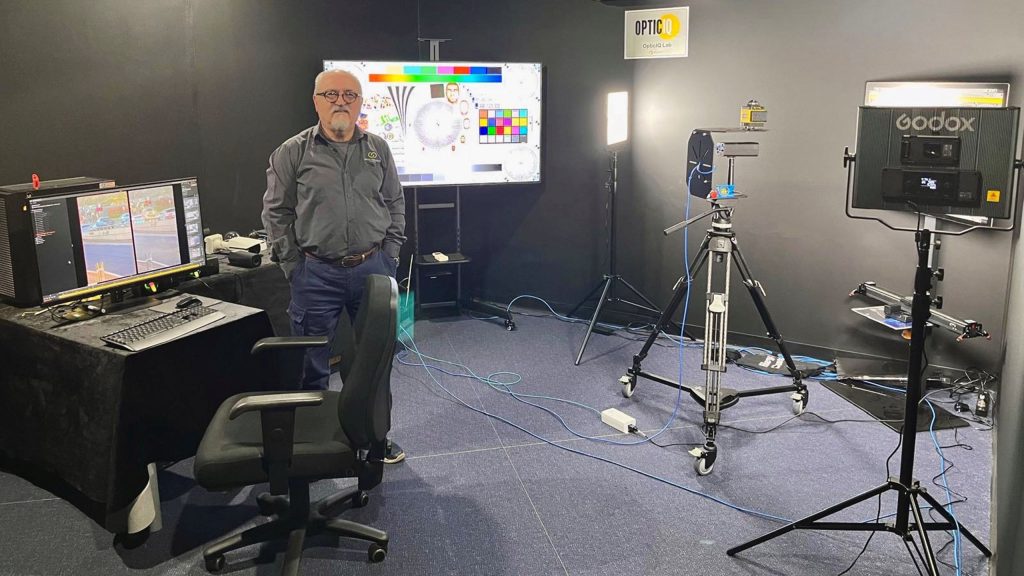
AXIS Q1728 Block Camera Test At OpticIQ Lab.
AXIS Q1728 Block Camera Test – OpticIQ Lab in Adelaide recently received the new AXIS Q1728 for testing and analysis.
The AXIS Q1728 is a full-body camera style with built-in vari-focal lens, which Axis Communications refers to as a ‘block’ camera, and it’s available with a number of different motorised lens configurations.
We were particularly curious about this model because it is a 4K (3840 x 2160) resolution camera with a very large CMOS sensor of 1/1.2-inch (11.25 mm x 7 mm). This suggests not only a high-resolution video of 8MP, but also strong performance in low light, as it boasts 2.9 µm pixels, producing pixel areas of greater than 9µm2.
Pixel areas greater than 9µm2 offer twice the light exposing area than the typical 2µm pixels (4µm2) of an average 4K CCTV camera with 1/2.8-inch (5.4 mm x 3.38 mm) sensor, and a similar area to the same-sized sensor (1/2.8-inch) delivering HD resolution (1920 x 1080).
Also, noteworthy is that this model runs on the latest Axis Communications ARPTEC-9 chip, which does all the heavy lifting in relation to video processing and analytics, as well as offering a higher level of cybersecurity.
The main reason, however, for our interest in this camera was that it features the newly introduced video compression codec, AV1. In a CCTV industry first, Axis Communications has produced a camera that includes the very recently released AV1 video compression, and we were curious to see how the AV1 in the AXIS Q1728 performs in comparison to the existing video compressions used in CCTV, such as H.264 and H.265.
The intention of our testing was not to analyse the accuracy of the AI-based analytics this camera offers, but rather to analyse the quality of footage recorded by the camera.
About The New AV1 Codec
According to an OpticIQ Lab Technical Note published in January in which we highlighted the main advantages of this new video compression, AV1 is that it is a royalty-free compression, comparable to H.265 in quality and bandwidth – that makes it twice as efficient as H.264.
As a simple rule of thumb, a high-quality HD video compressed with H.264 @ 4Mb/s would have similar or better quality when compressed with H.265 or AV1 @ 2Mb/s. For 4K video, the same rule of thumb would be about 12Mb/s using H.264, and 6Mb/s if H.265 or AV1 was used.
For our testing, we used 8Mb/s so that we could compare various compressions. As for a video clip of 3 minutes duration using 8Mb/s we produced around 150~160 MB of total data.
The AV1 compression was introduced by the Alliance for Open Media (AOMedia), whose founding members are Amazon, Cisco, Google, Intel, Microsoft, Mozilla, and Netflix. It is already used by YouTube for streaming purposes. Even if you upload your video in H.264 for example, Google will transcode it to AV1.
Although AV1 is royalty-free, many CCTV professionals may not realise that the royalty fees for using H.264 or H.265 are embedded in the camera costs and in the VMS channel licence costs.
Use Of AV1 in CCTV
How this new codec will be introduced in CCTV broadly is yet to be seen. Axis Communications already provides free APIs and says some VMS manufacturers have included it in their latest software. That said, unless you have the software decoder installed on your VMS, chances are you can’t use AV1 yet. Further note that this AXIS Q1728 AV1 camera still offers you the choice of H.264 or H.265 (and MJPEG) inside the camera.
For our testing, we used AXIS Camera Station Pro VMS software, and we had to update it to the latest version 6.9 in order to ‘see’ the AV1 in addition to the existing H.264 and H.265. If you are using this camera and want to make use of the AV1, you will need to ensure that your VMS software ‘understands’ this compression. If not, you will need to select H.264 or H.265 options.
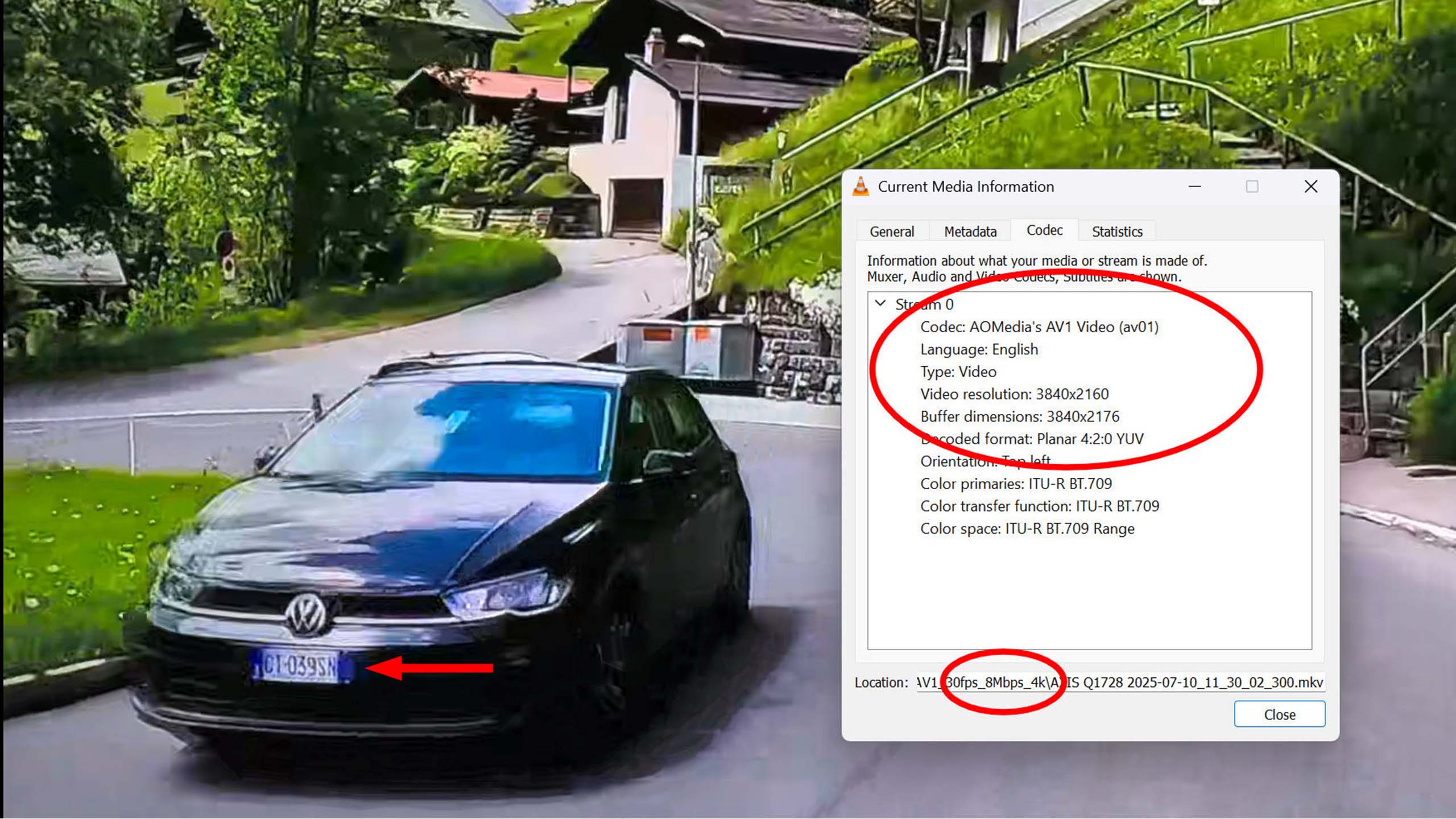
Another important thing to mention is that when you export an AV1 footage from the ACP Pro it can be played back by Microsoft Media Player 2025 as well as VLC – each has an embedded AV1 decoder. For our analysis, we used VLC.
Video Compression Quality Testing Process
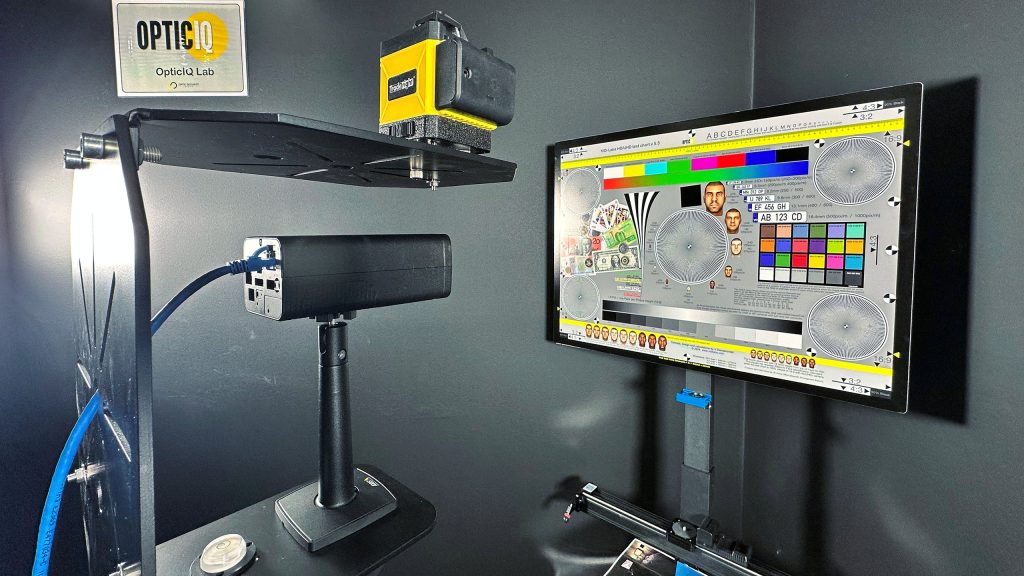
This AXIS Q1728 model is a full-body style camera with a built-in motorised lens with a range of 5.9mm~13.3mm, providing HFoV angles between 58~27 degrees. The camera is also available in a model that has longer focal length, ranging from 15.2mm~48.7mm.
Since the camera offered H.264 and H.265 compression in addition to AV1, we conducted a comparative analysis of the recording quality achieved by each compression type based on a common reference video sequence.
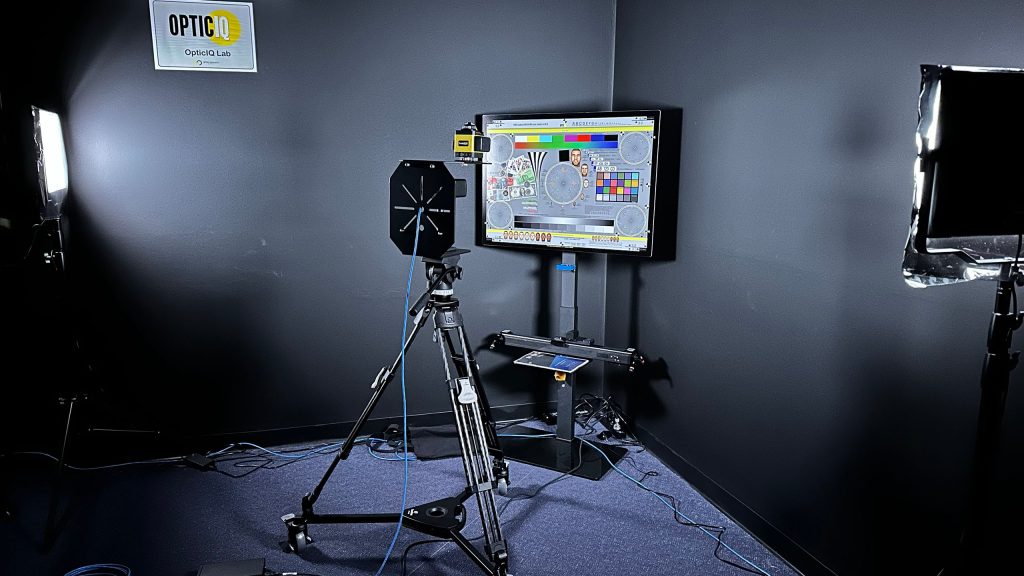
The reference video was a 3-minute repeatable clip recorded at 8k and featuring near-real-life imagery of a small Swiss village with various objects in the field of view, including people walking and cycling, vehicles passing by with visible number plates, etc. The clip was displayed on our OpticIQ Lab 8k Samsung QLED screen, with display-to-camera frame frequencies synchronised.
The reference video sequence was recorded using each of the 3 video compressions and the footage was then exported and played back using VLC for comparative quality analysis. We used a generous allowance for the video encoder of 8Mb/s, although 4Mb/s and 16Mb/s were also used.
The compression quality was set to 10 for each of the recordings, where the range was from 0 to 100; 0 being the best quality and 10 being very close to the best.
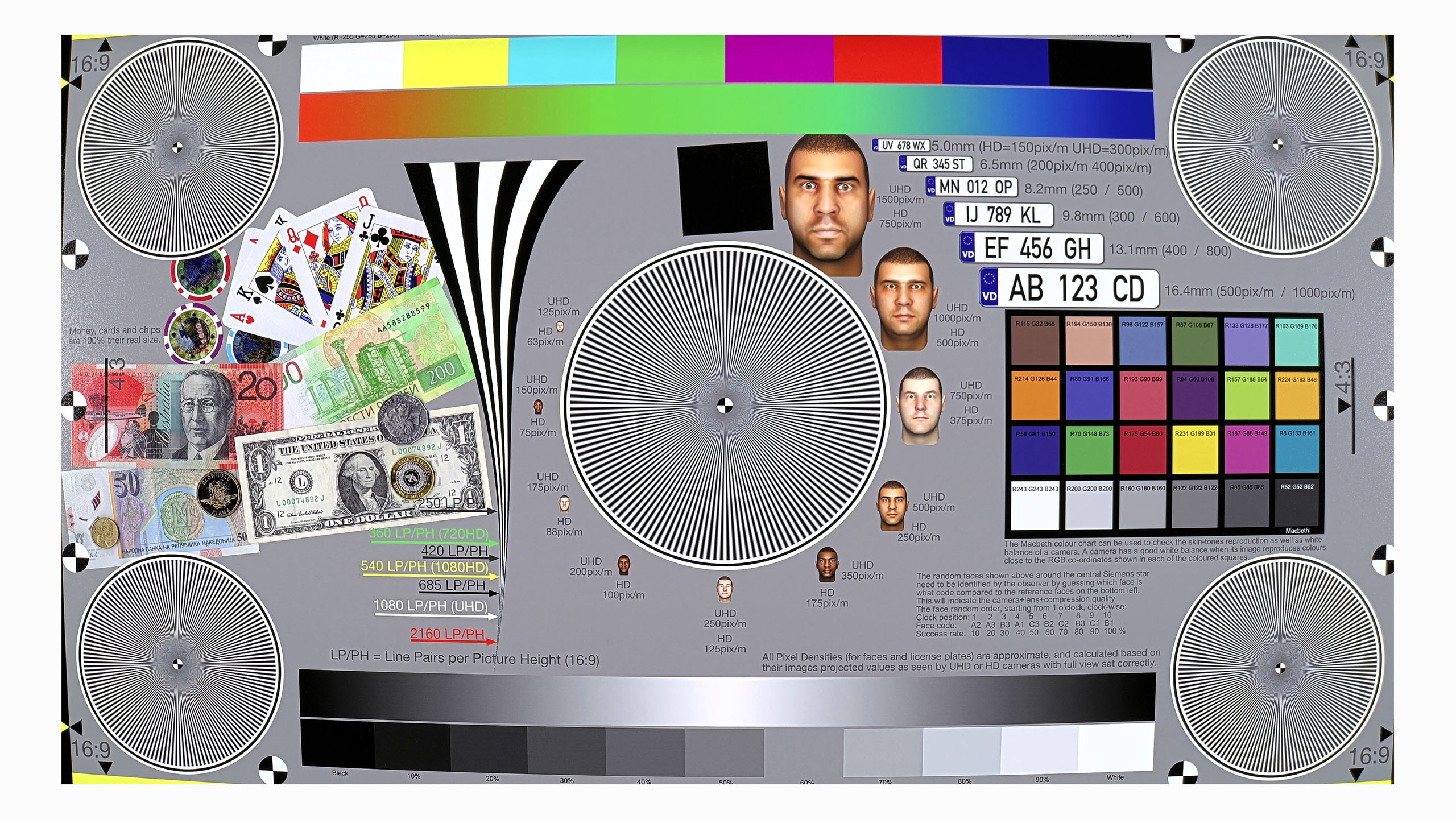
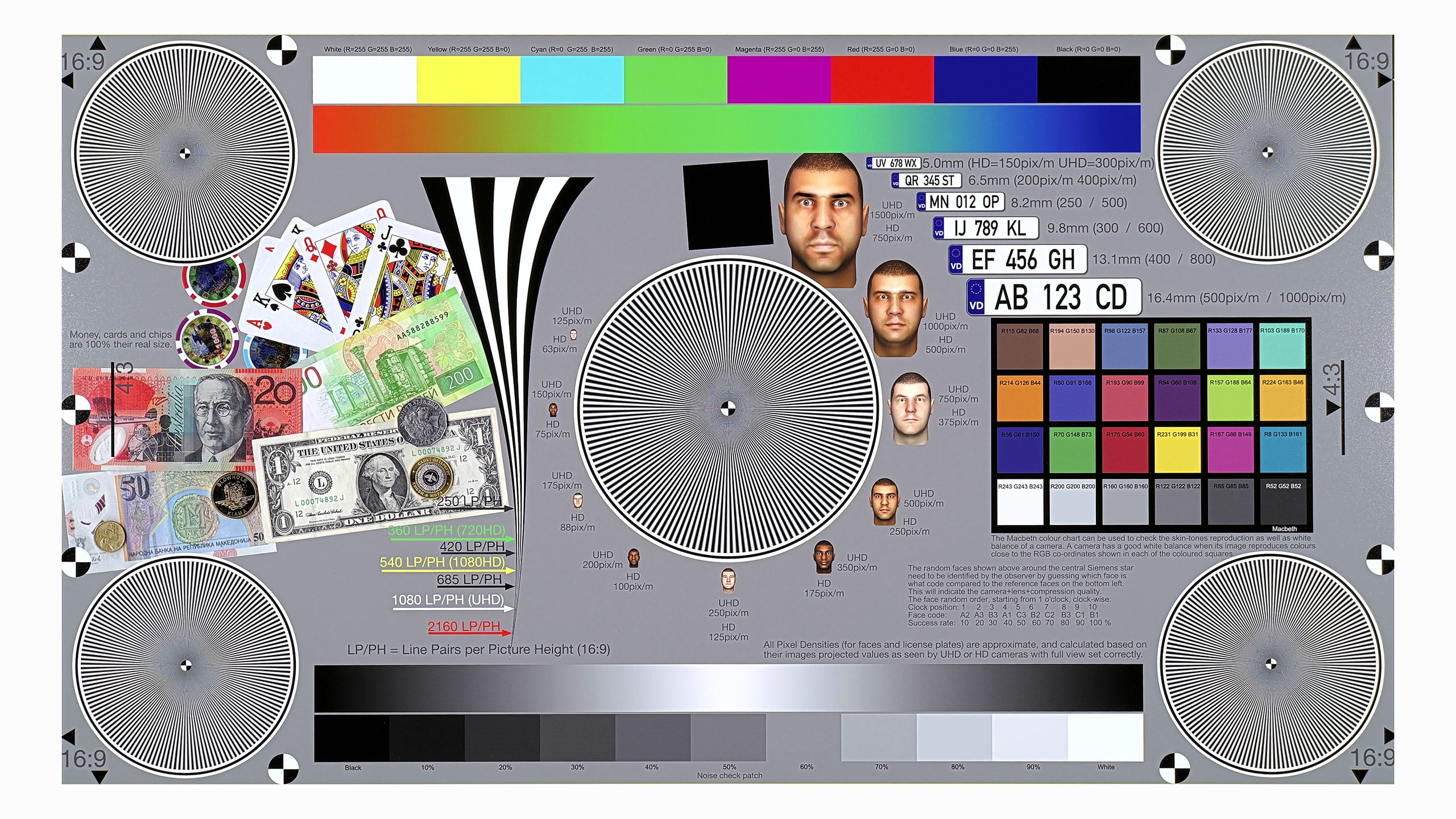
Image Quality Testing Process
Our first step was to conduct a test chart analysis using our ViDiLabs OpticIQ test chart v.5.3. The ViDiLabs OpticIQ test chart v.5.3 was designed to comply with the Australian and New Zealand Standard AS/NZS 62676 – Video surveillance systems for use in security applications. This is the current relevant ISO standard, which was published in 2020.
Measurements are made by the software analysing the exported images from the camera looking at the test chart, under controlled light. This eliminates the human factor in terms of interpreting the observed details, colours, and noise, so the measurement is as accurate and objective as it is possible to be.
The software performed analysis of other key parameters on this camera, including resolution, colour rendition, S/N, minimum illumination, linearity and Gamma. Based on AS/NZS 62676 Part 5: Data specifications and image quality performance for camera devices, Siemens sine-wave stars are used for measuring camera’s resolution.
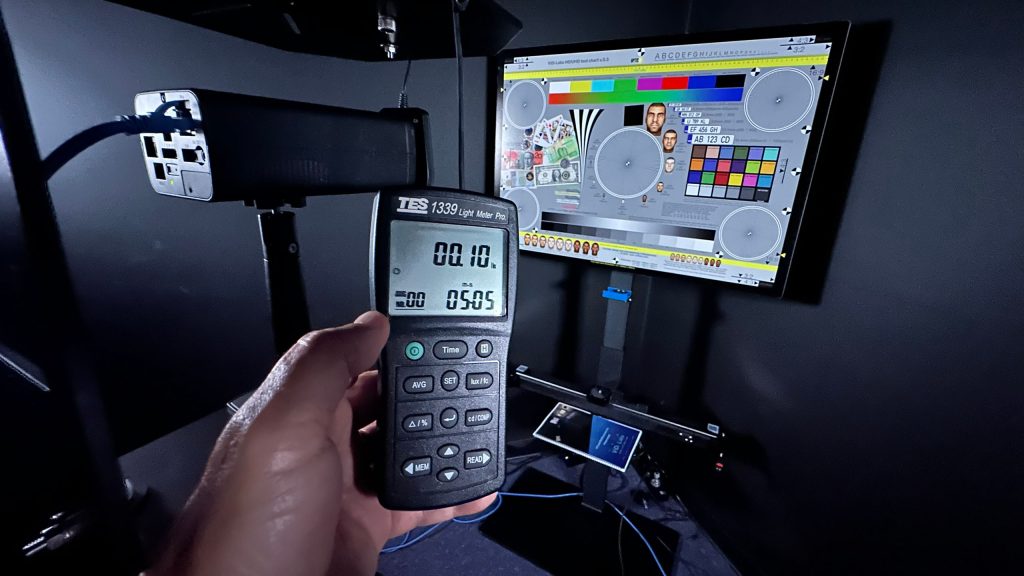
The resolution measurements were made at 100lux reflected light, as per the AS/NZS 62676-5 recommendations. For the minimum illumination performance, we used a professional lux-meter that measures down to a 0.1 lux threshold. Minimum illumination was set to this level.
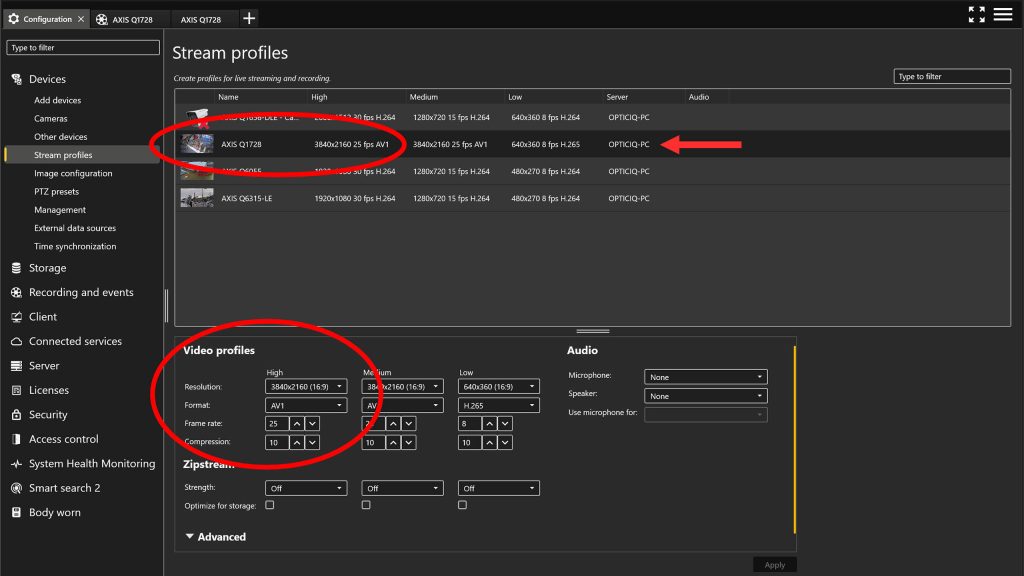
Maximising Camera Optical Quality
As with any camera testing, I try to maximise the optical quality a camera can produce.
Typically, I try to use longer focal lengths of a varifocal lens camera, especially when measuring resolution. The reason for this is that I can then position the camera at a reasonable distance from the test chart so lights can produce a more uniform illumination of the test chart. More importantly, when focal length is longer, we have minimum optical barrel distortions.
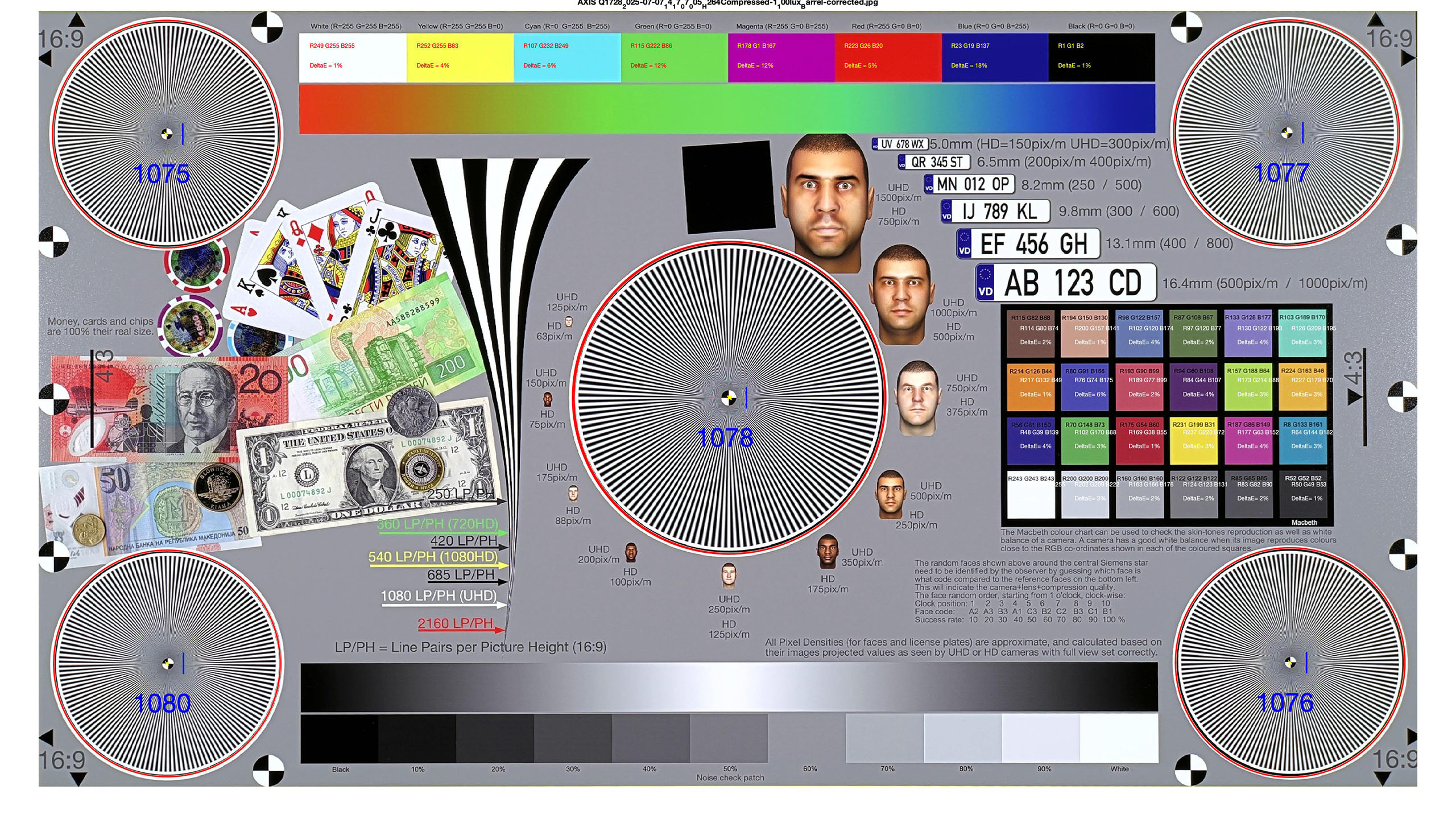
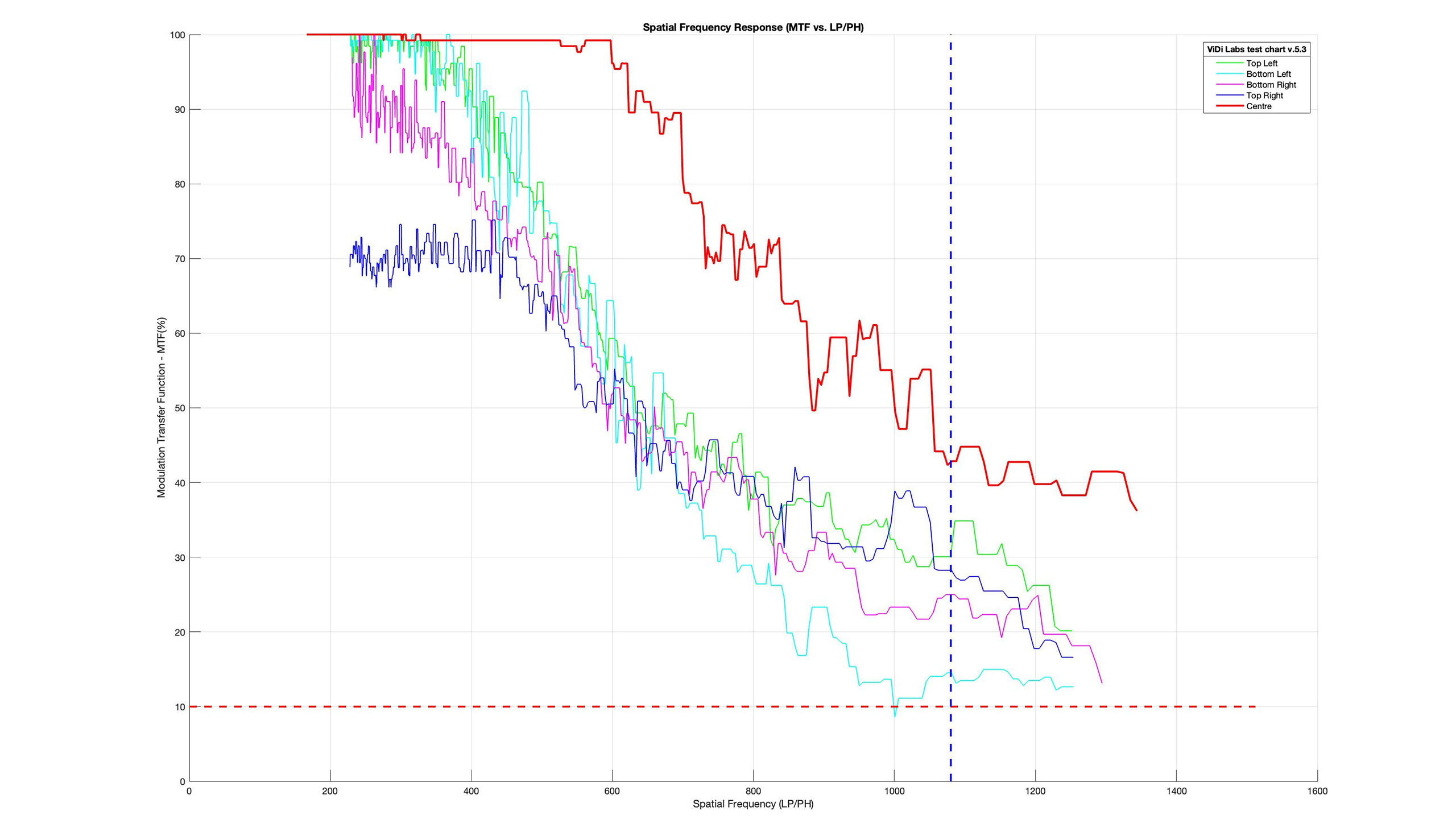
It is well known that wide angle lenses in CCTV produce very strong barrel distortion due to insufficient lens corrections. These distortions may not always be noticeable when a user is watching an outdoor random scene, but they become obvious when looking at a test chart with perfect geometry.
In general, cameras with strong barrel distortions create a problem for the software’s automatic analysis, because not all elements of the test chart fall in the correct locations. Additionally, it is difficult to align the camera view to cover the test chart to its edge indicators with 100 per cent accuracy.
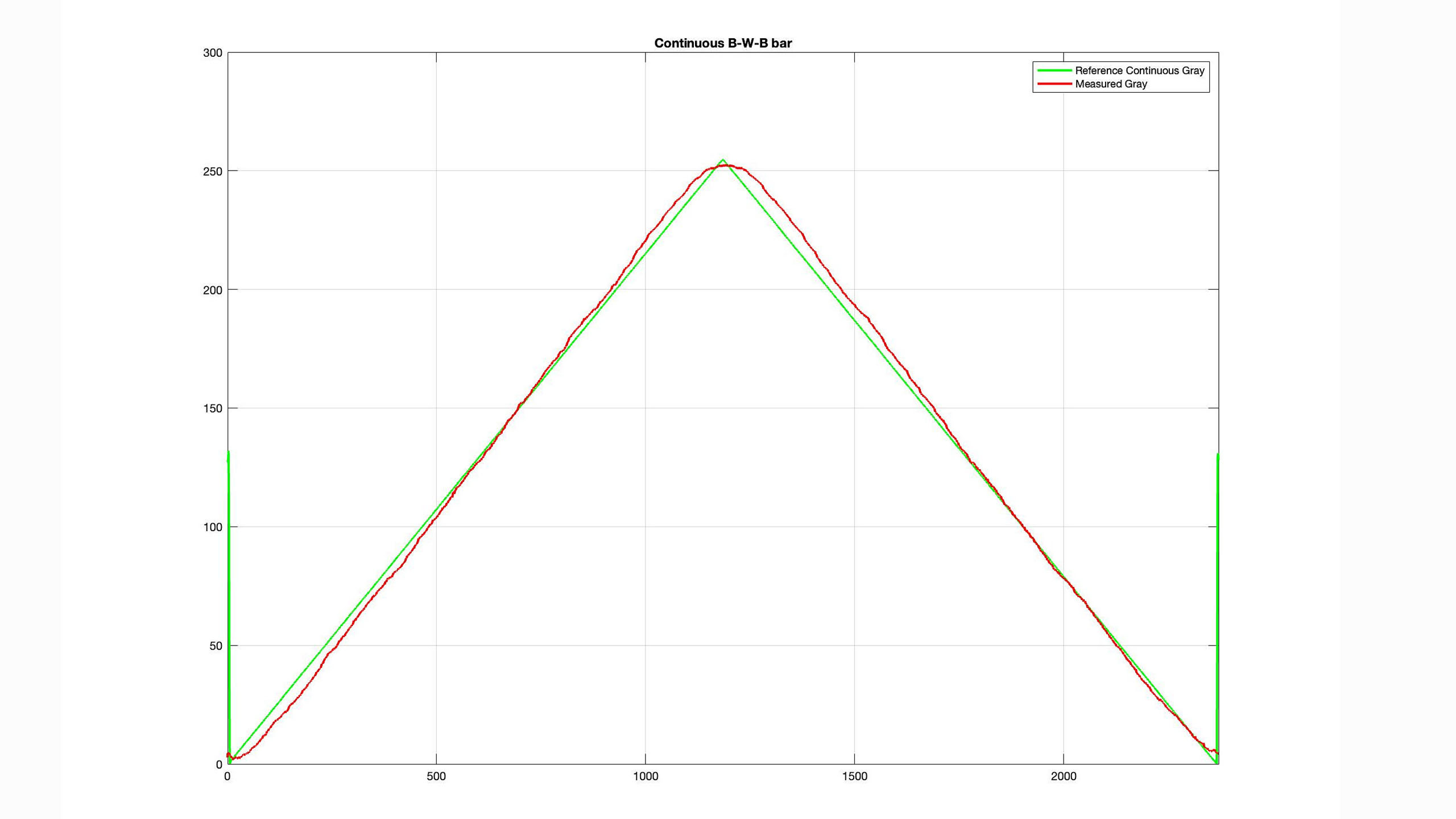
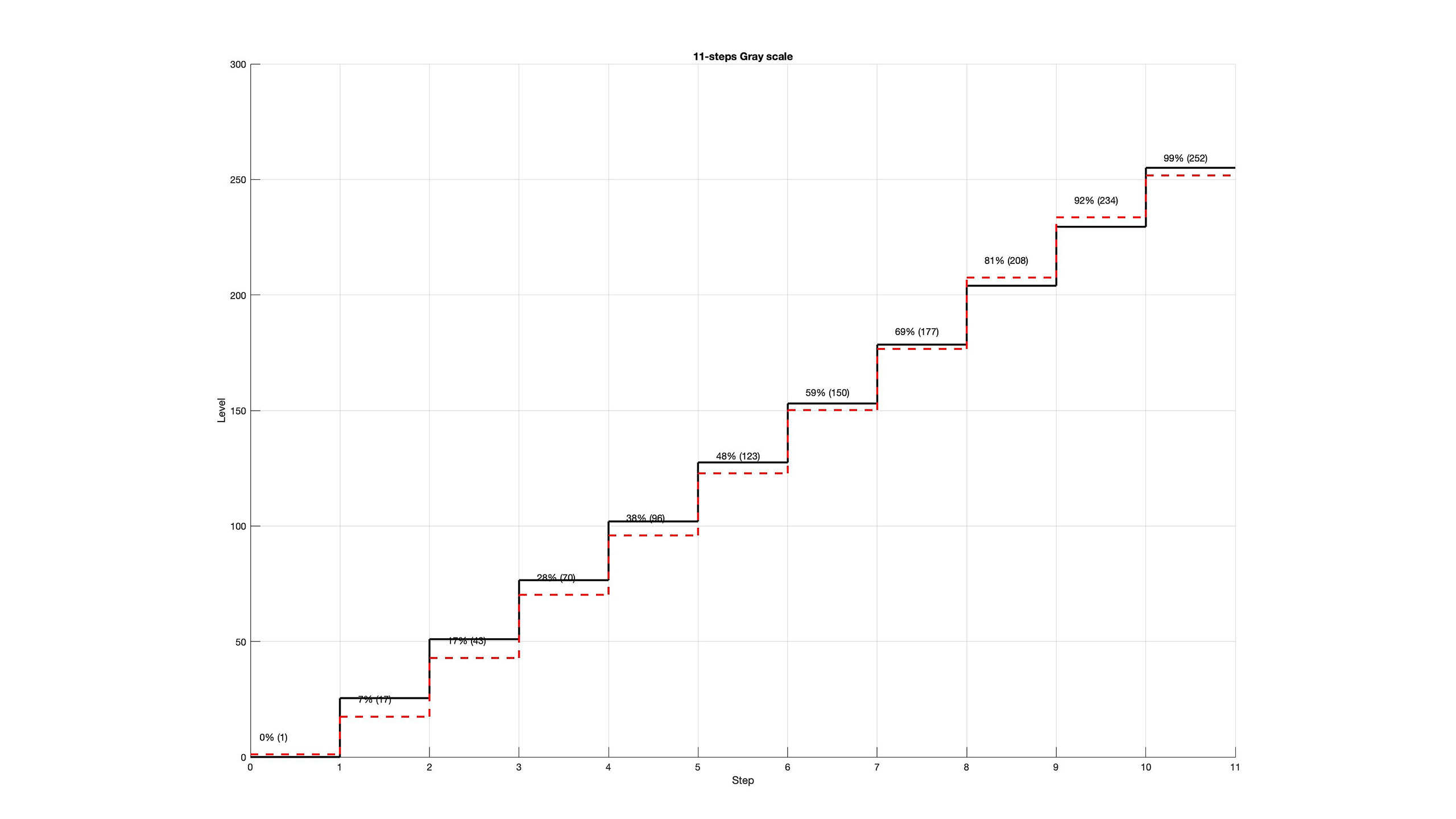
The AXIS Q1728 did show some barrel distortion (although not strong) at the longest focal length (13.3mm). I was pleasantly surprised to find that the camera has some very good de-barrelling corrections. This made the test chart image appear with near perfect geometry, which was used for the measurements described in this document.
Summary Of AXIS Q1728 Camera Performance
In summary, the AXIS Q1728 demonstrated excellent resolution Modulation Transfer Function (MTF) of close to 1080 LP/PH (which is the maximum for a 4K camera). This also indicates that the optical resolution is high, and close to the limits of the sensor.
Many 4k cameras used in CCTV, especially those with smaller sensors, have difficulty matching the sensor resolution with adequate optics. This results in MTF significantly lower than the maximum resolution a sensor can produce. In the case of AXIS Q1728, the optics have equal or potentially better resolution then the sensor itself.
Another impressive measurement resulting from the software test is the linearity of the sensor luminance reproduction, which achieved nearly perfect linearity, from black to white. This produces video rich with detail, not only resolution-wise, but also in terms of luminance and colour reproduction. This can be seen on the de-barrelled image, which closely resembles the actual electronic version of the test chart.
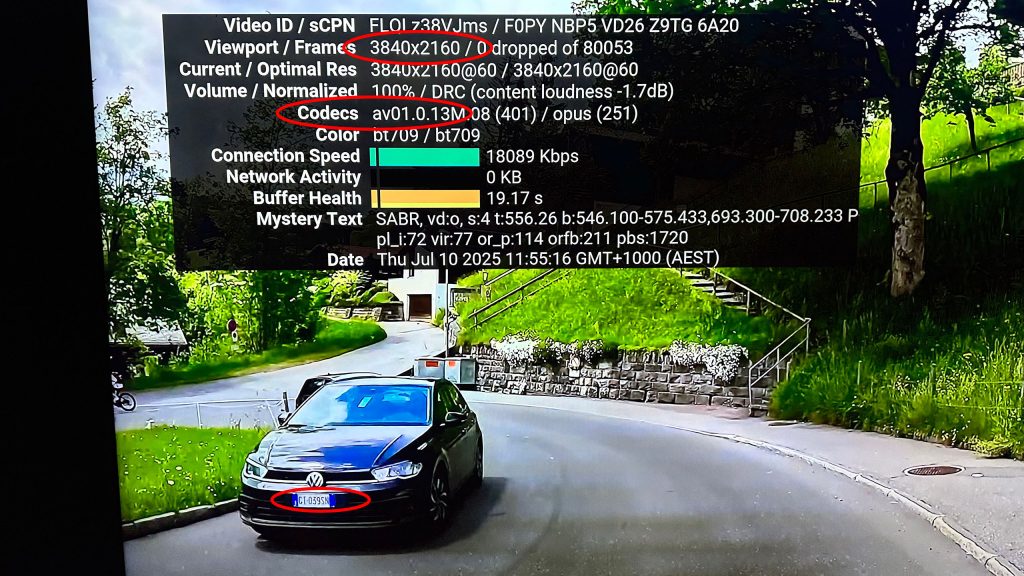
The AV1 compression achieves similar efficiency (bandwidth) to H.265 for the given quality, if not marginally higher, while producing exceptional video quality. Both H.265 and AV1, outperform H.264, not only in the detail of the video, but also – importantly – in minimising the artefacts of moving objects in the scene. This is because both H.265 and AV1 work with micro-blocks and macro-blocks in analysing motion in scenes, which results in less visible artefacts.
Consideration should be given to the GPU power of your VMS client PC, as all the decoding at this end is done in the VMS software. In fact, using 2 different computers in the OpticIQ Lab – one with an NVidia RTX 4080 GPU and the other with a laptop-type NVidia GForce RTX GPU – we verified that the GPU power defines the smoothness of the playback of the same footage when the 4k video is played back in full screen. Given these results, we recommend that if you are considering AV1 you should also consider a relatively powerful GPU. Videos will look smoother and with better detail.
With the above in mind, if you operate, or are planning to operate, a VMS that supports AV1 decoding (such as the ACP Pro v.6.9), this new AXIS Q1728 camera offers high video quality while optimising bandwidth and extending storage.
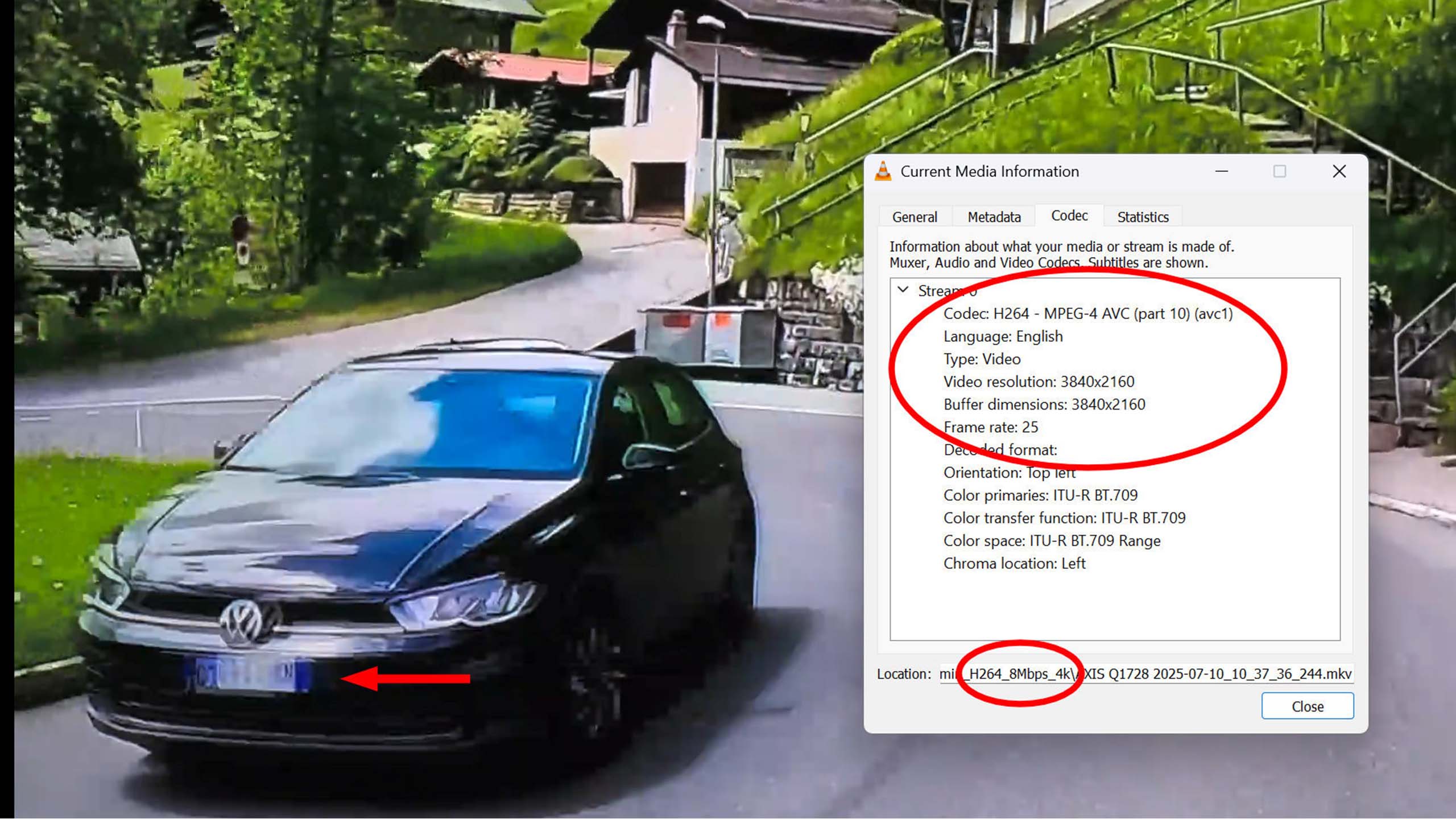
The images in this story illustrate the measurements undertaken in the OpticIQ Lab and the results at highest quality of AV1 – the comments provide explanation of the measurements.

About OpticIQ Lab
OpticIQ, a division of Australasian security integrator Optic Security Group, researches and develops emerging security technologies, and advises in relation to technology risk and Responsible AI.
Led by Damjanovski, the Adelaide-based OpticIQ Lab is a sovereign centre of excellence for the independent testing, training, and optimising of advanced optical, analytic and AI-enabled security technologies.
You can learn more about OpticIQ Lab here, discover Optic Security here, or read more SEN news here.
– Vlado Damjanovski, B.E. (Electronics & Television), is product innovation manager at Optic Security Group. Damjanovksi is internationally renowned as a CCTV innovator and educator. His first book, CCTV, was published in 1995. Its fifth edition, From Light to Intelligent Pixels, was published by the Australian Security Industry Association in 2022. A past chairman of the A/NZ CCTV Standards sub-committee, Vlado was honoured with the coveted Individual Achievement Award at the 2023 Australian Security Industry Awards for Excellence.