



Open Standards Vital To The Future Of Access Control But Must Deliver Security And Efficient Interoperability, Says Steve Katanas.
Open Standards Vital To The Future Of Access Control – Organisations value system interoperability in driving process efficiencies, especially when it comes to security, in today’s digital world.
The rapid rise of networked devices has opened a world of possibilities for installers, integrators and their end user customers, but greater integration and access to technology also brings renewed scrutiny from bad actors seeking to compromise digital systems, including physical access control systems.
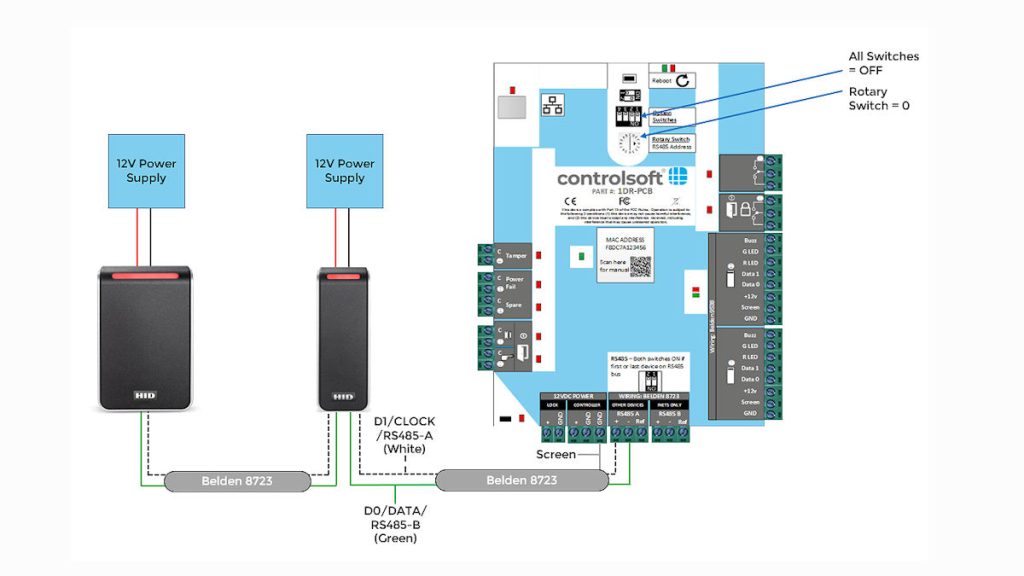
Access control has been widely deployed since the 1980s, but a lack of common standards has brought widely divergent access methods dominated by proprietary systems that don’t support the level of integration modern organisations deploying the latest technologies demand, nor can they withstand hacking attempts.
This is why Open Supervised Device Protocol (OSDP) is becoming even more important to enabling the level of security and efficiency that is now required as Australian organisations explore new or upgraded physical access control.
Increased Risks Of Old Technologies
While the global access control market is expected to rise to $US17.37 billion by 2033, a compound annual growth rate of 7.2 per cent, more than 90 per cent of PACS installed today still rely on the Wiegand protocol, making it the most common communication method used by access control devices. The Wiegand standard was developed in the 1980s and was not designed to keep pace with the turbocharged security demands and complex threats faced by today’s organisations.
In a recent HID survey of IT professionals, facility managers and physical security leaders, respondents said they were aware (39 per cent) or somewhat aware (36 per cent) of the security risks associated with the Wiegand protocol, yet they continued to use it. Meanwhile the remaining respondents (25 per cent) reported being completely unaware of the security risks.
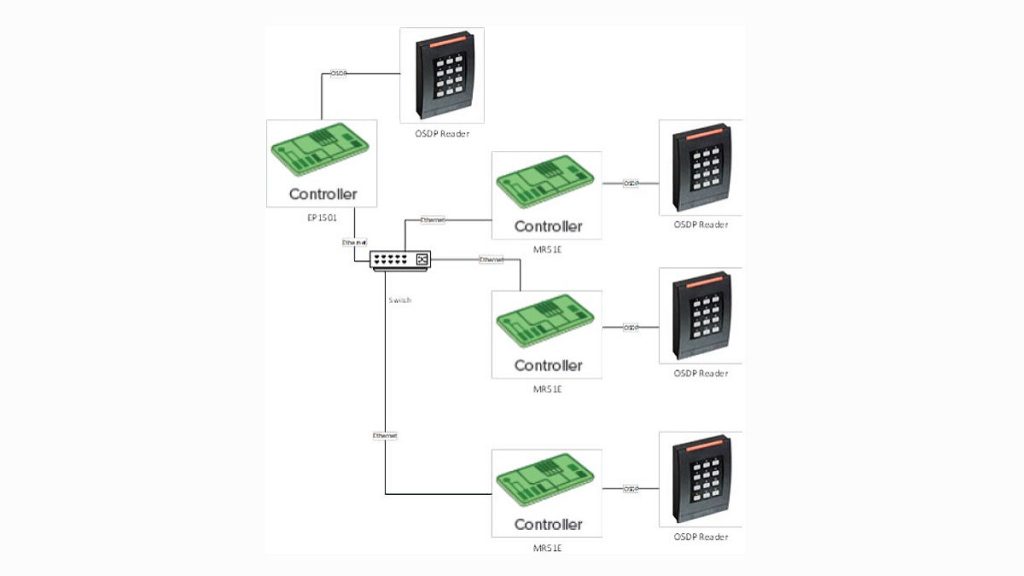
Recognising the shortcomings of Wiegand and other legacy protocols, OSDP was developed by Mercury Security and HID in 2008. It was donated, free of intellectual property, to the U.S. Security Industry Association to improve interoperability among access control and security products. In 2020, OSDP became an International Electrotechnical Commission (IEC) standard.
Legacy physical access systems that continue to use the old Wiegrand protocol are often vulnerable to exploitation by simple off-the-shelf hacking devices. Organisations that rely on these outmoded technologies are now at serious risk of data breaches that can have a significant financial and reputational impact.
Why Does The Future Of PACS Depends On OSDP?
Implementing OSDP standards significantly enhances security by utilising secure channel protocol with AES-128 encryption, vital for Australia’s critical infrastructure and essential services increasingly under threat from state-based cyber-attacks.
OSDP provides predefined encryption and authentication settings and addresses the emergence of man-in-the-middle attacks, where an intruder intercepts and alters communication between a reader and a controller to gain unauthorised access to a company or government system.
Another advantage of OSDP is its support for bidirectional communication between devices. This allows readers and the central management system to exchange real-time information, improving system responsiveness and control.

OSDP’s open platform is also scalable because it allows organisations to seamlessly integrate devices from different manufacturers over time, ensuring flexibility as security needs evolve. As new threats emerge, OSDP empowers organisations to quickly implement advanced technologies so they can maintain the protection of incoming and outgoing data collected via their PACS.
Importantly, OSDP is key to providing unified secure digital and physical access control systems. The 2025 HID State of Security and Identity Report shows that 67 per cent of security leaders and 73 per cent of integrators and consultants are actively adopting software-driven solutions that unify critical functions such as video surveillance, access control, and intrusion detection into a single secure platform.
Security threats continually evolve at lightning speed, and new waves of malicious attacks occur every day, placing Australian organisations under intense pressure to implement solutions that offer flexibility and robust protection in real time.
OSDP’s ability to address vulnerabilities in legacy systems while enhancing operational efficiency and scaling for advancing technologies makes it a clear choice for enterprises that consider the protection of data a high priority.
You can learn more about OSDP here, discover HID here, or read more SEN news here.
* By Steve Katanas Regional Head, Mature Markets, ANZ, Physical Access Control Solutions, HID.
“Open Standards Vital To The Future Of Access Control But Must Deliver Security And Efficient Interoperability, Says Steve Katanas.”