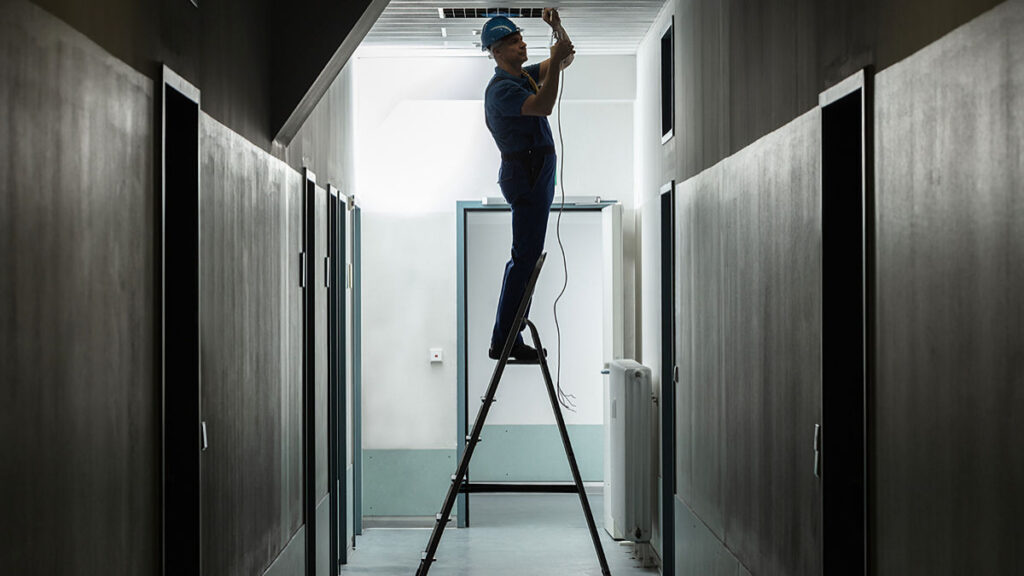





Working Safely on Ladders with Electrical Tools Requires Compliance And Discipline.
Working Safely on Ladders – Working on ladders is par for the course for electronic security installation and service work, particularly during device mounting, cable runs and fault-finding.
Where electrical tools are involved, the risk profile increases and safe work practices must align with Australian standards governing both ladder use and electrical safety. Supervisors and managers should bear in mind that there’s a point ladders are no longer appropriate – you’ll need to hire a lift.
Whichever ladder you are using, remember the 3-point rule for ladder safety. That means 3 points of contact with the ladder while climbing or descending – either 2 hands and 1 foot, or 2 feet and 1 hand must be in firm contact with rungs or side rails. Techs should always face the ladder, move one limb at a time, and keep their centre of gravity between the rails to maintain balance and control. As tempting as it is, don’t try to do anything else while you’re ascending or descending.
The 3-point rule is compromised when both hands are occupied, when the user reaches too far to the side, or when they turn away from the ladder. Tools should not be carried in the hands while climbing, with tool belts or lifting methods preferred. And yes, we know how impossible it is when you’re installing something fiddly and you’ve got a Philips head in your mouth, a drill in one hand and you remember the fixings are in your back pocket. Best practise is to holster the tool, then use the free hand.

In Australia, ladder selection and use is guided by AS/NZS 1892, which sets out requirements for design, duty rating and safe use. Meanwhile electrical work practices are governed by AS/NZS 3000 and supported by safe work guidance from Safe Work Australia. These frameworks require that work at height is controlled, equipment is appropriate to the task, and exposure to electrical risk is minimised.
For electrical work, non-conductive ladders constructed from fibreglass are preferred over aluminium to reduce the risk of electrical conduction. Step ladders are typically used for short duration tasks where the tech can maintain those 3 points of contact, while extension ladders may be required for access to higher points but introduce stability risks. Platform ladders offer improved footing and can reduce fatigue during longer tasks, particularly when tools are in use.
There’s always a point a ladder is the wrong choice – uneven ground, too much height with no overhead attachments or handholds, no lateral ladder attachment points. Some extension ladders are simply too long, in SEN’s opinion. You should never be climbing 3-6 metres above the ground without overhead attachments, even if you bought that kick-arse 4-8 metre extension ladder with the dinky levelling feet. Those will count for nothing if your 90kg weight gets out of balance at elevation – the ladder will go sideways, and you will have a date with the force of gravity.
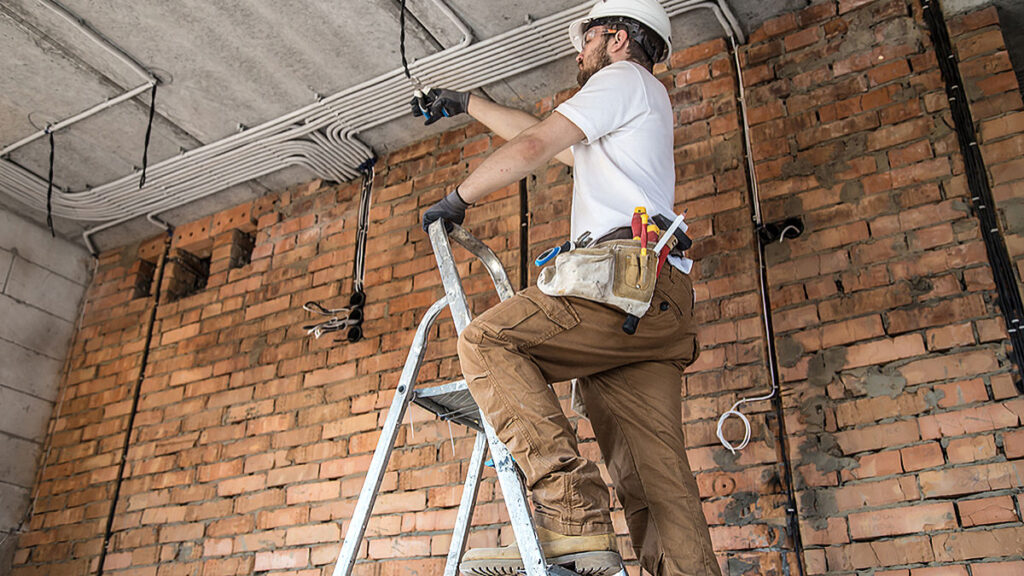
Ladders are intended for short-duration, low-risk work and should not be used where the working height introduces a fall risk that cannot be controlled and that will certainly lead to serious injury. As a guide, work above 2 metres requires a closer assessment under workplace safety regulations, including whether a ladder remains the appropriate access method or whether a mobile platform or scaffold should be used instead. Overreaching, working side-on, or carrying tools while climbing all increase fall risk and should be avoided.
When using electrical tools on a ladder, tool management becomes critical. Tools should be secured or hoisted rather than carried in the hand during the ascent. Battery-powered tools reduce reliance on leads, and minimise trip and entanglement risks. Lighter tools are easier for balance. Any height work near live electrical circuits must follow isolation procedures and verification of de-energisation before commencement – getting thrown off a ladder by a live circuit can be fatal.
Personal protective equipment should be matched to the task. We would use compliant, comfortable helmets with a chin strap when working above 2 metres, and when things get higher than this a harness and attachment points start coming into view.
On many sites it’s wishful thinking to expect compliant safety harness points but if they are there, use them. Obviously, shoes or boots with appropriate grip are essential. Something that’s underrated when working at height in our opinion is planning your work, moving slowly and not panicking.
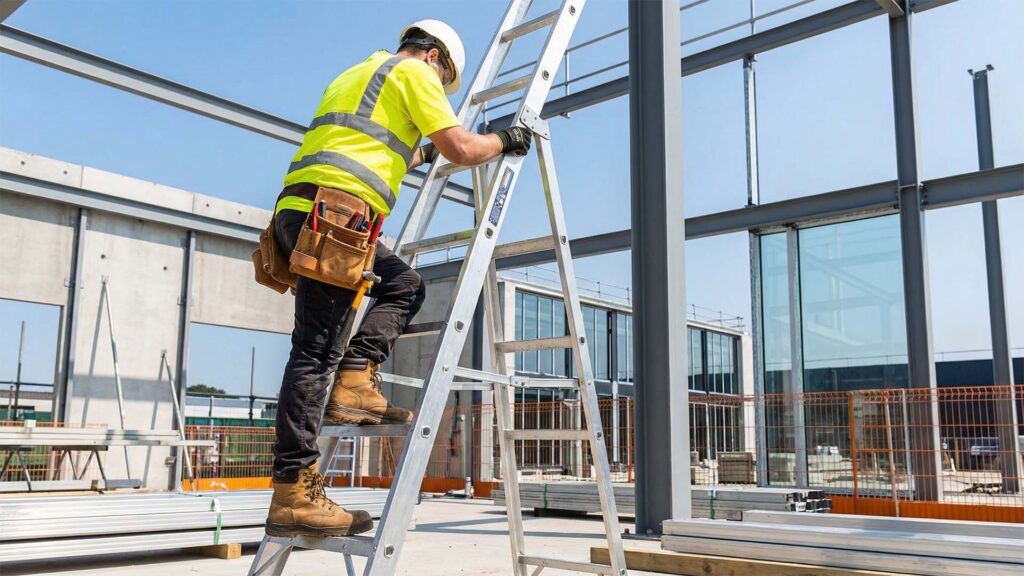
From a compliance perspective, contractors and employers have clear obligations. Failure to provide a safe system of work, including correct ladder selection, training and supervision, exposes organisations to regulatory action, including penalties under workplace safety legislation. Incidents involving falls from ladders remain a leading cause of injury in construction and service industries, often linked to inappropriate ladder use, unstable setups or unsafe work practices.
Safe ladder work in electrical environments is not complex but requires discipline and it’s easy to overlook the risks when you are at height all day long. Just bear in mind that a 3-metre fall onto concrete will break bones.
Think about the type of ladder you use, too. There’s a place for smaller ladders, extension ladders and for big platform ladders, too. Take the right ladder to the job and you’ll work more safely. You can find some quality ladders here or read more SEN news here.
“Working Safely on Ladders with Electrical Tools Requires Compliance And Discipline.”