

Installing An AJAX Alarm In 30 Minutes – Could We Install An Ajax Alarm System In 30 Minutes On A Building Site With No Comms?
Installing An AJAX Alarm In 30 Minutes – Could We Install An Alarm System In 30 Minutes On A Building Site? With preparation and assistance from the distributor, yes, we could.
Late December 2025, after an intrusion via an upper floor, SEN’s editor needed to install an alarm system at very high speed to secure a premises in which high value items were stored – and it all needed to happen the day before the family left town for holidays.

This alarm system needed to provide coverage internally and externally across 3 levels, with one sensor installed on the roof partly exposed to sun, rain and thrashing palm trees to monitor the threat of upper-level perimeter intrusion.
This application is a building site – a townhouse in a state of renovation. There’s power in several locations but no comms whatever. That meant use of internet as a primary communications path was not an option. Reliability of physical locks on multiple levels was uncertain, while security of legacy keys could not be guaranteed.
Because access to the site’s roof had already occurred and could take place again at any time, rooftop detection was required, along with detection to lower-level landings, as well as inside the premises. In this application, every sensor needed to deliver fast detection along with video verification.
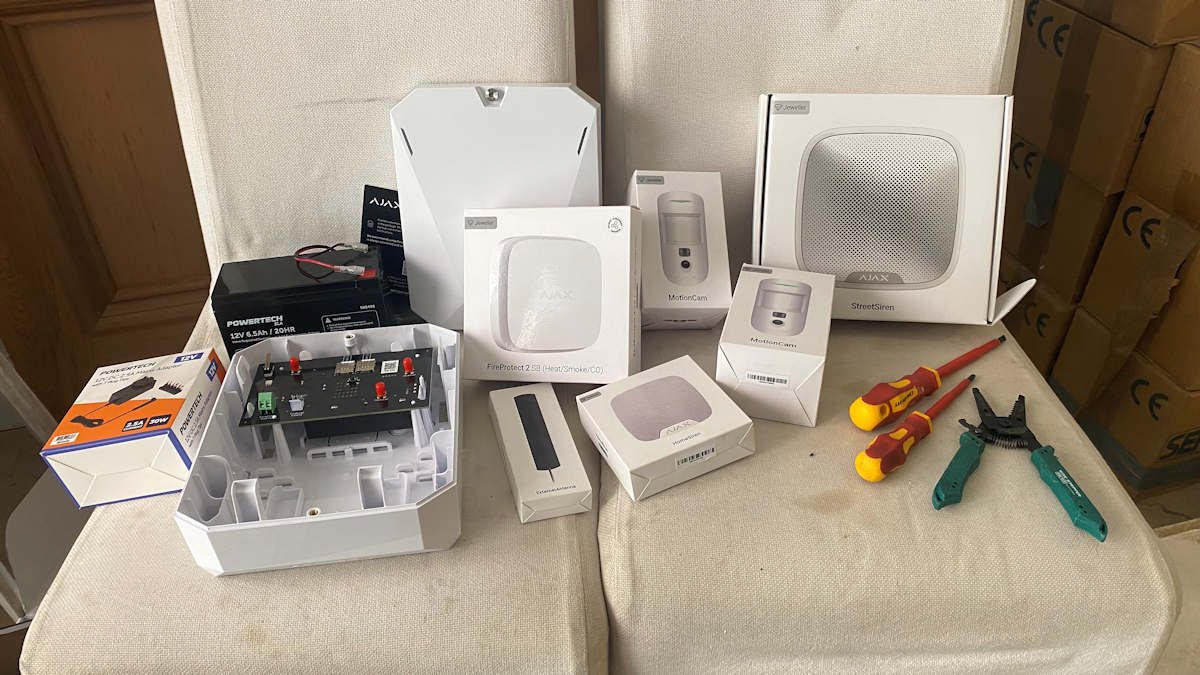
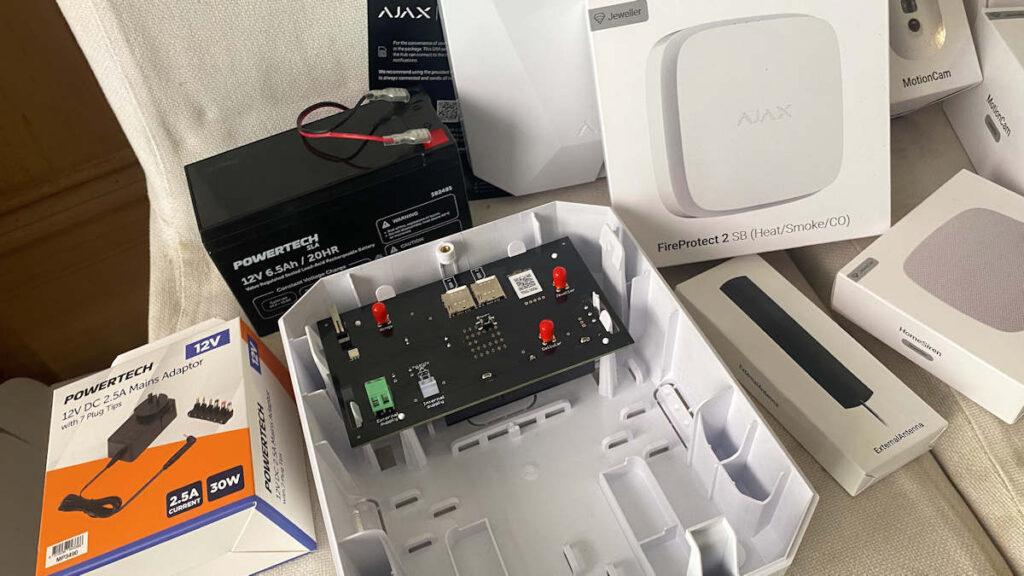
There are a couple of salient points which stood the installer in good stead. The first was that Ajax master distributor SecuSafe had provided SEN an Ajax 4G hub, internal and external sirens, a video intercom and several internal MotionCam Indoor PIR sensors to review way back in June 2025. These components provided the core system and a baseline internal defence.
Backing up these core elements were 3 additional sensors purchased about an hour before Ajax distributor Zankap closed its doors for Christmas (thanks for your help, Team Zankap!). This included another pair of MotionCam Indoor PIR sensors and the vital externally-rated Motion Cam High Mount Outdoor dual technology sensor.
The first 2 of these 3 sensors were required to keep watch over covered external balconies, a marginal use given their internal rating that we judged they would handle. Meanwhile, the mighty PHOD was going to be copping pure hell protecting the roof and the approach from the upper level perimeter.
Because SEN has already tested the Ajax PHOD at a rural application (review coming shortly) we knew what it was capable of in the face of direct sunlight and heavy tree movement. This meant there was no hesitation in purchasing such a robust and highly tunable detector with video verification, despite the fact it’s not a low-cost item.
Central to the speed of this installation was a trip to SecuSafe at Auburn with the 4G Hub in hand a couple of days prior to the work. Our intention was to collect a few additional components, but what was most important about the visit was the assistance of the technical team in setting up the panel’s comms and registering the hub via Ajax Pro.
While we’ve successfully set up an Ajax hub by ourselves before, we would likely not have managed this Pro application without initial help, and the erstwhile installer might have spent his Christmas sleeping on the townhouse floor. In this application, we used a pair of SIMs supplied by SecuSafe – given the time pressures it was the right choice.
As part of a mad afternoon on the day of the install – it was about 50 million degrees in Sydney – we nipped over to Zankap then swung by Jaycar to score a power supply with the correct amperage and a backup battery for the hub before storming back to town to get to work. As we dashed up the front steps, we noted logistics were proving the most time-consuming part of this job.
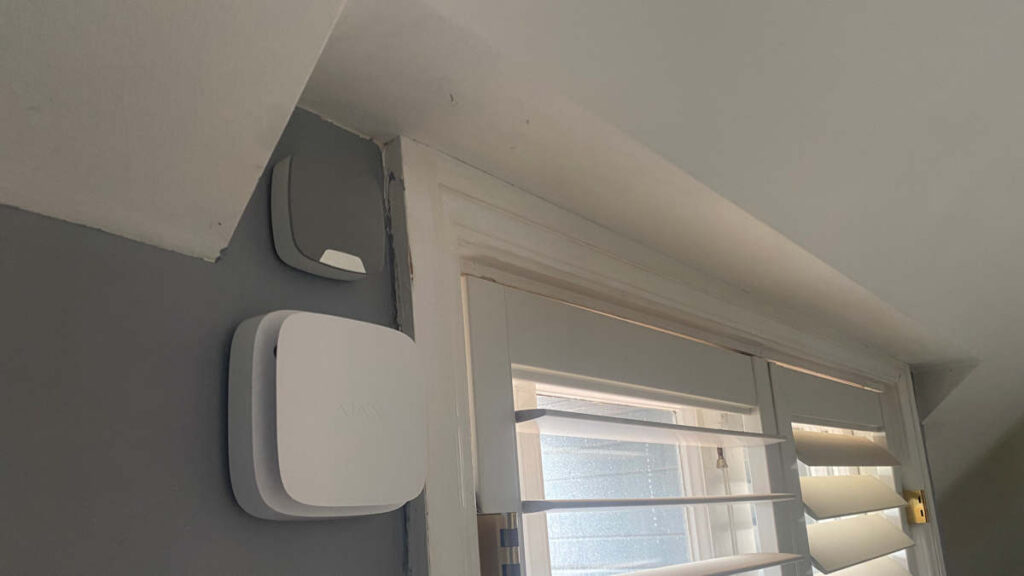
Not a compliant smoke sensor location but without a ladder and pressed for time it’s ok for the top floor of an uninhabited property…
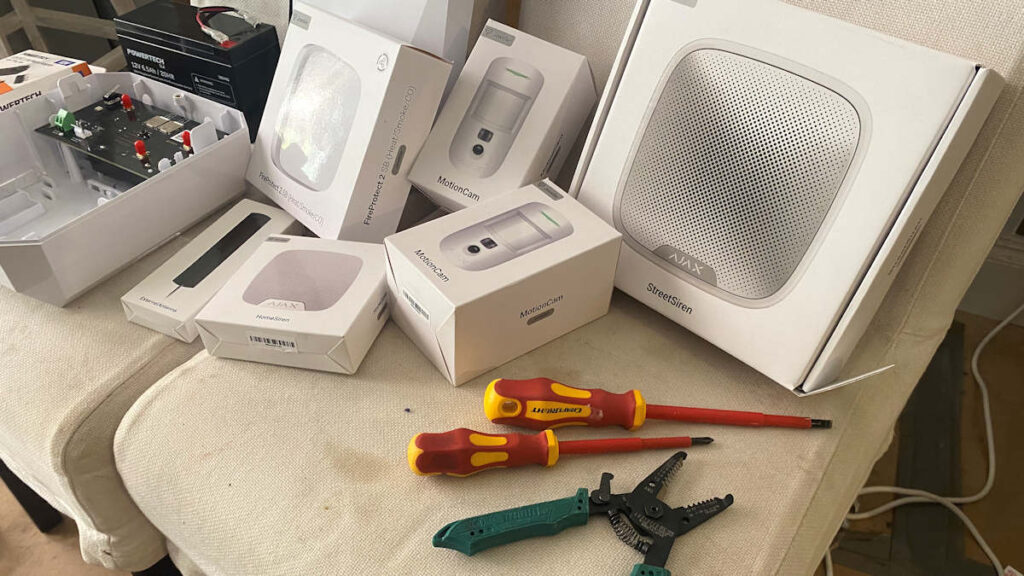
Once inside and with the Christmas holiday clock ticking fast we cast our eyes about for a suitable flat workspace before settling on a few dust-covered chairs in the dining room – securing a partial renovation makes for compromises.
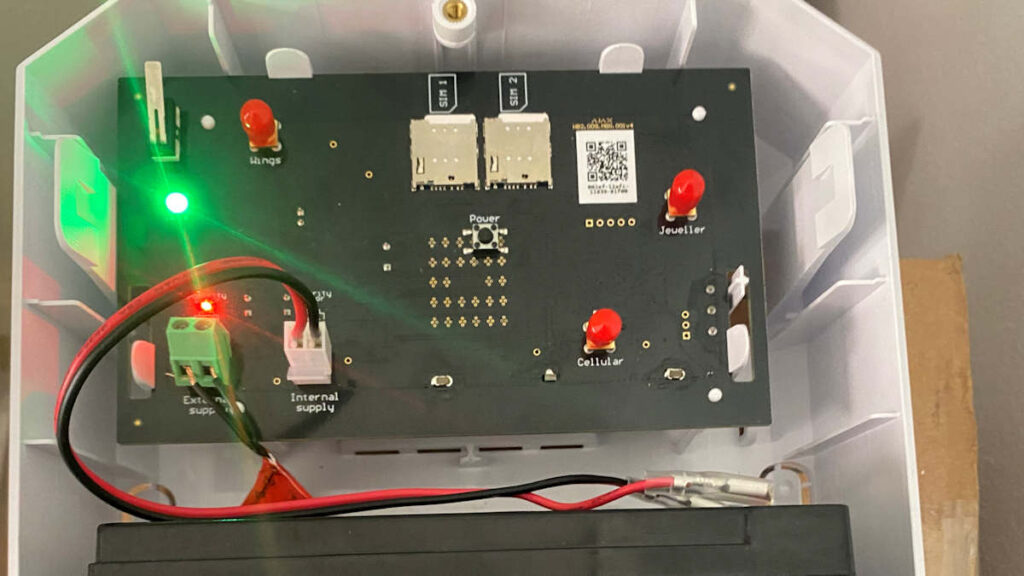
After getting our components out of their packaging – Ajax does a good job with packaging and fixings – we cut off the power supply termination plug then stripped the wires to suit the internal blocks on the board and powered up the hub. Next, we unscrewed the block screws removed the wires and drilled a knockout sufficient for the 4G antenna and the power supply cable before threading the wires through and connecting the power back up again and plugging in the backup battery.
With the Ajax app open we were able to see that the ground floor of this concrete and reo townhouse was not going to give the best possible 4G communications signal so with unplugged hub in hand (supported by the battery) we took a wander looking for the optimum (elevated) location.
Once the hub was in our chosen position it was time to get to work on the sensor side of the job. Instinct had already suggested a few options for the internal devices but first we walked around and took a photo of each space we’d be installing a device then created rooms in the Ajax app and added the photos to rooms via the app.
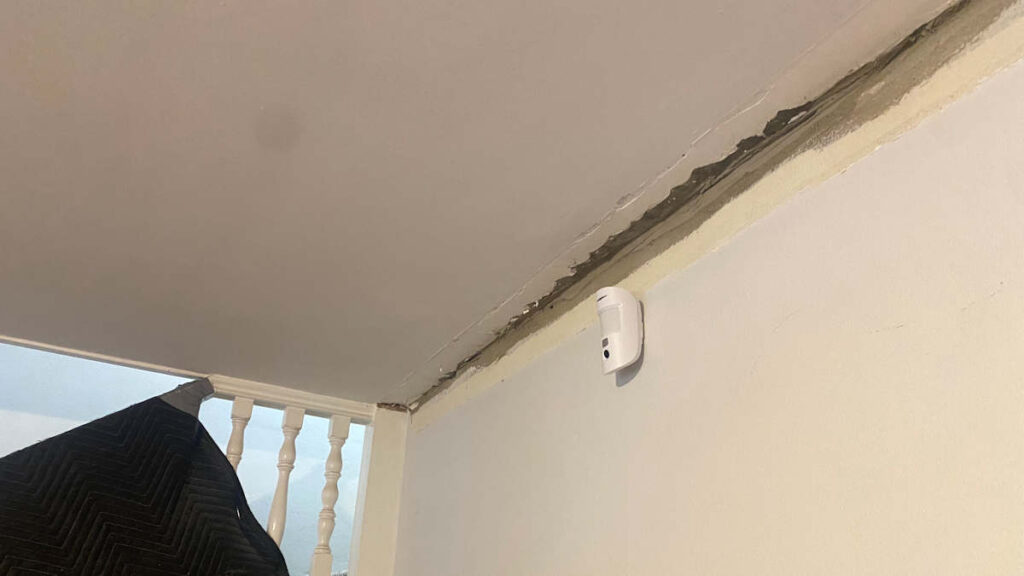
Then it was time for devices. First, a smoke sensor in the top floor master bedroom – while up there we installed the compact internal alarm siren beside it. The smoke sensor location bears further consideration – it needs moving to the peak of the A-frame ceiling – as well as supplementation, but the internal siren will stay where it is. The big external siren was located inside the front door on the ground floor as a ‘wall of noise’ first line of defence.
We did the internal sensors next. Anyone who has installed an Ajax system knows the simple process – you photograph a space, add a room, add the photo, scan a device QR code, then add the device to the relevant room. Ideally you would do all the rooms and devices on the bench but being in a bit of a state over time constraints, we chopped and changed, thanking the app-based programming for allowing us to do some of this on the fly.
Installing An AJAX Alarm In 30 Minutes
With the internal sensors we opted for maximum sensitivity. The physical side was easy enough – we had a good idea where these needed to be. The first covered the entry in such a way it was impossible to open the front door without triggering an alarm event and securing face identification with photo quality at the highest settings. We used fine fixings to get a firm grip here.
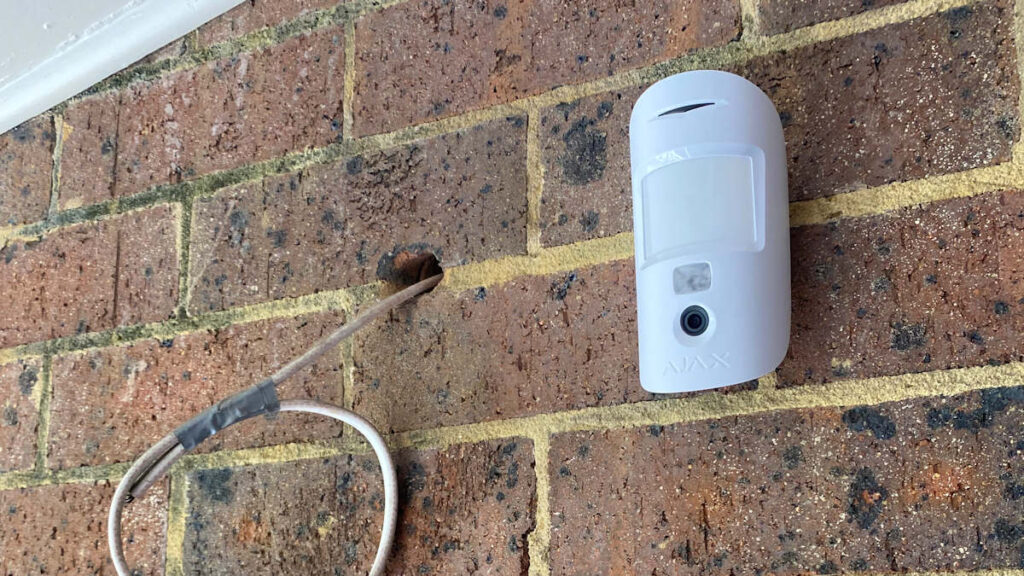
The second sensor had a more complicated job. It needed to cover an external entry door to a balcony and an internal door from a room that has a second external entry door to the same balcony. This sensor also covers the staircase to level 3, as well as 2 additional doors and the head of the staircase to level 1 at the far end of a 6-metre landing.
Having selected what presented itself as the perfect point for multifarious detection (a quick walk test with a Blu-Tac sensor mount confirmed our hunches), we installed this second sensor using another pair of fine fixings and slid the sensor into its base to be rewarded with a green flash from the LED.
Next came the 3 external sensors – the first on the ground floor balcony, another on the second-floor balcony and a third on the third-floor balcony – the keystone to our defence system, the big dual technology PHOD. All these sensors need to be set at lowest sensitivity for the summer months in this application.
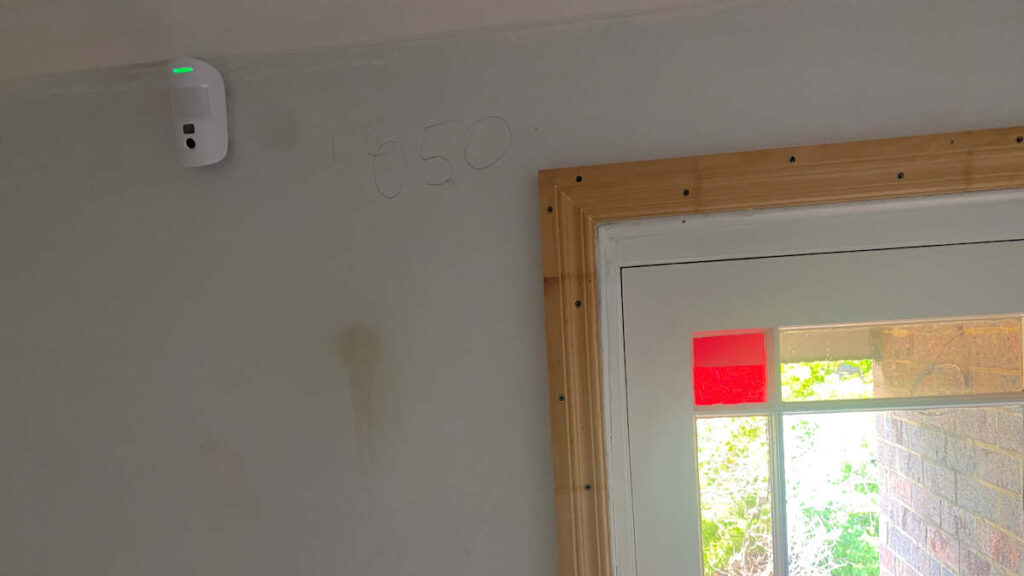
The first external sensor was installed at the far end of the balcony on the ground floor. These balconies are deep, so there’s no issue of moisture reaching the sensors directly. The key challenges are detection of ambient movement on the shared staircase to the adjacent townhouse (which is acceptable), as well as picking up background tree movement, which in this case proved a non-issue.
Heading up a level we installed the second MotionCam Indoor at an elevated point deep under the balcony roofline and used a (too) slim timber wedge to angle the sensor inwards towards the 2 balcony entry points and away from the outer lip of the balcony rail. We were trying to avoid getting traffic and tree movement in the sensor view. This strategy showed promise during walk testing but has since proved a failure, with the elevated position giving the sensor too much to think about outside our narrow detection zone.
On hot days, even on the lowest sensitivity settings, this sensor picks up traffic and moving branches on the street. There are 2 options for resolution of this issue, and we had no time to implement them on the day. The first is to install the sensor directly on the beam supporting the outer roofline of the balcony facing inward towards the doors. This extruded beam is steel, so it’s going to be a job for (gulp) double-sided tape, while the lower projection of the beam may impact on the sensor’s vertical field of view – walk testing will tell.
The second option is use of an Ajax Curtain Outdoor sensor presently installed as part of another system in the country for which we’ve still not found the perfect summer application. Experience suggests this Outdoor Curtain will be much happier protecting a covered balcony with its detection zone ending cleanly against a brick wall than it will be aimed at a conga-line of trees and a herd of curious cows.
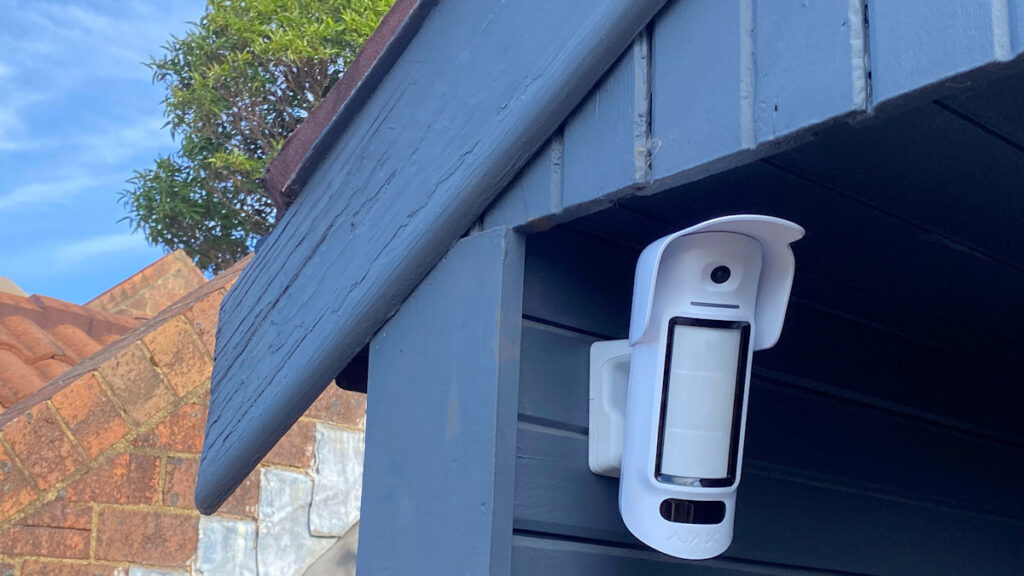
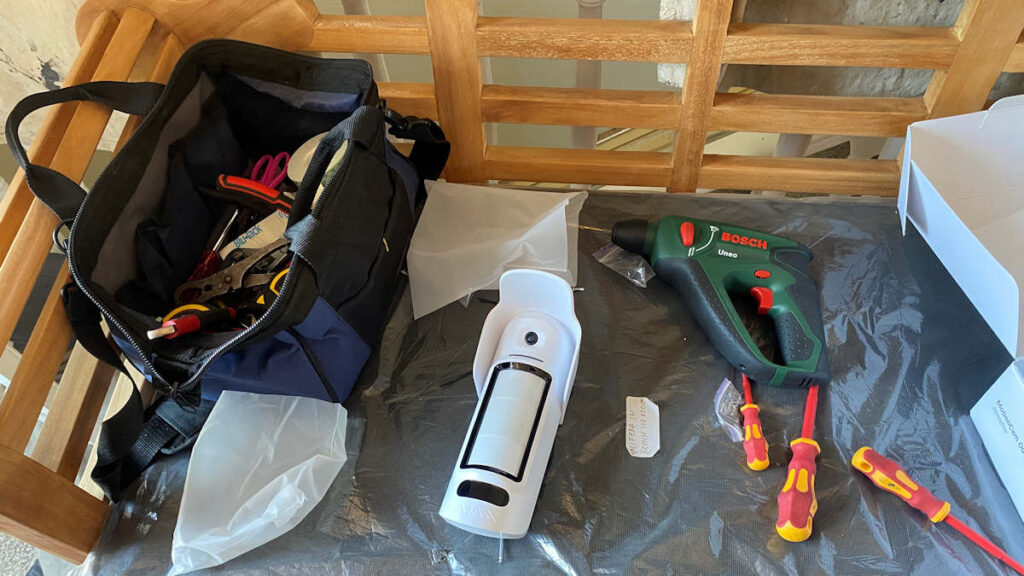
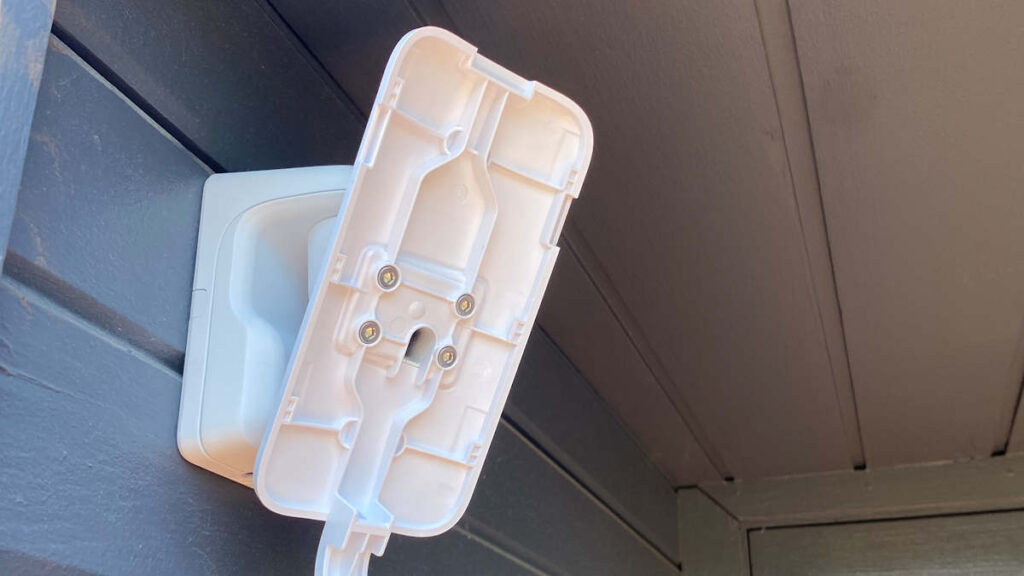
On the day, however, we installed the Motion Cam Indoor without knowing how it would react to the challenges it faced and then dashed up to the third floor to install the Motion Cam High Mount Outdoor dual technology sensor. This sensor faces a difficult task. Mounted just under the wooden dormer with the sensor slightly protruding into weather and full sun, it needed to cover as much as possible of the roof and any potential access points.
This sensor has a good range of 15 metres, meaning its PIR sensors will not benefit from the sort of physical barrier at the end of its detection zones that PIRs prefer. Meanwhile, the microwave component of the sensor is going to be noticing flailing palm trees, as well as cars and people moving outside the detection zone.
Given the needs of the application there was nothing that could be done to ameliorate these challenges – they are part of the application that needs procedural management. Even with sensitivity at the lowest settings on hot and windy days, with strong thermal currents rising from the concrete roof tiles in the field of view at a distance of only 3 metres and moving trees, we get occasional false alarms. They are a price worth paying.
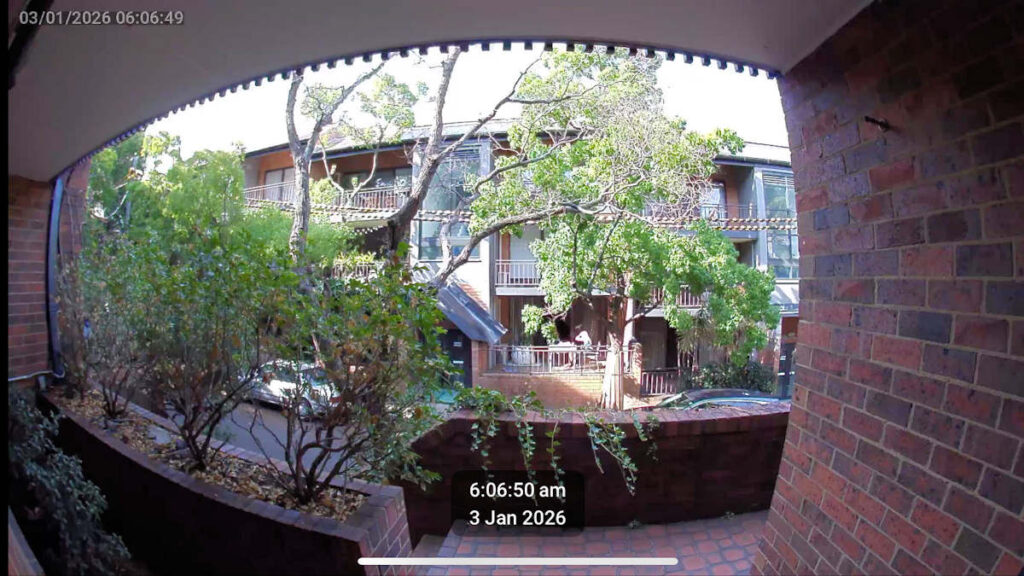
Operationally, the general dependability of sensor performance in extreme conditions and the high quality of the imagery – to say nothing of the peace of mind we get from snaring everything that could possibly be an intrusion up top – makes the PHOD the perfect choice for our job.
Installing the Motion Cam High Mount Outdoor dual technology sensor with its adjustable swivel mount and little rubber grommets and hex head fittings proved mildly complex for the part time installer and was not made less complex by how close we’d positioned the mount to the dormer ceiling to gain weather protection. However, with only a modest amount of swearing we got the mount into place, adjusted it for tilt and angle, then slipped in the sensor and tightened the base grub screw only a couple of minutes past the 30-minute mark.
It’s going to be a story for another day but after returning from holidays we temporarily added the Ajax video intercom to this system using a Wi-Fi router located in the apartment block over the road with the intercom supported by its little internal battery. Before the battery ran out – this is a hardwired device, remember – the imagery was sufficiently impressive to encourage permanent installation.
You can learn more about the Ajax 4G Hub from SecuSafe here or find more SEN news here.
“Could We Install An Alarm System In 30 Minutes On A Building Site With No Comms?”