

Plastic Vs Glass CCTV Lenses – What’s Best For High Security Applications?
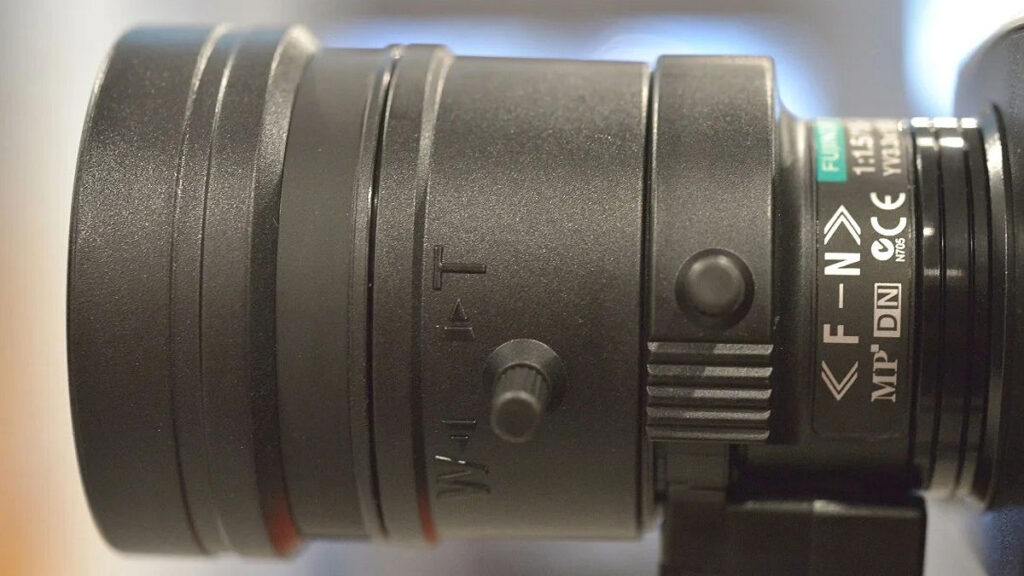
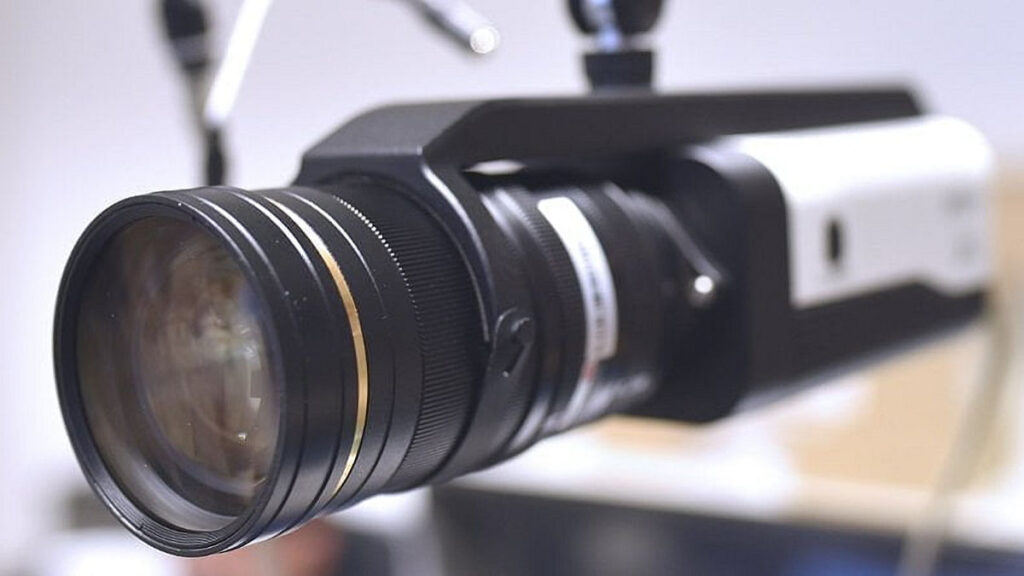
Plastic Vs Glass CCTV Lenses – One of the quickest ways to improve the performance of full body cameras – yes, they are scarce these days we know – is to fit them with a quality glass lens. Alternatively, try to buy bullets, domes and PTZs with glass lenses already fitted.
Glass lenses are a much purer transmission path for light than plastic. Even quality plastics generate unpredictable internal reflections. Key parameters with lenses include stuff like transmission spectra, thermal resistance, manufacturing tolerance, sample variation, index stability and surface hardness.

Consider that quality optical glass has a transmission rate of up to 95 per cent per element when it’s uncoated, increasing to 99.5 per cent transmission if the glass is coated with decent anti-reflective layers. Quality plastics are not as far behind as you’d think – up to 90 per cent transmission, though this falls away in blue and closer infrareds as these wavelengths are absorbed by acrylics and polycarbonates.

Where the difference really starts to matter is when it comes to complex lens equations. There could be up to 20 elements in a complex PTZ lens and each time light transits an element you’ll get another 5-10 per cent attenuation. Now add failing light, a fast-moving target, a low-quality CMOS sensor, and a poorly engineered camera engine to the equation. You can imagine how performance tails off dramatically when the going gets tough.
There are other factors that will come into play. Plastic lenses have a higher internal scatter co-efficient because while optical glass has a lower surface flatness plastic surfaces are roughened by injection moulding. Meanwhile, glass with quality coatings carefully designed to control reflections do a great job of managing reflection paths to minimise their effects. Conversely, with plastic lenses, multi-element compensation for these unpredictable reflections is difficult and expensive and manufacturers usually don’t bother.
It’s also certain that the mechanisms handling plastic lens elements will have lower tolerances and that wiggle room in the helicoids will variably change the wavelength of light as it passes through them. Loose tolerances also cause aberrations like coma and astigmatism. We know that coma is always much worse with the superfast apertures which low-cost CCTV lenses almost always have. With plastic lenses, the inherent coma issues are made worse. The result will be that sharpness will fall away towards the edges of the frame. This might be tolerable with longer fixed focal lengths but with very wide lenses, it’s going to eat into your situational awareness.
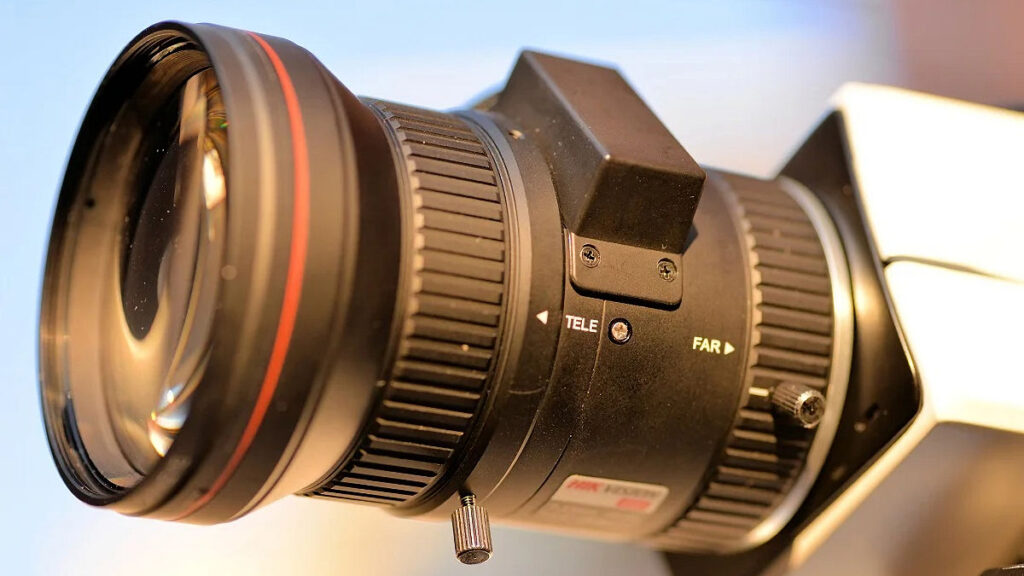
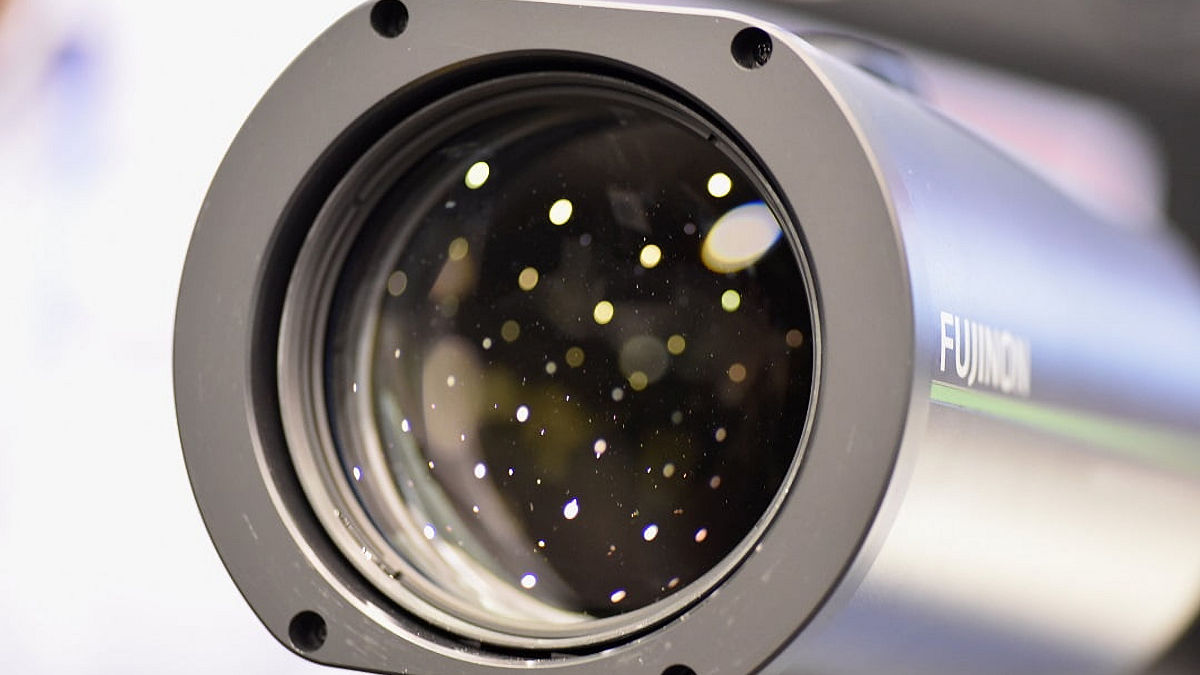
Internal reflections cause ghosting and flare and god knows what other curiosities as strong light sources move through the field of view. As well as veiling flare with light at an acute angle, you’ll also get veiling glare. This will lower contrast, which will lower sharpness, which will lower the chances of court admissible ID, especially in challenging backlight when you need the best performance you can get.
Next come chromatic and spherical aberrations. The latter are effects we loved with our Nikon F1.2 50mm prime lenses but they are not characteristics you want with a CCTV lens. Plastic lenses introduce much higher separation of light wavelengths, and this causes purple colour fringing and longitudinal chromatic aberrations, both of which soften the image. Excessive colour fringing can be 10 pixels deep or more, ruining your image, especially if you are digitally zooming for a face amongst foliage or along the high contrast edges of a motor vehicle. Glass lenses with low-dispersion (ED) elements are streets ahead in this regard – the more elements in a lens equation, the further ahead they are.
Because of the lower transmission rates and higher internal scatter, as well as reduced baffling caused by their necessarily teeny tiny size, plastic lenses are very prone to blooming and smearing. The former means too much light is hitting the sensor surface, causing voltage to leak into adjacent pixels. The result is the glare of blooming, which in worst cases can blind a camera.
Meanwhile smearing is sheets of glare which blast off points of strong light. These are not pretty aperture stars you might get with a quality Hikvision DarkEye lens – streaking makes a great big mess of your image just as the burglars drive away. Glass and glass coatings handle all these challenges way better.
There are weathering issues, too. Glass can handle exposure to the sun without yellowing because its thermal coefficient is 10-20 times higher that that of plastic. Being more prone to sun damage means plastic lenses suffer from focus drift when temperatures change. This is because they are prone to warping of elements. They are also prone to yellowing and crazing. Sunlight passing through an unshielded CCTV camera can generate lens temperatures of 100C day after day after day after day. What happens? Plastics break down, plastic helicoids buckle and lens adhesives fog.
We could drone on about plastic vs glass lenses, but this gives you something to get started on. If you can use glass, always use glass – it will pay off in spades. It’s the best single improvement any CCTV camera can have. If you can’t use glass lenses or they are not available, use the simplest plastic lens equations that deliver your operational outcomes – hopefully short to mid-range fixed lenses.
Face your cameras away from the sun. Clean your camera windows. Shroud your cameras. Increase the cadence of camera replacement in your clients’ maintenance schedules. You can find a high-quality CCTV lens here or read more SEN news here.
“Plastic Vs Glass CCTV Lenses – What’s Best For High Security Applications?”