



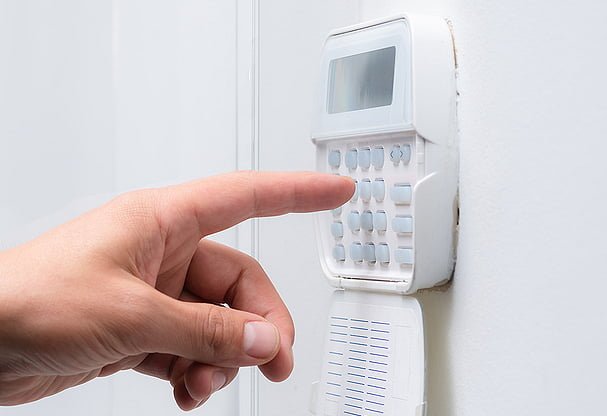

Q: Sometimes we have to install metal alarm panel boxes on plasterboard walls, especially in residential applications. This has led to control boxes pulling off walls, usually when accidentally exposed to pressure over time, especially in rental properties. Are there anchors that offer better grip in these sorts of applications? Or would you recommend hubs?
A: Yes – you can use anchors that unfurl as they are screwed in, but these won’t eliminate plasterboard’s friable nature, or the tendency of anchors to pull out when kids start climbing the walls. It’s better to find an adjacent wall stud and drill through the plaster to the timber behind it, then use wood screws to get serious grip. Installed this way, a pair of properly sized wood screws is likely to be more than enough to support a relatively light alarm/home automation control panel.
The best way to find studs is with an electronic stud finder. Most electronic stud finders work using capacitance to sense where studs are and then buzzing to let the operator know the stud finder is over a beam. There’s a variation between the dielectric constant of a sheet of plasterboard and an area of plasterboard with a stud located behind it based on changing wall density. There are also stud finders that employ Doppler effect microwaves to detect studs – these pick up the tiny echoes produced by studs behind walls.
Many modern home security and automation solutions are integrated into primary keypads or hub-style – they don’t require traditional metal boxes. Ensuring keypads are securely mounted or discretely located so they can’t be disabled by putting them into a metal container to block wireless signals or simply immersing them in water remains important.
Wireless controllers should be located in an elevated position with good connectivity to all devices in a location that is protected by intrusion detection devices. Having them sitting on the kitchen counter next to convenient power and comms medi-alarm style is not recommended. Hardwired controllers should be tucked away somewhere they can’t be seen and are not likely to be subjected to random environmental forces.
#securityelectronicsandnetworks.com