



Verkada Introduces AI-Powered Deterrence To Deliver Proactive Video Surveillance.
Verkada Introduces AI-Powered Deterrence – Verkada has released a new AI-powered deterrence capability designed to identify suspicious behaviour and intervene before an incident escalates.
Contents
The capability is built into Verkada’s Command platform and uses a combination of vision, audio and language models to analyse live camera feeds, detect behaviours such as loitering, and initiate automated responses prior to alarm activation.
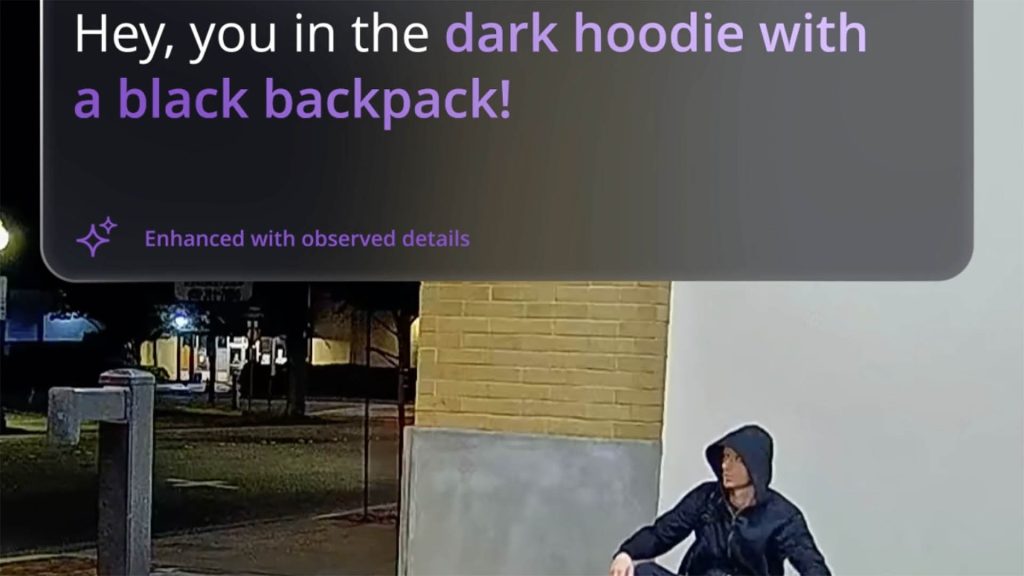
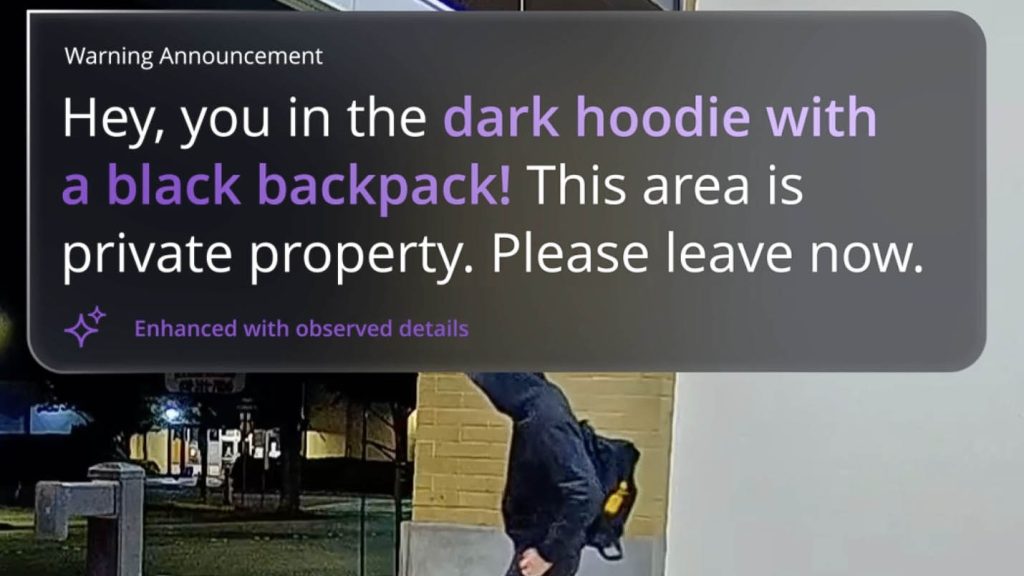
Rather than relying on post-event alerts, the system is designed to engage directly with individuals on site. When suspicious behaviour is detected, it triggers a sequence of escalating audio warnings generated in real time, incorporating contextual detail such as location or visible characteristics.
Initial messaging may begin with a general warning, followed by increasingly specific and direct instructions if the behaviour continues. If the individual remains on site, the system escalates to alarm conditions, including siren or strobe activation, live operator talk-down, notification of security personnel or police dispatch.
According to Brandon Davito, senior vice president of product and operations at Verkada, the release reflects a broader shift in security system design.

“AI-powered deterrence represents a fundamental shift that we’ve been driving for our customers: moving from reactive to proactive security,” said Davito.
“We’re delivering on Verkada’s goal of building safer, smarter communities in a very real and tangible way when our customers have the ability to stop an incident before it escalates.“
The deterrence engine can be configured through rule-based workflows, allowing organisations to define how and when intervention occurs. This includes the ability to vary messaging, adjust escalation timing and alter voice output to reduce the effectiveness of repeated exposure for offenders.
The release also introduces more advanced alerting capability through compound event logic. This allows notifications to be triggered only when multiple conditions are met, such as a person entering a restricted area without required personal protective equipment, or loitering combined with identification as a person of interest.
Events and alerts can be exported via webhooks to external platforms including analytics tools, enabling integration with broader operational systems.
Alongside deterrence, Verkada has expanded AI functionality across its intercom and visitor management portfolio. New capabilities include live 2-way translation across multiple languages, voice-driven directory navigation that routes visitors based on spoken intent, and biometric identity verification that compares ID documents with live facial capture.
The company has also introduced automated incident summaries, generating descriptive reports from recorded video to support investigations and compliance.
These updates build on a broader expansion of AI capability across the platform, including unified timelines that track people and vehicles across multiple cameras, structured operator workflows, and analytics functions that extend into operational metrics such as occupancy and queue monitoring.
You can learn more about Verkada solutions here or read more SEN news here.
Verkada Introduces AI-Powered Deterrence
Verkada Introduces AI-Powered Deterrence Features
- Real-time detection of behaviours such as loiterin
- Context-aware audio warnings generated using AI models
- Escalating response workflow from warning to alarm activation
- Integration with siren, strobe, talk-down and dispatch function
- Configurable rule-based deterrence and escalation logi
- Compound alerts triggered by multiple conditions
- Webhook integration with external analytics platforms
- AI-generated incident summaries for reporting
- Live translation and voice directory via intercom systems
- Biometric ID verification for visitor management.
How It Escalates
- Stage 01DetectionVision models flag a behaviour on the live feed — loitering after hours, presence in a restricted zone. The workflow arms, but nothing sounds on site yet.
- Stage 02General noticeA first audio message plays through the on-site speaker — a plain, non-specific reminder that the area is private property and the site is monitored.
- Stage 03Context-aware calloutIf the person stays, the next message is generated from what the camera can see — position, clothing, direction of travel — so it reads as addressed to them rather than broadcast to the car park.
- Stage 04Final warningA direct instruction with the consequence stated. Voice output can be varied between incidents, so repeat offenders don’t learn to tune out a familiar script.
- Stage 05Alarm and responseSiren and strobe activation, live operator talk-down, notification to the security contact list, or police dispatch — whichever path the site is configured to take.
Message content, escalation timing and the thresholds between each stage are set per site through rule-based workflows. Stages shown are indicative of the published sequence, not fixed product behaviour.
“Verkada Introduces AI-Powered Deterrence To Deliver Proactive Video Surveillance.”
01What is AI-powered deterrence in video surveillance?
AI-powered deterrence uses vision, audio and language models to recognise suspicious behaviour on a live camera feed and respond with automated audio warnings before an alarm is raised. It moves the system from recording an incident after the fact to intervening while the incident is still forming.
02How does the deterrence escalation sequence work?
The workflow runs in stages. Detection arms it, a general audio notice plays, then a context-aware message that references what the camera can see, then a final warning with the consequence stated. If the person remains on site, the system escalates to alarm conditions.
03Does AI deterrence replace a monitored alarm system?
No. It sits in front of one. Deterrence occupies the window between detection and alarm activation, then hands off to siren, strobe, operator talk-down or dispatch if the warnings are ignored. The monitoring and response layer behind it is still required.
04What are compound alerts and why do they matter?
Compound alerts fire only when several conditions are true at once — a person crossing a restricted line while not wearing required PPE, for instance, or loitering by someone already flagged as a person of interest. Fewer notifications arrive, and the ones that do carry more meaning.
05Can the deterrence behaviour be tuned for a specific site?
Yes. Message content, escalation timing and the thresholds between stages are configured through rule-based workflows, and voice output can be varied between incidents so repeat offenders do not become accustomed to the same warning.
06Where do the alerts go once they leave the platform?
Alerts can be pushed to external systems through webhooks, which allows events to be consumed by analytics and business intelligence tools rather than staying inside the security platform. That is what makes occupancy, queue and dwell data usable outside the control room.
07What should Australian installers check before deploying audio deterrence?
Playing an audio warning is a different question from recording audio. Audio capture on CCTV is governed by state and territory surveillance devices legislation, and handling of personal information falls under the Privacy Act 1988 and the Australian Privacy Principles. Signage, retention periods and access settings are worth confirming at design stage.
Answers reflect the capability as announced. Configuration options and behaviour vary by site, licence tier and firmware version.