

What is the Best Mobile Wireless Communication for Alarms in Rugged Rural Applications?
What is the Best Mobile Wireless Communication for Alarms – This is a fun question and we’re going to go off tap with it and ignore the fact some wireless technologies are or aren’t available anymore.
In forested, hilly, rural and broken environments, mobile network technologies behave differently depending on their RF characteristics, tower density, and resilience to environmental interference, as well as topology, like valleys, forests, bodies of water and more.
When comparing 2G, 3G, 4G and 5G purely on technical performance in terms of signal range and uptime during adverse weather, key differences emerge that impact their suitability for long-range and low-density applications.
2G operates at lower frequencies, (around 900 MHz), giving it superior propagation over distance and better penetration over terrain such as hills and through dense vegetation. Further, its narrow bandwidth and lower data rate make it less susceptible to degradation from rain fade, signal scattering or multi-path interference – common in valleys and rugged country.
This means 2G often remains accessible where higher frequency signals fail, particularly when cell towers are widely spaced. Its minimal power requirements also contribute to stable uptime with limited infrastructure. However, limited data handling and sunsetting of 2G networks to scavenge bandwidth for more profitable 4G and 5G services reduces viability for modern applications. This is a bit of a shame, in our opinion, though specialist vehicle monitoring services like MiniMoto continue to use 2G in support of LTE-M primary paths.
The introduction of 3G brought improved data services, but it uses higher wavelengths — 2100MHz in Australian deployments — leading to reduced range and greater vulnerability to signal obstruction in rugged country. While still capable of fallback voice and limited data in rural settings, 3G’s broader bandwidth is more susceptible to attenuation and it requires closer tower spacing to maintain stable connections. In heavy rain and strong wind signal integrity is more likely to degrade than with 2G. But it’s still better in many ways at pushing skimpy alarm data packets over long distances than higher bands of 4G – in ideal conditions ranges can reach 70km. Obviously ANZ is phasing out 3G, so using it has become a moot point.
What is the Best Mobile Wireless Communication for Alarms in Rugged Rural Applications?
Next comes 4G LTE, which offers higher speeds and lower latencies and operation across multiple bands, including 700MHz, 1800MHz and 2600MHz. In rural deployments, the 700 MHz band (Band 28) provides better coverage due to its longer wavelength. This helps signals travel over long distances and around obstacles. However, performance still depends heavily on tower density and line-of-sight.
In broken country, 4G signals using higher bands fall off much more quickly and are more likely to be impacted by terrain shadowing. During storms or high humidity, 4G performance can also be impacted, particularly in valleys, where reflections and absorption will interfere with signal clarity. This said, 4G’s adaptive modulation and error correction protocols give it better recovery characteristics than 3G in fluctuating conditions, even though its outright reach between towers in open country is not as good.
Finally, we come to 5G, which in its sub-6GHz form shares some spectrum with 4G but adds capacity and latency improvements. 5G’s higher frequency mmWave bands are unsuitable for rural use due to extremely limited propagation range and high susceptibility to atmospheric absorption. Even sub-6 GHz 5G bands, while better suited for regional applications, offer reduced range compared to 700MHz 4G and require much tighter cell spacing.
5G excels in capacity where it’s supported by sufficient infrastructure but it offers less resilience in wide-area coverage, unless supported by a robust tower network and backhaul infrastructure – lots and lots of infrastructure. In broken terrain and inclement weather, 5G signal degradation is more pronounced.
So, what’s best in SEN’s opinion? We think 2G still provides the best theoretical coverage and uptime in remote, low tower density rural environments for alarm comms due to its frequency characteristics and simplicity. In its absence, 4G at 700MHz offers the best modern balance of range and throughput, as well as supporting data and voice. Meanwhile, 3G and high band 4G or 5G perform less reliably in broken country, especially during adverse weather conditions, due to their higher frequencies and sensitivity to environmental factors.
If you’re doing short range we’d be thinking about LoRa solutions (more here), which have a range of up to 16km. LoRa technology would suit applications in which an organisation has multiple remote sites located around a central hub and would serve for internal organisational reporting – it’s not going to work for monitoring stations except in very custom applications.
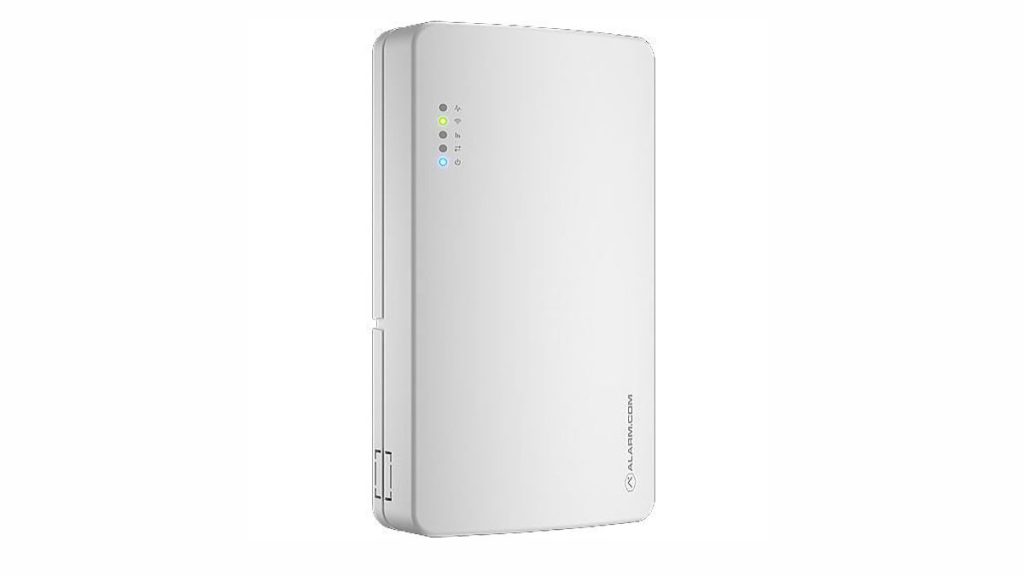
There’s a link to one of our favourite 4G LTE alarm communicators here or you can find more SEN news here.
“What is The Best Mobile Wireless Communication For Alarms In Rugged Rural Applications?”