




We’ve heard that it’s possible to use a torch to find the far end of a fibre run – is this true? We’re working in a large legacy site with a mess of fibre installed decades ago and trying to make sense of it in the field is very difficult.
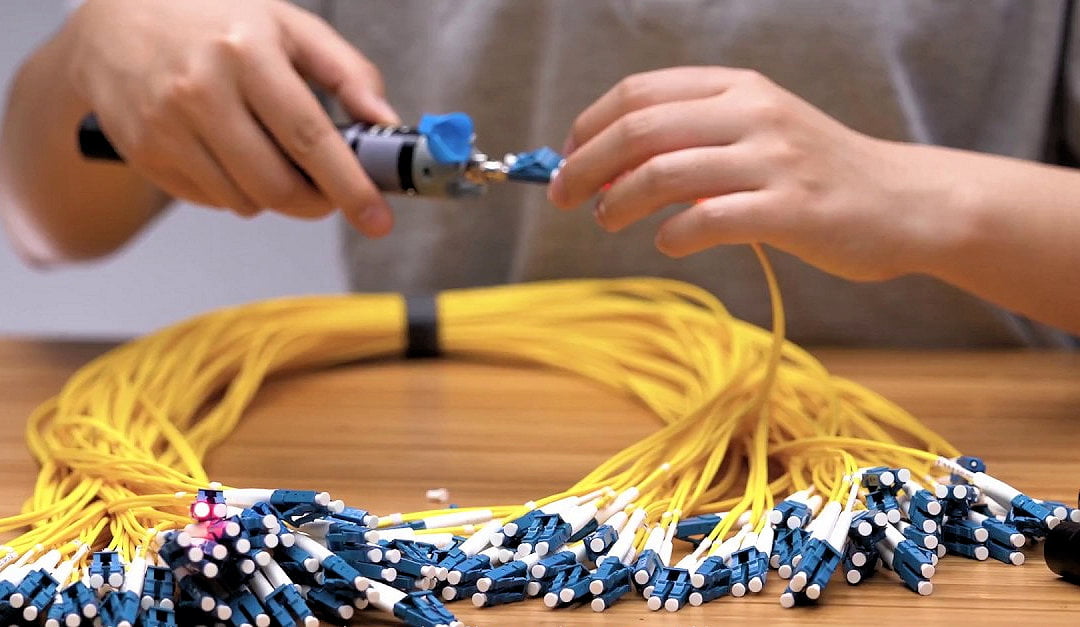
A: CCTV installers who install or service fibre optic cable plants in tough environments should consider making a visual fault locator part of their toolbox. VFLs use a semiconductor that emits fire a stream 0f red light down a fibre to check its physical integrity.
The light signal escapes through cracks or damaged joints and can be seen with the naked eye anywhere the fibres are exposed. While it sounds a rudimentary technique, the red test light will travel up to 10km down standard fibre and can be clearly seen under the glass fibre’s coating.
Bear in mind that if the fibre is heavily encased in a thick plastic jacket chances are you won’t be able to see light spilling out of it.
Ideal locations to use this technique will be when working on the back of switchers or integrated equipment racks where there’s poor labelling of fibre runs and you need to see where a single fibre input ends up on the other side of a snugly bound bundle of 15 or 20 fibres. You can also check the integrity of joins and connections along a cable run.
In such situations, visual locators work a treat. If you don’t have a visual fault locater you can use a small torch though it won’t be anywhere near as effective. Rather peering into fibres, which can be dangerous to eye health – hold a mirror or the white tag you’re going to use to label the run close to the fibre ends with room lights dimmed.
#securityelectronicsandnetworks.com