Drilling Plaster Over Lath Requires Planning And Delicacy, Especially If The Building Is Old And The Plaster Is Friable...
Drilling Plaster Over Lath Requires Planning And Delicacy
Drilling Plaster Over Lath Requires Planning And Delicacy, Especially If The Building Is Old And The Plaster Is Friable. Drilling Plaster Over Lath Requires Planning And Delicacy – SEN’s editor spent his primary school years at Frederick St in Hastings a few doors up from the Curly Top factory and close enough to Caroline Road […]
Drilling Plaster Over Lath Requires Planning And Delicacy, Especially If The Building Is Old And The Plaster Is Friable.
Drilling Plaster Over Lath Requires Planning And Delicacy – SEN’s editor spent his primary school years at Frederick St in Hastings a few doors up from the Curly Top factory and close enough to Caroline Road to smell the tomato sauce brewing at Watties when the wind was blowing right.
This moment of reminiscence isn’t about food production in the fruit bowl of New Zealand but emerges from the fact that when I was a boy it was always raining. Athletics carnival – raining. Walk-a-thon – raining. Riverbend – raining. Cycling up Te Mata peak on the new-to-me Raleigh Twenty fixie – raining. Going to Westshore for a swim – raining. Rugby vs the Parkvale Punks – raining. Rugby vs Flaxmere – pouring. Excursion to Cape Kidnappers (the most exciting event on the Mayfair Primary calendar) cancelled – raining.
And this bios level damp has seeped into every home I’ve lived in since. The houses have always been old, and they have always been damp, and they have always had plaster and lath walls that I’ve always been too scared to drill for fear of bringing the whole place crashing down in a welter of shell grit and horsehair.
I found the perfect spot for that bullet camera down here, honey…
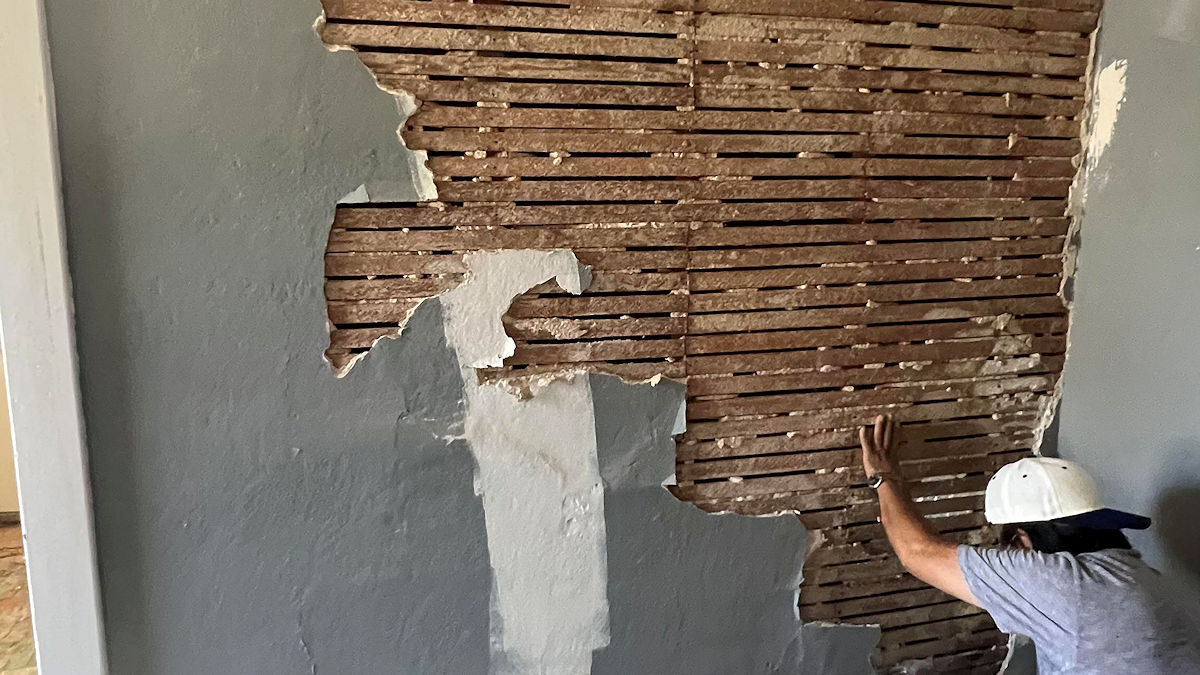
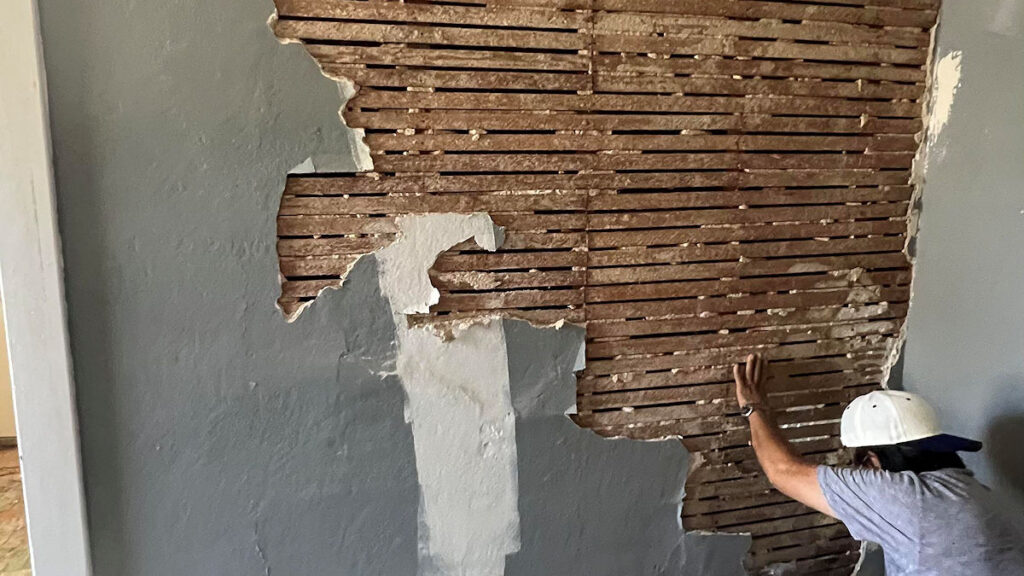
Drilling plaster over lath in older homes is a different job to working predictable (but still annoying) plasterboard. Lath and plaster looks solid and in places it can be, but the real strength isn’t in the plaster surface but in the laths behind the plaster that you can’t see.
Long experience has taught that if you treat plaster and lath like plasterboard, you’ll end up with blown-out holes, crumbling edges, fixings that fall out under the force of gravity and don’t even start me on what happens when a drill bit walks sideways across a lath-stud junction.
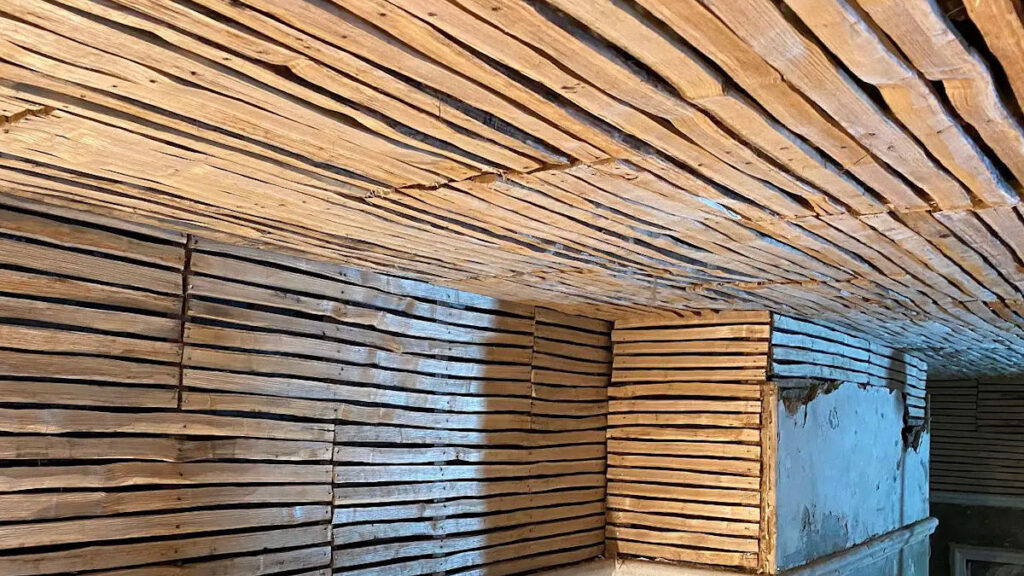
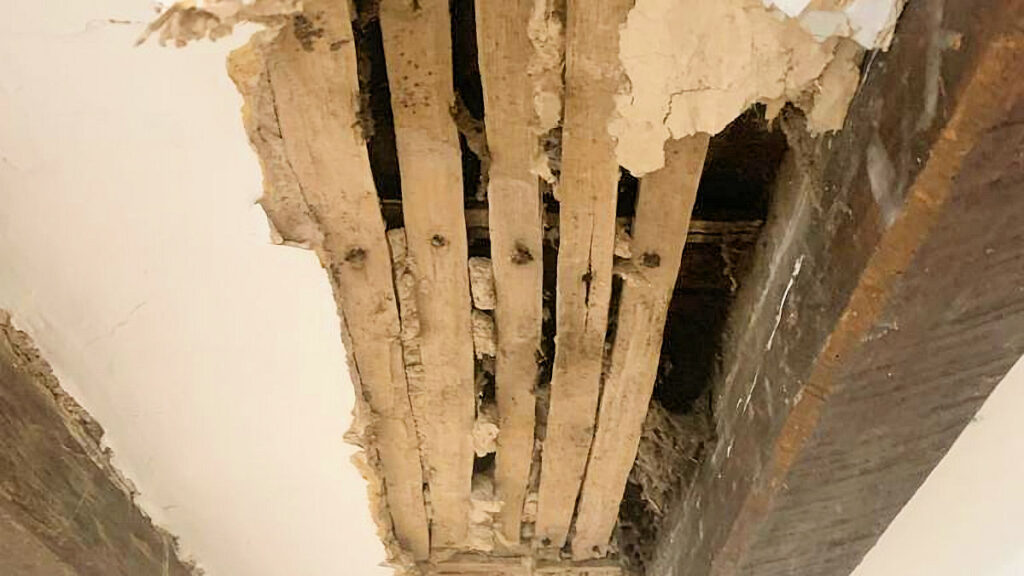
The first thing to understand is how lath and plaster walls are built. Traditional plaster is applied over horizontal timber laths nailed cross ways to studs with small gaps between each lath. Plaster is smoothed against the laths with a trowel and it then forms keys after it squeezes through the lath gaps and expands behind the laths as it hardens, forming a mechanical bond. What this structure means is that the plaster is effectively hanging off the laths and you must never break that bond.
When you start drilling plaster and lath, go gently. Never hammer drill. A light, controlled entry with a very slender bit is the way to go. High speed and pressure will fracture the plaster – you’ll see cracking radiating out from the pilot. Once that happens, the integrity of the fixing point is compromised forever, and you will have to move to another spot, something which has never, ever happened to me.
A small pilot hole helps – start with a tiny bit and step up as needed. This reduces stress on the plaster surface and gives some feedback on underlying structures. You will feel the difference between plaster and timber. Plaster that’s old is often very soft and powdery, you will feel timber immediately and you’ll see the shavings.
But it’s finding the lathes or studs before you pick up a drill that’s critical if you want a secure fixing. If you are drilling plaster over lathe, you should always be aiming to get your fixings into wood. A stud finder can help, but they are not always reliable through thick plaster.
Tapping the wall can give clues, but, and we say this with a twisted visage, the only reliable method is probing the plaster with a very fine drill bit until you locate timber. Once you find a lath or stud, you can work horizontally or vertically, as these members are spaced consistently. Typically, plaster depth is about 2.5mm and it helps to mark your bit at 3mm – if you’ve not hit timber at this depth, you’ve missed the lath. What’s under the plaster if you miss the lath is an airspace with no holding power whatever.
Wherever you elect to start work, avoid drilling too close to previous holes and stay far away from existing cracks which lath and plaster walls always have, especially if the house is built on clay, which my houses always are. Old plaster doesn’t recover once weakened – if you see hairline cracks forming during drilling, step back.
Drilling Plaster Over Lath Requires Planning And Delicacy
Condition of the plaster matters a lot. Old plaster can become friable or granulated, particularly if there’s been moisture ingress as there has been at my place. If the plaster surface looks like a cane toad’s back lightly sprinkled with Annie Sloan American Chalk step way from the wall and find an adjacent bookshelf to attach your device to. Or better yet, move to another house.
If the surface looks ok but the material coming out of the hole is pure dust you should stop drilling unless you are sure of lathe or stud location. You will only damage the wall further. Move to a sound area. Drilling into very damp or degraded plaster is a bad experience – you can buy an inexpensive moisture meter that will give you a general idea. Cheap moisture meters aren’t certified to relevant standards so be guided by extremes. No reading means dry, if the wall is causing the meter to max out – look for another fixing point.
For heavier devices in the 3–4kg range, you need to be deliberate. Ideally, you are fixing into at least one, preferably 2 laths, or a stud. Use longer screws where possible but avoid over-tightening. Driving a screw too hard will crush the plaster around it and reduce grip. Final tightening by hand gives best feel – just make sure you use decent fixings that don’t burr the first time they meet screwdriver. If you can’t be sure of the surface, consider using a door frame or window frame (or a bookcase).
When you’re drilling plaster with a fine bit you need to balance minimal force and the need for direct pressure with good tool control to get through cleanly. Waggle the drill around and you’ll chew up the plaster. You also need to minimise drill walk, especially at the point of lath contact. Once you’re into the lath it’s wood drilling – you know the rest – light pressure and let the bit do what it was designed to do.
Don’t use too much force once you’re into a lath – older laths are slender pieces, not structural timbers, and they are likely to be brittle with age. And note that while you can use a lath to carry a lighter device, you’ll need to find a stud to carry heavier loads reliably.
Using a quality stud finder and doing some practice is a worthwhile skill when you’re working around older buildings with lath and plaster internal walls. I really need to buy one myself.
You can source a decent quality stud finders here or read more SEN news here.
“Drilling Plaster Over Lath Requires Planning And Delicacy, Especially If The Building Is Old And The Plaster Is Friable.”
Drilling Plaster Over Lath Requires Planning – this view is very familiar…
A professional writer and editor who has been covering the security industry since 1991, John is passionate about clever applications of technology and the fusion of sensing and networking. A capable photographer John enjoys undertaking practical reviews of the latest electronic security systems.