




Poor Terminations Cause Intermittent Faults In Electronic Security Systems.
Poor Terminations Cause Intermittent Faults – Poor terminations are one of the most common causes of intermittent faults in electronic security systems, yet they are also one of the easiest problems to eliminate.
Getting terminations right is not about speed, it is about consistency, correct tooling and attention to detail at every stage from cable selection through to final labelling. The process starts with selecting the correct connector for the application.
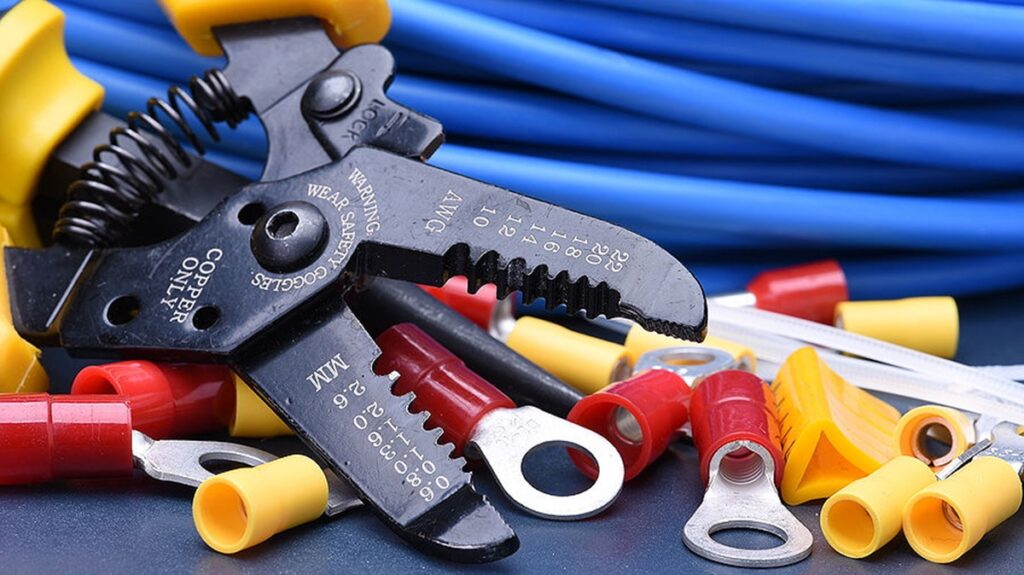
In security controllers, where terminals are typically small and closely spaced, insulated bootlace ferrules are often the most appropriate choice for stranded conductors. They provide a consistent profile, prevent strand splaying and allow reliable clamping in screw terminals.
Spade and ring terminals have their place, particularly on power supplies and larger terminations, but oversized connectors forced into small terminals are a recurring cause of loose connections and heat build-up. Automotive-style connectors such as Narva products are suitable where vibration or higher current is present, but they must match both conductor size and terminal design.
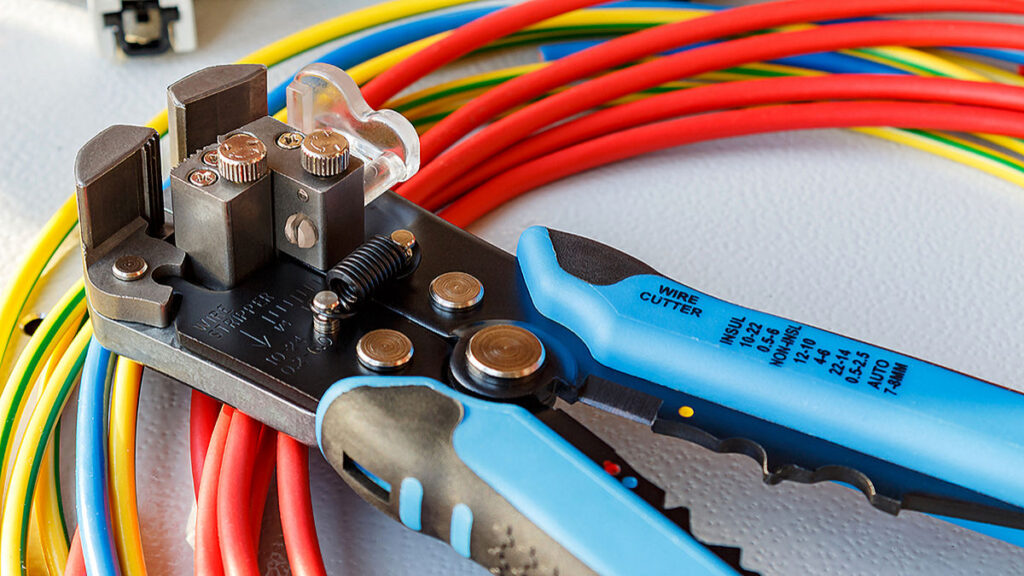
Stripping cable to the correct length is critical. Expose only enough copper to fully seat within the terminal, typically 6–8mm depending on the device. Excess exposed conductor increases the risk of short circuits and corrosion, while insufficient strip length leads to poor contact area and higher resistance. The strip should be clean, with no nicked strands. Damaged conductors reduce current capacity and create weak points that fail over time.
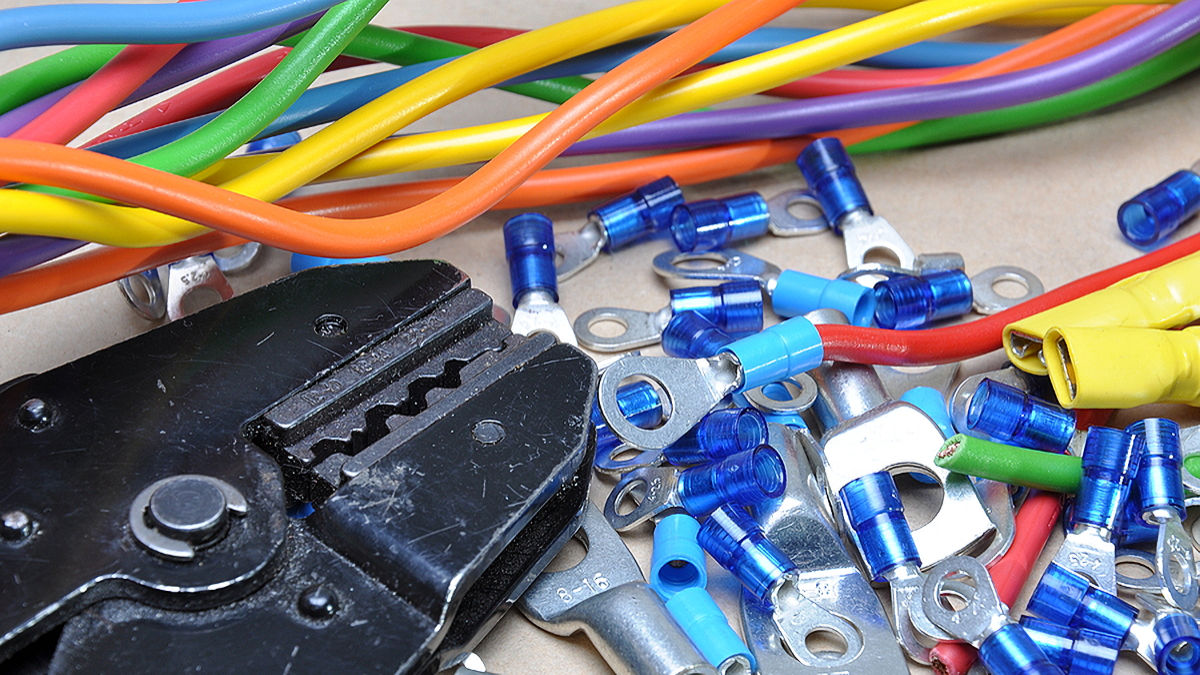
Crimp quality is the next step. The correct crimping tool must match the connector type and conductor size. Generic pliers or incorrect dies create inconsistent compression, leading to high resistance joints or connectors that pull free under light tension. For controller work, smaller ratcheting crimp tools with controlled pressure are preferred, allowing precise, repeatable crimps without over-compressing the conductor. A properly crimped connection should be mechanically secure before it is ever inserted into a terminal – give it a tug to be sure.
When terminating into controller boards, force must be controlled. Small PCB-mounted terminals are not designed for heavy torque. Over-tightening can crack solder joints or distort terminal blocks, leading to latent failures. Meanwhile, under-tightening results in high resistance and heat. Use a small insulated screwdriver with appropriate tip size and apply firm but measured pressure. Where manufacturers specify torque settings, follow those settings but let your fingers tell you what’s right.
Poor Terminations Cause Intermittent Faults
Environmental factors play a significant role in termination longevity. In humid or corrosive environments, applying a contact protection compound or dielectric grease to exposed conductors can reduce oxidation and extend service life. This is particularly relevant in coastal locations, plant rooms and outdoor enclosures. However, products must be used sparingly and be compatible with the connector type.
Controller location and cabinet condition are often overlooked. Poorly sealed enclosures allow dust, moisture and insects to enter, all of which degrade terminations over time. Gland entries should be properly sealed, unused knockouts blanked, and cabinet doors closed securely. Where controllers are installed in harsh environments, consider higher IP-rated enclosures or relocating equipment to a more stable area.
Cable quality underpins the entire termination system. Low-grade cable with inconsistent conductor size or poor insulation will never terminate well – you’ll pay for your savings by the call-out. Use cable that meets relevant Australian Standards, with consistent strand count and proper insulation thickness. Maintain bend radius and avoid mechanical stress at the termination point, as movement over time will fatigue conductors.
Standards provide a baseline for best practice. Installations should align with AS/CA S009 for cabling, AS/NZS 3000 for electrical safety, and relevant product standards for security systems. These standards reinforce correct termination methods, segregation, and mechanical protection.
Good terminations deliver long-term stability. A clean, correctly crimped and properly tightened connection will typically outlast the equipment it is connected to – that’s the build standard you should be aiming for. Poor terminations, by contrast, generate service calls for intermittent faults, voltage drops, communication errors and device failures. Across a large installed base, eliminating termination faults can remove a significant proportion of reactive maintenance visits.
Labelling cables at the controller and at the device is part of termination quality. Every conductor should be clearly identified at both ends using durable labels. This reduces troubleshooting time and prevents errors during maintenance or upgrades. Labels should be consistent, legible and aligned with as-built documentation.
A best practice approach includes scheduled inspection. Critical systems should have periodic checks of terminations, particularly in high-load or harsh environments. Look for signs of loosening, discoloration, corrosion or heat damage. Retighten where required and replace any degraded connectors. Even a simple annual inspection can prevent faults before they occur.
Attention to termination detail is not complex – it’s boringly simple. The payoff for proper procedures and work discipline is fewer faults, reduced maintenance costs and systems that perform as intended over the very long term.
You can find some relevant cabling standards here or read more SEN news here.
“Poor Terminations Cause Intermittent Faults In Electronic Security Systems.”