



Airports Too Slow To Intercept Intrusions Says Optic Security’s Nick Dynon.
Airports Too Slow To Intercept Intrusions – A perimeter breach at Vancouver International Airport has again put the spotlight on how slowly airfield intrusions are being intercepted and why traditional security layers are struggling to keep up.
A person was taken into custody after scaling a perimeter fence and accessing an aircraft without authorisation earlier this week. While the airport confirmed the breach was detected and contained within minutes, it reportedly took almost 3 hours for police to make the arrest.
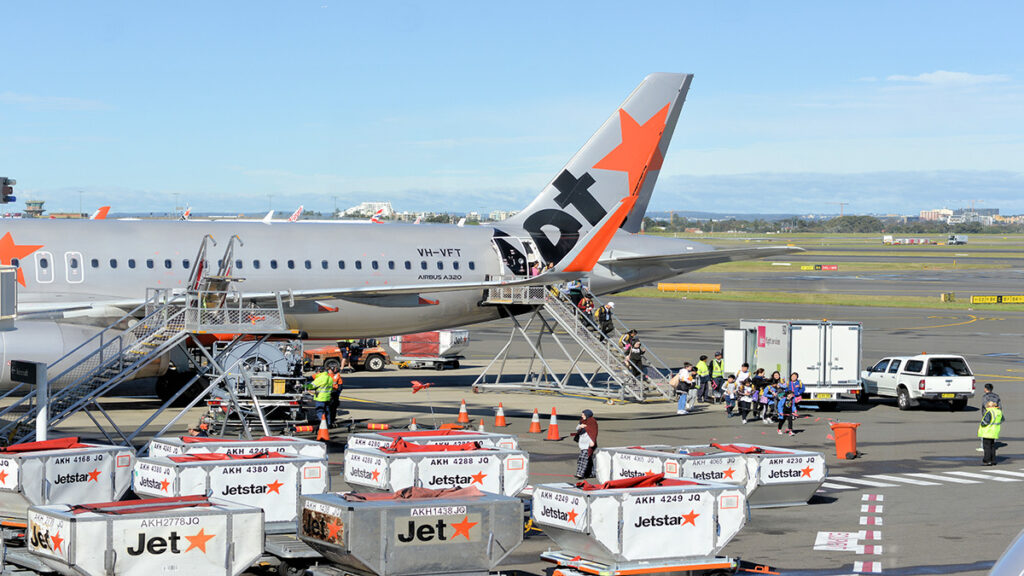
The incident follows a pattern seen globally and locally. In Australia, federal authorities have already been reviewing airport security settings after multiple breaches, including the March 2025 Avalon Airport incident in which a teenager exploited a hole in the fence to access a Jetstar aircraft.
According to Optic Security Group’s Nicholas Dynon, the issue isn’t whether breaches occur — it’s how quickly they are handled.
“Globally, perimeter breaches occur with enough frequency—typically dozens per year—that they should be treated as an expected risk condition rather than an exceptional event,” said Dynon, Optic Security’s group brand strategy & innovation director.
“The differentiator between a minor incident and a major safety event is the airport’s ability to detect, verify and respond before the intruder reaches critical airside infrastructure,” Dynon said.
“It comes down to a simple principle: speed of detection and response must be faster than the time it takes a trespasser to scale or cut their way through perimeter fencing.”
According to Dynon, the scale of modern airports makes traditional approaches increasingly ineffective.
“The challenge for airports is that they are vast properties with airfield perimeters in excess of 10km long,” he said. “That’s a very long distance to fortify and monitor.
“Security patrols alone – whether they are boots on the ground or drone-enabled – don’t provide ubiquitous perimeter surveillance, cable-based fence sensors won’t give you a clear picture of the potential threat, and CCTV at these distances presents significant infrastructure issues.”
In this context, perimeter protection becomes what Dynon describes as a time and space problem, where delays in detection and response create opportunity for intrusion.
“This is a time and space problem that’s clearly thwarting traditional designs,” he said.
The answer, he argues, lies in faster detection and verification — something he believes only AI-driven systems can deliver at scale.
“If an airport’s perimeter security system is not harnessing Artificial Intelligence-based advanced analytics for automated threat detection and verification then it will not perform quickly enough to prevent a motivated trespasser from stepping foot on the airfield,” Dynon said.
“Properly harnessed, artificial intelligence provides airports with an unprecedented ability to collapse time and space at the perimeter and regain control of their airfields.”
“Where AI technology gets you ahead of a trespasser is its ability to combine data from multiple sensors (CCTV, radar, thermal, fence vibration, etc) to produce a reliable view of a surveilled area, detect a potential threat and verify it, track its movements, and direct a security response team to it in real time before the threat becomes an issue.”
“It’s a race between trespasser and security, for which there’s no prize for second place.”
You can learn more about Optic Security here or read more SEN news here.
“Airports Too Slow To Intercept Intrusions Says Optic Security’s Nick Dynon.”