



AI Storage Demand Fires HDD And SSD Prices Into The Stratosphere.
AI Storage Demand Fires HDD And SSD Prices – Standing at Officeworks in front of the HDD storage options the other day brought home just how wildly AI storage demands have fired up the price of HDDs and SSDs, to say nothing of the impact on the professional grade storage stuff.
Skyrocketing digital storage prices – which were elevating through 2025 – have gone crazy late 2026. The impact on installers, integrators and end users is not to be underestimated – nor is the benefit of using quality compression and clever analytics to eke every 0 and 1 out of your available platters.
The issues go further than cost. Users looking to maximise storage are certain to cut back on frame rate, resolution and retention times – they’re even more likely to install lower resolution cameras. These are shifts that have an operational impact on image stream quality. Users are also more likely to be interested in movement-based analytics and cloud solutions to turn their big capex into little opex.
And there’s another operational impact to consider – it’s pushing back storage upgrade timetables to the point hard yakka storage systems supporting huge CCTV solutions – we are talking about sports venues, transport systems, city surveillance solutions here – to the point MTBF is not just heaving into view but disappearing in the rearview mirror.

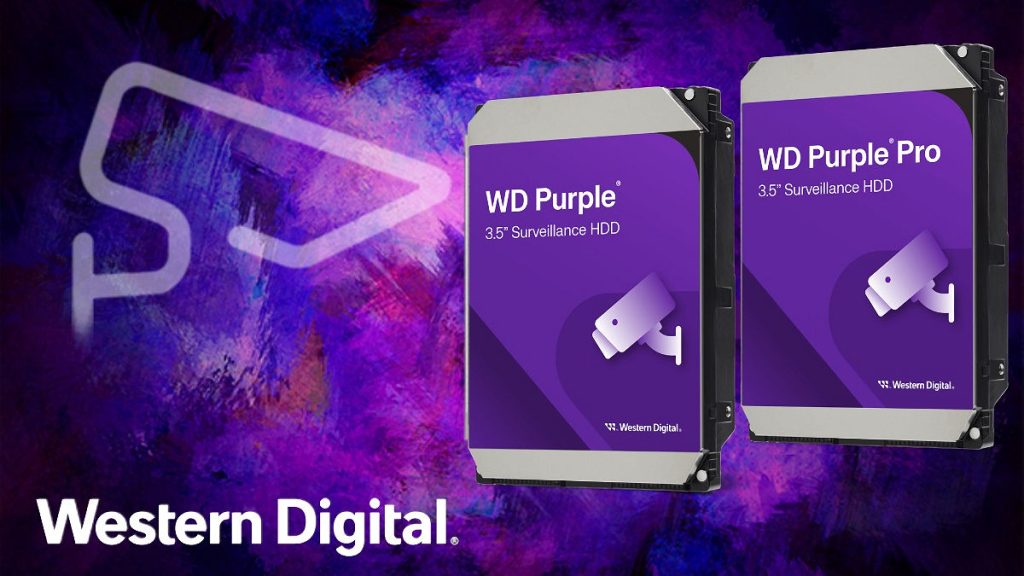
Australian supplier CCTV Supplies reported in its inhouse blog recently that prices for surveillance-grade drives including WD Purple and Seagate SkyHawk had risen by an average 46-60 per cent over the previous year – that’s a big jump, especially on bigger applications.
The pressure is not confined to surveillance drives. Seagate CEO Dave Mosley said in July that data centre demand represented about 90 per cent of the company’s exabyte shipments and that the “vast majority” of its nearline HDD capacity was already allocated into calendar 2028 under long-term supply agreements.
And the other storage behemoth Western Digital is seeing the same change. The company said in February that 90 per cent of its revenue was being driven by AI and cloud applications, while its 40TB UltraSMR drives were moving towards volume production in the second half of 2026. WD said it plans to extend ePMR HDD technology to 60TB and HAMR drives to 100TB by 2029 – what these will cost in the current climate doesn’t bear thinking about.
If you’re thinking SSD might be a price haven forget about it – flash storage cost increases are nuttier still. TrendForce reported this month that enterprise storage products remain in short supply as AI and cloud demand drives significant increases in average memory selling prices.
And revenue for the world’s 5 largest enterprise SSD suppliers reached nearly $US37.59 billion in Q2 2026 as shipment volumes and prices increased – no mention of margins but it’s hard not to imagine a little fat on bones.
Industry data we’ve seen for August put 30TB enterprise TLC SSDs at around $US22,600, that’s around 6 times the price they were fetching a year earlier and 18.6 times the per-terabyte cost of equivalent HDD capacity. And NAND contract prices were reported up another 10-15 per cent in Q3 following increases of 70-75 per cent and 55-60 per cent in the preceding quarters – there’s going to be no let up.
Meanwhile, Seagate research released this week found 99 per cent of 2712 enterprise technology decision-makers expect AI to increase their storage requirements during the next 3 years, while 32 per cent expect requirements to grow by more than 50 per cent. It’s a perfect storm.
As an industry commentator SEN likes to assert bold opinions, but we increasingly find it hard to predict the future with a feeling of certainty. When it comes to storage costs installers, integrators and end users can be sure of one thing – costs will increase and they will need to be managed carefully with a weather eye on risk management.
We think the endless cost increases mean that – unlike me at Officeworks – integrators are better to buy the highest quality storage from quality providers offering the longest warranties and to commission it in the cleverest possible way without compromising the quality of image streams.
You can find Seagate’s recent report on AI storage requirements here – there’s more SEN news here.
“AI Storage Demand Fires HDD And SSD Prices Into The Stratosphere.”