




The Waratah’s 626
carriages (78 trains) are expected to be progressively introduced into
passenger service from late 2010, as part of the New South Wales Public Private
Partnership (PPP) project between RailCorp and Reliance Rail. The Waratah is
being designed, manufactured and delivered by the Downer EDI Rail (DEDIR) –
Hitachi Joint Venture, on behalf of Reliance Rail.
“These cameras
are designed specifically for transport,” said Wai King Wong, country manager,
Australia and New Zealand, Axis Communications.
“They are very
slim, very light and are designed to withstand prolonged and vigorous
vibrations.”
Each train will
have 98 networked IP cameras ensuring that the full length and breadth of each
carriage can be monitored to provide enhanced security and safety for
commuters.
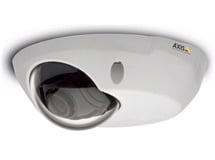
The palm-sized
Axis 209MFD-R network cameras have been specifically designed for mass transit
and are flat, discreet and tamper resistant. The cameras also utilise
progressive scan technology which provides full resolution of moving objects
with no distortion.
“Flexibility is
one of the strengths of the IP solution, which also provides multiple lens
options,” said Wong.
Designed
specifically for handling vibrations, humidity, dust and temperature
fluctuations that are typical of mass transit vehicles, the cameras are
connected via Power over Ethernet (PoE) using the train’s communication
network, which eliminates the need for separate power cables.