




Q: Price – what’s
the cost of an SD5 fixed full body camera? An SD5 vandal resistant fixed dome
camera?
A: we are
delighted to say the pricing for both the fixed body and vandal resistant SD5
cameras will be the same at the current SD3 models but with much, much more in
the way of functionality and features.
Q: The release of
SD5 clear indicates that Panasonic retains a strong commitment to analogue
surveillance camera technology, doesn’t it?
A: Yes the
analogue products are still a major product line for Panasonic, Pacom and the
CCTV market in general. Panasonic’s commitment to development of both analogue
and IP technologies is evidence of its deep knowledge of security specialists’
need for both IP and analogue. Further evidence of this is the way in which the
new Digital Recorders will compliment the range as well as taking advantage of
new SD5 features that include I-VMD (Intelligent Video Motion Detection), which
consists of Video Motion Detection, Object Detection (Abandoned and Removed)
and Scene Change Detection.
Q: The heart of
SDIII was a double speed CCD with advanced DSP to grab the bright and dark
portions of the image and then recombine them into a single frame enhanced by
digital contrast correction. Is SD5 the same in this regard?
A: It is dual
speed CCD technology plus a lot more. Panasonic has added two existing
technologies the double CCD technology plus the adaptive black stretch
technology, these two wide dynamic technologies are combined to give an even
wider dynamic picture. A third ingredient I-VMD (Intelligent video motion
detection) is also added to the mix. I-VMD enhances the picture where motion is
occurring. Add to this the 650TVL and you get a very smart camera. What is
great is that the improvements are not subtle, they are a quantum improvement.
Q: Is it right to
say that SD5 Super Dynamic technology represents a composite of a number of
different capabilities like Image Stabilizer, Scene Change Detection, Auto
Tracking, Motion Vector, Motion Area Edge Difference and Image Data Value –
same as it was with SD3?
A: The term SD5
really relates to the image reproduction only but as with SD3, SD5 will quickly
become generically identified as a technology that includes what you mentioned
plus I-VMD, 650TVL, ABF, superior low light performance and scene change
detections.
Q: What are the
key differences between SD3 and SD5 in the simplest terms?
A: Key
differences are 650VTL, 0.1 lux low light performance in colour. The wide
dynamic technology for the SD5 is very different, since it now integrates three
technologies together, SD (super dynamic) +ABS (adaptive black stretch) + I-VMD
(intelligent video motion detection). The SD3 was simply super dynamic
technology only.
In addition a lot
more features have now been added to the SD5. Such as analytics, including left
and removed object detection, loitering, and directional detection, plus scene
change detection – all in one package!
Q: Which are best
features of this new camera in your opinion, from the point of view of
installers and end users?
A: For installers
the ‘auto-back-focus’ is definitely up there. The one button push to focus a
camera is brilliant. And for end users the superior wider dynamic range is
great. My personal favourite is the built in edge analytics which will be a
great feature for end users. Alarm handling and monitoring via existing coax
back to the upcoming new DVR range will also benefit end users too.
Q: What is
adaptive digital noise reduction and how does it improve picture quality in an
SD5 camera?
A: The adaptive
digital noise reduction in the SD5 prevents video noise in the image without
the effect of image blurring due to moving objects.
Q: Could you
further explain the functionality of I-VMD?
A: I-VMD when
used together with the Super-Dynamic function and the adaptive back stretch,
enhances the picture where motion is occurring. I-VMD also includes
left/removed objects, loitering, and directional detection analytics.
Q: Has the
dynamic range of the new camera been improved?
A: Yes since the
adaptive black stretch (ABS) function has been added to the SD function, it
allows the iris of the camera lens to close slightly giving better clarity in
any bright areas of the picture.
Q: Let’s talk
about resolution – 650 lines – that’s the highest resolution ever for an
analogue camera. Given your experience, can you see the improvement in picture
that SD5 delivers on a typical monitor? What about in playback? Does the higher
resolution translate into superior recorded images all other things being equal?
A: What it means
is that although the monitor or digital recorder may in some cases “only” have
a 500TVL resolution limit. The clarity of the image is fully maintained right
up to the 500TVL cut off. That is, there is no slight dropping of the image
quality as it approaches the 500TVL limit. Therefore image display and
recordings are improved. The SD3 camera was outstanding but when you compare to
the new SD5 the clarity, sharpness and colour reproduction are an obvious
quantum shift improvement.
Q: Will DVRs,
encoders, network hardware and all the rest need to be tuned to handle the
additional image quality or will the camera simply deliver better images under
all circumstances?
A: No tuning will
be required. SD5 cameras just deliver superior visual performance. In addition
the new Panasonic Digital recorders will feature an HDMI output to improve the
display of high resolution cameras and extend display options.
Q: In terms of
installing and configuring an SD5 camera – is it as easy as SD3 or are there
additional steps and considerations?
A: You still have
the superb ABF (auto back focus) which is a massive time saver that will remove
many hours of setup, so focus is as easy as ever, and ensures 24/7 perfect
focus in both colour and black and white mode. You now also have analytics on
board to configure but now you are able to download camera settings to a
Panasonic DVR, so you now have back-up capability for CCTV camera
configurations!
Q: If you were
installing a camera to get the best performance – what sort of general
configuration would you employ – taking into account the variables of a given
site?
A: In most cases
factory default is going to be just fine, Panasonic has chosen the default
camera settings to cater for most applications. Changes may be necessary for
some site specific conditions, for example use of shutter to capture number
plates on moving cars. Also the new SD5 camera can use camera scene files to
optimise for day and night conditions.
Q: Panasonic’s
claimed minimum scene illumination numbers are the most realistic in the
industry – what sort of low light performance can reasonably be expected from
an SD5 camera in the field?
A: We are glad
you mention this. Panasonic has always been very sensible in stating sensible
minimum usable scene illumination levels. SD5 is now a low 0.1 lux for Colour
at F1.4 and 0.01 lux black and white!
Q16: Is there
going to be an SD5 PTZ camera and if so, when will it be available?
A: Yes SD5 in PTZ
domes is coming, but date of release is not finalized yet.
Q: What are the
external IP ratings of the fixed dome and full body camera?
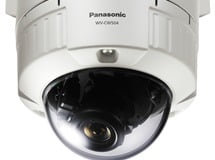
A: The WV-CP500
series fixed camera requires camera housing. The WV-CW500 series fixed vandal
resistant dome has an IP66 weatherproof rating. It also features a dehumidification
device to prevent moisture build up in the dome due to condensation.
Q: Is there any
difference with the lenses on the new SD5 cameras?
A: The new SD5
camera cannot use the old video servo-type lens this is because SD5 performance
is better with DC servo lens. We recommend that like a high performance car you
not put retreads on it, so we recommend a Panasonic lens or a well known
quality branded lens.
Q: In terms of
getting the new SD5 cameras onto a network, does this require an encoder? There’s
no IP connectivity onboard is there?
A: No there is no
IP connectivity and yes you would have to use an encoder. But watch this space
there is more to come in the new Panasonic i-pro range.
Q: This is the
first big Panasonic release since distribution was taken on by Pacific
Communications – it must be an exciting time for the team?
A: One of the
reasons we took on Panasonic was that they could clearly demonstrate their
development path on both IP and analogue. Only 6 months into the relationship
and they have delivered with spades. We are over the moon.
Q: What else can
we expect from Panasonic and Pacific Communications over the next 12 months –
will there be additional releases?
A: In the coming
months we will see new Digital Video Recorders with HDMI outputs and there will
be widescreen monitors and some great new IP cameras. The Security 2009
exhibition in Sydney late August will be a launching pad for many new products
from Pacom all which take huge leaps forward in both analogue and IP.
Q23: Alongside this release of SD5 is Panasonic MEGA
SD megapixel camera – do you see these 2 products as offering end users a
perfect combination of high end analogue and megapixel performance across a
range of applications?
Ans: Yes, the Panasonic product offers a great range
to suit all applications. The new I-Pro Mega super Dynamic megapixel camera
will be launched at the Security 2009 exhibition as well. This new range will
include Super Dynamic technology as well as sensational IP/megapixel camera features
all with the Panasonic renowned stamp of quality, reliability and the backing
and support of Pacific Communications. Pacom’s product road map has never been
more exciting and the next 6 months will be the packed full of new releases.
Q: How do you feel
about SD5 yourself, Kieron? How good is it? Is this undisputedly the best
analogue camera available today?
A: You know,
analogue camera development has been incrementally small over the last few
years and we were wondering where an analogue camera could really improve. But
Panasonic has jumped the field and set a new benchmark that places it clearly
above all others. It is amazing how good this new camera is, you can see the
difference clearly and I just love all the great features the camera has – I-VMD
is my personal favourite.