What’s the Best Way To Remove Light Rust From Chromed Tools?
What’s the Best Way To Remove Light Rust From Chromed Tools Without Using Harsh Chemicals And Is ACF-50 The Best Way To Keep Them Protected?
What’s the Best Way To Remove Light Rust From Chromed Tools – As you suggest there are plenty of metal polishers in the world, but many are abrasive to polished chrome surfaces.
After many years of cleaning motorcycle chrome in our spare time, we’d say the most effective method of cleaning light rust from chromed surfaces is water with a little dishwashing liquid applied with a ball of aluminium foil.
There are chemical reactions behind this process relating to a galvanic process induced between aluminium and iron oxide such that the foil skives off the rust’s oxygen atoms. However it works, we know that foil and water (with a little vinegar for tougher spots) is so effective it will return surfaces looking well on the road to ruin to near new in a way that is giggle-inducing.
Alongside the fact the chemical reaction between aluminium and iron oxide causes rust to break down, foil is softer than the underlying chrome and falls apart rather than scratching, which is exactly what you want when cleaning expensive metal components.
It’s best to clean tool surfaces first then and dry them but there’s nothing complicated about it. Just dab your foil ball into the soapy water and rub gently. This process raises a grey-ish slurry – you can hose or wipe it leaving a pretty much perfect chromed surface.
Our experience with the fuel cap of an Enfield 500 Classic suffering from sub-surface bubbling suggests there are limits to what’s possible with foil and water but if your lovely hand tools – box wrenches and socket sets – only have surface rust, this is the way.
What’s the Best Way To Remove Light Rust From Chromed Tools?
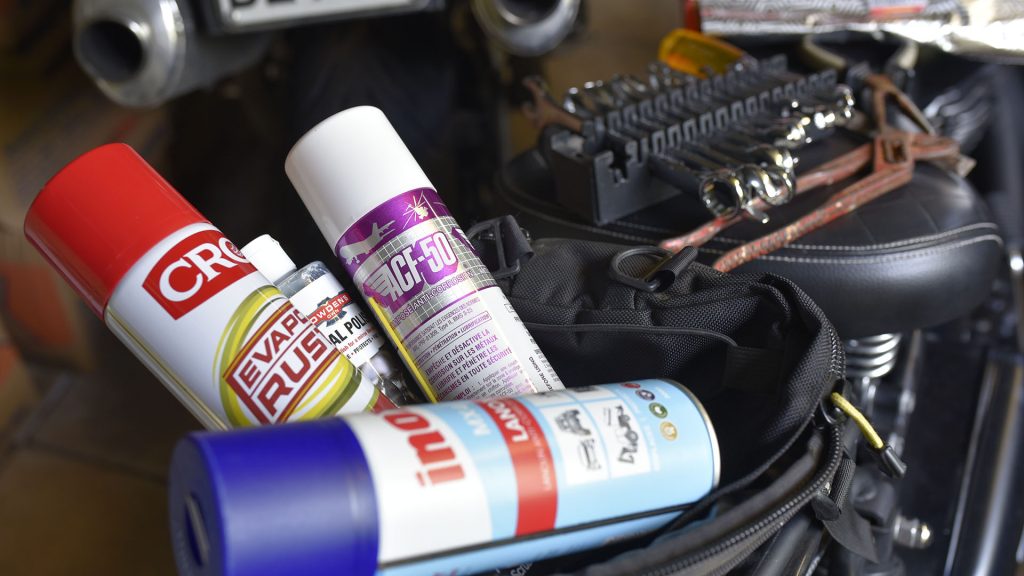
When it comes to ACF-50 – which was designed for aircraft – this product is formulated to protect chromed and stainless surfaces from rust. Unlike things we typically use – Inox, light machine oil and WD-40 that leave a sticky residue – ACF-50 excludes water, neutralises electrolytes, including salt, and creates a protective layer that is meant to last for up to a year.
You need to get your surfaces as clean as possible before applying it and while there are spray cans we’d probably spray into a dish and then brush or wipe it on. Things like Inox and WD-40 applied under pressure are also prone to making a huge mess – Inox is particularly annoying like this – it goes everywhere and leave you looking (and smelling) sheepish.
Depending on what you’ve used to protect your tools in the past you may need to degrease them. That doesn’t mean you need a pro-grade degreaser. Soapy water works. For heavier layers a splash of kerosene on a pair of reggies living a second life as a polishing cloth will remove oil and grease surprisingly well.
So, thanks for the tip on ACF-50 – we’ll report back on whether it’s the best thing to protect tea-stained yacht winches, grungy motorcycle spokes and rusty tools as soon as we’ve mustered the energy to clean them.
The short versionFoil and soapy water to clean, ACF-50 to keep it that way
1Clean and dryWash the tool first; soapy water does it. Kerosene and an old cloth shift heavier oil and grease.
2Ball up some foilDab a ball of aluminium foil in water with a little dishwashing liquid. Add a splash of vinegar for tougher spots.
3Rub gentlyA grey slurry forms as the rust lifts. The foil falls apart before it can scratch the chrome.
4Hose or wipe offWhat is left should be close to new chrome. Dry it before you protect it.
Why it worksAluminium is softer than chrome, so the foil crumbles instead of cutting. A galvanic reaction between the aluminium and the iron oxide helps break the rust down, though SEN’s view is that the result matters more than the chemistry.
What it suitsSurface rust on chromed hand tools, box wrenches and socket sets, motorcycle chrome and similar polished surfaces. Not for painted or anodised finishes.
Where it stops. Sub-surface bubbling (rust under the plating, as on the Enfield fuel cap) is beyond foil and water. If the chrome has lifted, cleaning will not bring it back.
Then protect it
Product
Residue
Applying it
Lasts
ACF-50
Excludes water, neutralises electrolytes including salt
Spray into a dish and brush or wipe on; clean the surface first
Up to a year, per the maker
Inox
Sticky
Goes everywhere under pressure
Not stated
WD-40
Sticky
Messy from the can
Not stated
Light machine oil
Sticky
Wipe on
Not stated
Source. Method, limits and product comparisons are SEN’s own experience as described in this article, from years of cleaning motorcycle chrome. The ACF-50 claims (water exclusion, salt neutralisation, up to 12 months) are the manufacturer’s; SEN has not yet tested it and will report back.
Questions readers askFoil, vinegar, pitting and ACF-50
Will aluminium foil scratch chrome?
Not in SEN’s experience. Aluminium is softer than the chrome plating, so the foil ball breaks up and turns to slurry instead of cutting the surface. Use light pressure and plenty of soapy water.
Do I need vinegar?
Only for tougher spots. Plain water with a little dishwashing liquid handles most light surface rust; a splash of vinegar helps where the rust is more stubborn.
Does it fix pitted or bubbled chrome?
No. Foil and water deal with surface rust. Where rust has formed under the plating and the chrome has bubbled or lifted, cleaning cannot restore it.
Do I have to degrease before applying ACF-50?
Yes, get the surface as clean as possible. Soapy water is usually enough; kerosene and an old cloth will shift heavier oil or grease left by earlier protectants.
How is ACF-50 different from WD-40 or Inox?
The maker says ACF-50 excludes water, neutralises electrolytes such as salt and leaves a protective layer rated for up to a year. WD-40, Inox and light machine oil leave a sticky residue and are messy applied from the can. SEN has not yet tested ACF-50 on tools.
Where does ACF-50 come from?
It was developed for aircraft and is sold in aerosol cans. SEN suggests spraying into a dish and brushing or wiping it on rather than spraying tools directly.
Source. Answers restate this article. ACF-50 performance claims are the manufacturer’s, not SEN test results.
You can learn more about ACF-50 here or read more SEN news here.
Reader question · Workshop
Got a tip that beats foil and soapy water? Send it in
SEN will report back on ACF-50 once the yacht winches, spokes and rusty tools have been cleaned. If you have a method, a product or a before-and-after worth sharing, the editorial desk wants it.
ACF-50 link is to an Australian stockist and opens in a new tab; SEN has no commercial arrangement with it.
“What’s the Best Way To Remove Light Rust From Chromed Tools Without Using Harsh Chemicals And Is ACF-50 The Best Way To Keep Them Protected?”
What’s the Best Way To Remove Light Rust From Chromed Tools?
”
Join the conversation
What’s your read on this?
SEN readers are the people doing the work — installers, integrators, engineers, specifiers and end users. If you’ve got hands-on experience, a correction, or a view worth arguing, put it below.
A professional writer and editor who has been covering the security industry since 1991, John is passionate about clever applications of technology and the fusion of sensing and networking. A capable photographer John enjoys undertaking practical reviews of the latest electronic security systems.
Dicker Data Completes Sektor Acquisition Following October Announcement Of NZ$138 Million Deal.Dicker Data Completes Sektor Acquisition - Dicker Data...
Advanced Security Group Wins Tamworth Council Security Services Contract.Advanced Security Group Wins Tamworth Council - Tamworth Regional Council has...
Software-Based Fire Trips Are Dangerous And May Impact Mandated Fail-Safe Standards In Access Control Systems.Software-Based Fire Trips Are Dangerous...