





HomeArticlesMolybdenite Offers True Starlight CCTV Cameras

Molybdenite Offers True Starlight CCTV Cameras

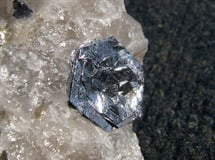
The technology described by EPFL has 5 times the light sensitivity of current technology and would allow usable CCTV imaging down to 0.002 lux – the equivalent of starlight – without using noise-generating amplification techniques, slowing down the shutter speeds or using external light sources.  The objective of the EPFL researchers was to demonstrate molybdenite’s […]

sen>SEN.news
More from SEN
    All coverage
    Bookmark
    Page is Bookmarked

    RECOMMENDED

    WEATHER

    Sydney
    light rain
    15.6 ° C
    16.5 °
    14.8 °
    78%
    0.5m/s
    98%
    Sat
    17 °
    Sun
    21 °
    Mon
    22 °
    Tue
    23 °
    Wed
    17 °

    Latest Articles

    RECOMMENDED

    The technology described by EPFL has 5 times the light sensitivity of current technology and would allow usable CCTV imaging down to 0.002 lux – the equivalent of starlight – without using noise-generating amplification techniques, slowing down the shutter speeds or using external light sources. 
    The objective of the EPFL researchers was to demonstrate molybdenite’s potential in image sensors. For this reason, their sensor only has a single pixel yet it needs 5x less light to trigger a charge transfer than the silicon-based sensors that are currently available. 
    “Our main goal is to prove that MoS2 is an ideal candidate for this kind of application,” explains EPFL researcher, Andras Kis.
    Molybdenite’s extraordinary properties make this performance possible. Like the silicon used in currently available sensors, molybdenite requires an electric current, which comes from the battery. To generate a pixel, the charge generated by the light energy must be greater than the threshold current from the battery.
    A single-atom layer of molybdenite requires only a very small electric charge to function. Because of this, it takes much less light energy to reach the threshold needed to generate a pixel. MoS2 is a naturally abundant, inexpensive material. In addition, Kis explains, the prototype doesn’t require any other semi-conductors, which should greatly simplify manufacturing processes. 

    AUTHOR

    SEN News
    SEN Newshttps://sen.news
    Security & Electronics Networks - Leading the Security Industry with News and Latest Events. Providing information and pre-release updates on the latest tech and bringing it all to you daily. SEN News has been in print for over 20 years and has grown strong as a worldwide resource in digital media.
    The people who specify, install and sign off security read SEN.Display, newsletter and sponsored content across Australia’s security industry.19,000+Monthly readers37,000+Page views200,000+Ad impressionsSee rates & specs →Google Analytics 4 · July 2026