





How Long Can An Integriti Zone Loop Be On A Very Large Educational Site?
How Long Can An Integriti Zone Loop Be – We’d say your source of truth for all things Integriti is the Inner Range team but there are a few things we can say about monster wired zone loops on any hardwired system.
When you’re stretching a zone loop you’re really dealing with 2 limits that blur in the field. One is at what distance the panel can electrically interpret a zone state when dealing with resistance and noise. The other is how far you can push 12V power down a cable on which a sensor is being powered by a panel or expander.
The first variable tends to fail quietly and intermittently. The second fails more obviously when voltage drops below the device’s operating threshold. Note that an Integriti input is fundamentally a supervised circuit. The panel is looking for a defined resistance based on your EOL configuration, whether that’s single or dual EOL. That means the loop can tolerate some resistance from the cable, but not an unlimited amount.
As total loop resistance rises, the panel starts to lose clarity between normal, alarm, and tamper states. There isn’t a single published maximum length because the outcome depends on cable gauge, the number of terminations, whether devices are powered from the loop, the EOL values in use and the electrical environment. We’d say that with a decent 4-pair security cable of reasonable gauge, you can usually operate reliably over a few hundred metres and expect a clean supervised input. You might even go further on some sites.
Beyond that, resistance and noise begin to work against you and behaviour becomes less predictable. How unpredictable depends on things like induced noise, the nature of the environment, the physical nature of the cable run, the age of the cable run, moisture, the quality of terminations, the age of supporting batteries, etc.
Voltage drop is what tends to catch people out, though the nice thing about drop is that it’s possible to bridge a device’s entire (arguably invisible) cable run with a test cable so as to readily ascertain drop is the issue. If the sensor works fine with the bridge installed, the zone loop is the issue though finding exactly where is the trick.
Consider that a detector might nominally run at 12V, but over distance the resistance of the cable reduces voltage available at the device under load. You might install a long run and see it working perfectly on day one, only to have problems emerge months or years later. Terminations oxidise, environmental conditions shift, and small increases in resistance add up.
Devices experiencing voltage drop misbehave in subtle ways. PIRs may not reset properly, reed loops may chatter, tampers may appear intermittently, alarms may come and go with temperature changes. These are the kinds of faults that consume a tech’s time because they are inconsistent – give us a good old-fashioned short circuit any day.
Moving to your second point, if you add a second device into the loop, you increase electrical complexity and you increase the sum of current draw. Additionally, more cable and more joins means more potential resistance and more opportunity for induced noise. Additional current draw also means greater voltage drop – all the usual issues are turbocharged when there are 2 sensors in a loop.
If the original run was already near its practical limit, adding another powered device means you need to pull the zone loop back towards the power source to regain some voltage headroom. If the devices are passive contacts, the issue shifts towards resistance stacking and supervision accuracy rather than current draw, but the loop still becomes more sensitive to drift and will be harder to fault-find.
For younger techs, the trap is assuming that if it works during commissioning, the job is done. Long loops often work initially, then degrade slowly and unpredictably and end up making the end user lose faith. What you are really deciding with quality installation work is whether you are building something that will remain stable over time or something that will generate intermittent faults that are difficult to diagnose in years to come.
EOL resistors are your reference point, and over long distances the cable itself starts to become a meaningful part of the resistance equation. The longer the run, the more the cable resistance represents a percentage of the EOL value, and the more likely noise or minor degradation will shift the apparent resistance enough to create ambiguity. Dual EOL configurations are particularly sensitive to this tendency over long runs because you’re effectively asking the panel to distinguish between multiple resistance states across a circuit that is no longer electrically clean.
Cable quality and terminations become critical as distance increases. Larger conductors reduce resistance and doubling up cores for power can help reduce voltage drop. Clean, solid terminations are essential, and mixed metals or poor joins will come back to nip you over time.
It’s tempting to use the, in complex cable runs when you’re adding a sensor but junction boxes do not extend range in any meaningful sense – they simply introduce more connection points, which, even when executed extremely well, become additional sources of resistance, signal failure and false alarms. If you add a junction box, you need to re-do the math.
When choosing a route, external runs can be more direct and therefore shorter, but they carry greater exposure to moisture, UV, physical damage and electrical interference. Internal runs are often longer and less direct, but they tend to be more stable over time. Long external runs also behave more like antennas, picking up mains interference, switching noise and transient events, which can lead to phantom alarms and unstable zone behaviour.
Having scratched our heads over this and talked to a couple of techs we’ve decided there isn’t a practical way to boost a traditional dry contact loop. Once you start thinking about buffering or conditioning the signal you are effectively acknowledging that the architecture is wrong for the distance. At this point, it makes more sense to consider a local input expander or a different transmission method altogether.
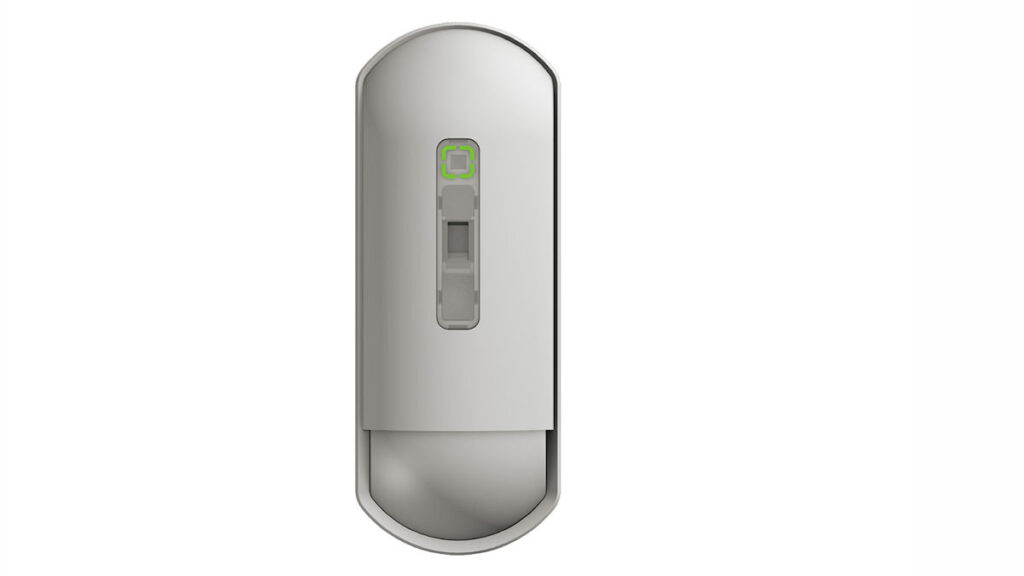
It’s in long runs that wireless starts to make a practical case – especially outdoors. A properly deployed wireless sensor, supported by a repeater where required, removes voltage drop from the equation and avoids extended copper runs altogether. It introduces different considerations, such as battery management and RF planning, but in marginal long-distance scenarios it is often the more controlled and predictable solution.
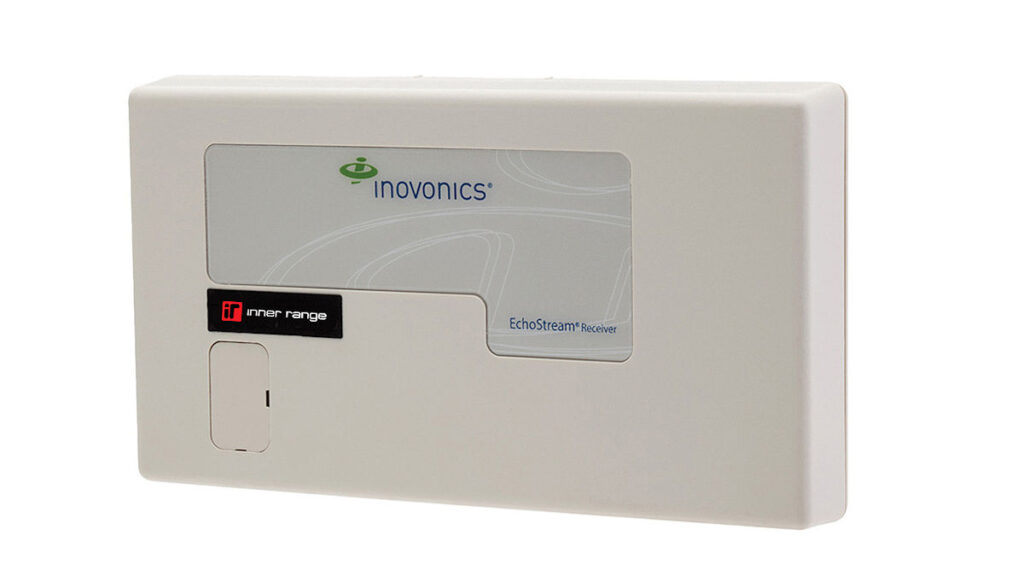
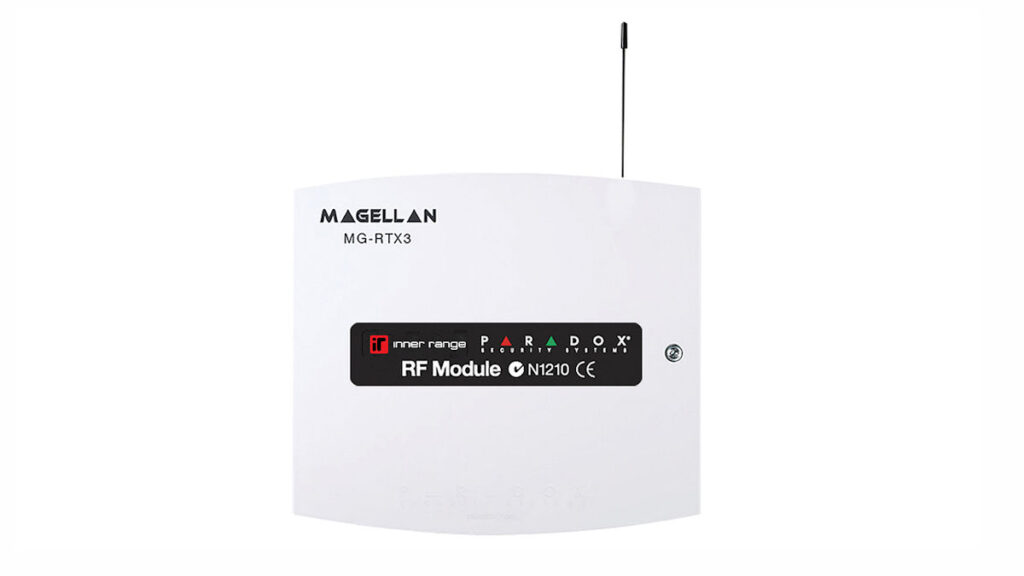
Happily, when it comes to Inner Range Integriti, you have some quality wireless add-ons to play with – the system supports the Paradox RF Expander Module and the Inovonics RF Expander Module. These are solutions from quality manufacturers and being long term Inner Range partners you’ll get seamless integration.
The sensible approach is to keep wired zones short, clean and well within electrical limits, building in margin for inevitable loss, rather than working all the way to the edge of the laws of physics. Getting a loop to function is straightforward. Keeping it stable over time is the real measure of your skill as an installer.
You can read more about Inner Range Integriti here, or find more SEN news here.
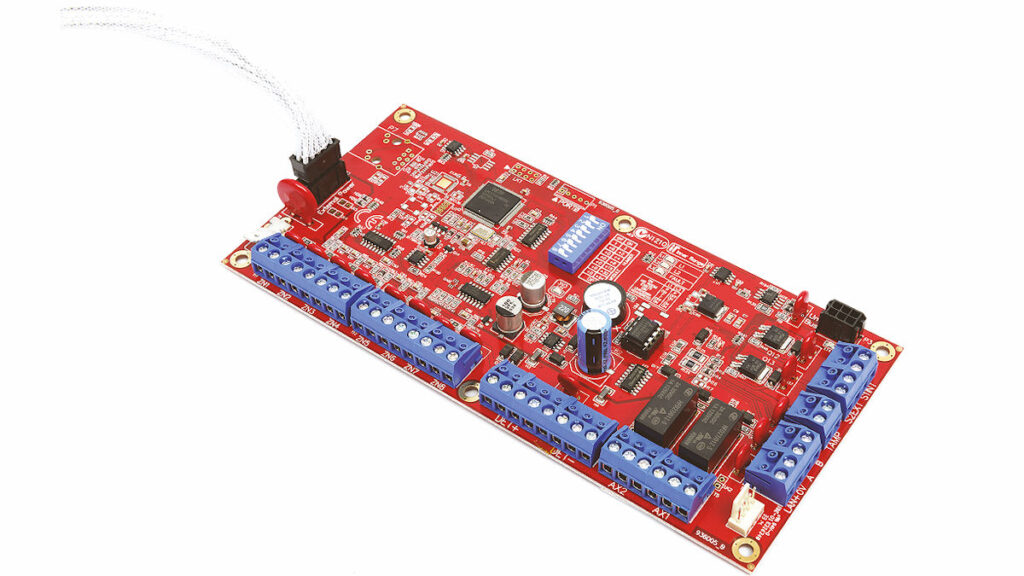
N.B. Our lead image isn’t showing a zone loop per se – it’s comms – but it looks so good we can’t bring ourselves to tell the graphic designer…
“How Long Can An Integriti Zone Loop Be On A Very Large Educational Site?”