





First Aid For Electrical Burns: Immediate Response And Safe Handover.
First Aid For Electrical Burns — Electrical burns are not like thermal burns. What you see on the skin is often the least of the problem. Current passing through the body can cause deep tissue damage, cardiac disruption and internal injury that is not immediately visible to panicking security technicians.
First aid needs to be fast, controlled and based on safety, because the rescuer can easily become the next casualty. The first step is to make the scene safe. Do not touch the casualty until the power source is isolated. Switch off at the mains, isolate the circuit, or use a non-conductive object to separate the person from the source if isolation is not immediately possible. Secondary injuries occur when someone grabs a casualty who is still live – don’t be that person. Should the person still be holding a live conductor, you can punch their wrist away from the conductor but wear gloves.
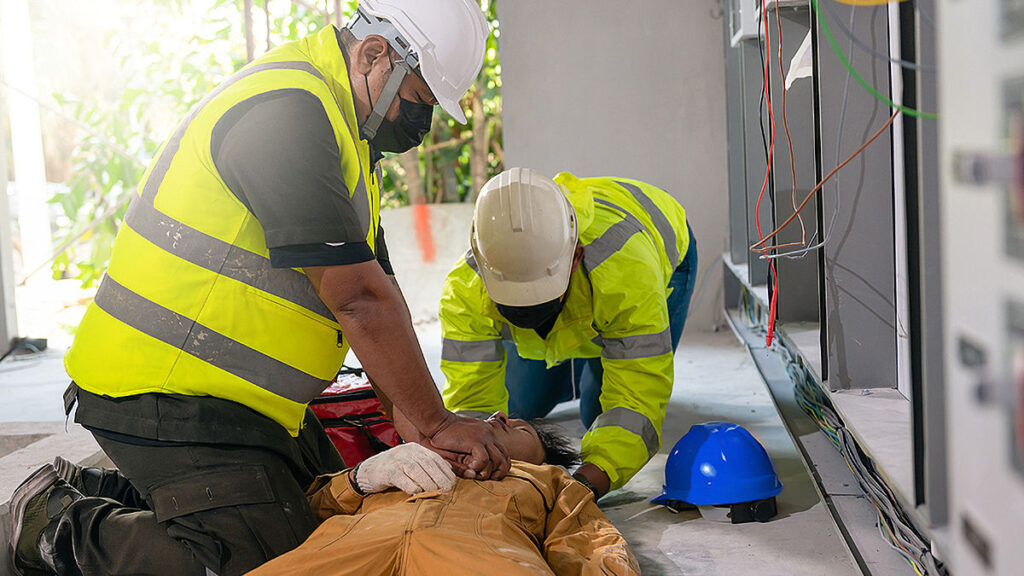
Once the source is isolated, and it is safe to approach, check responsiveness and breathing. If the person is unresponsive and not breathing normally, call emergency services immediately and begin CPR using standard compression and ventilation protocols. Writing this down makes it sounds so simple. Every member of your team should do a first aid refresher course every year to ensure techniques are the front of mind.
Electrical incidents carry a real risk of cardiac arrest, even from relatively low voltages – your vehicles should carry an AED for your staff, as well as for assisting workers around you. if the casualty is breathing, keep them still and calm. Movement can worsen internal injury. Call for an ambulance and treat the situation as a medical emergency, regardless of how minor the external injury appears.
When dealing with the burn itself, follow standard burn first aid, but with the understanding that electrical burns may have entry and exit wounds and deeper damage along the current path. Remove any smouldering clothing or jewellery if it is safe to do so, but do not pull away anything stuck to the skin.
Cool the burn with cool running water for 20 minutes. This remains the current best practice and having tried on our own burns, we concur that it makes a real difference. Do not use ice, iced water, creams, gels or ointments. Cooling reduces tissue damage and pain and is one of the most effective interventions you can make in the field. Get a hose if possible but use a bucket if not.
After cooling for 20 mins, cover the burn with a sterile, non-stick dressing or clean cloth. Cling film can be used in a pinch. Wrap loosely. The goal is to protect the wound, not compress it.
Signs of deeper injury include entry and exit wounds, muscle pain or weakness, irregular pulse or chest discomfort and confusion or loss of consciousness. Look for these characteristics so you can better inform the paramedics when they arrive.
In the meantime, even if internal injuries are not obvious, assume internal injury is possible. Shock is a real risk. Keep the casualty warm and lying flat unless breathing is compromised. Do not give the patient any food or drink and monitor breathing and responsiveness continuously while waiting for paramedics.
If the incident involved high voltage or prolonged contact, be particularly cautious. These cases are more likely to involve deep tissue damage and delayed complications.
When handing over to ambulance crews they are going to want to know what happened and how the contact occurred, estimated voltage or source if known, duration of contact, loss of consciousness, first aid provided, including cooling time using running water. That information helps guide immediate treatment and triage – bear in mind throughout.
In electrical work environments, preparation matters. First aid kits should be properly stocked, access to isolation points should be clear, AEDs should be functional, team first aid courses should be up-to-date, and techs should understand both the risks and the response. If you’re responding to an electrical injury, the response needs to practised – you don’t want team members playing response by ear.
You can learn more about low voltage first aid courses here, or read more SEN news here.
“First Aid For Electrical Burns: Immediate Response And Safe Handover.”