OPTEX ACCURANCE OV-102 Solves Tailgating – See It At SAGE On The BGW Technologies Stand!
OPTEX ACCURANCE OV-102 Solves Tailgating – Ahead of SAGE 2026 in Canberra, BGW Technologies’ sales manager NSW & ACT Graham Clark explains how the OPTEX ACCURANCE OV-102 closes one of access control’s most overlooked gaps.
“Access control is very good at deciding who can open a door,” Clark explains. “What it can’t do on its own is see who actually walks through that door.”
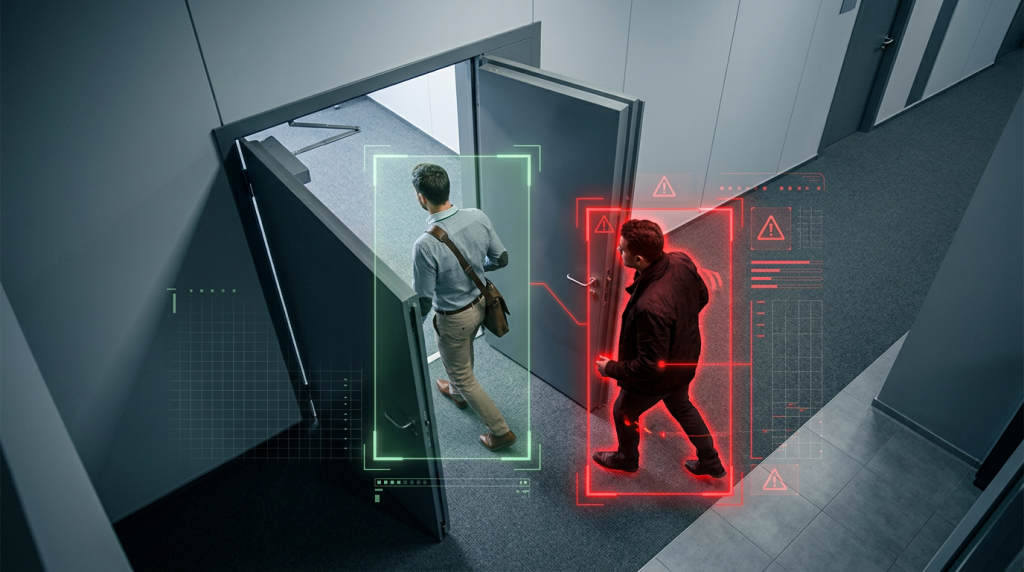
2+people in the detection area = warning signal
OPTEX ACCURANCE OV-102 · anti-tailgatingOne credential. Two people. One sensor that counts.Access control decides who may open the door. The OV-102 watches who actually walks through it. Let it play, or pick a scenario.
Auto-playing both
Door status
People in detection area0
Credential—
OV-102 outputIdle
Alarm & warning lampOff
Automatic unlockArmed
Single entry: one authorised person approaches the door.
Illustrative sequence drawn by SEN from BGW Technologies’ description and OPTEX’s published scenario diagrams (detection lines A and B); not to scale. The tailgate run shows both responses BGW describes — alarm and warning lamp, and disabling automatic unlocking. OPTEX lists three response levels, from alert/deterrence to prevention, chosen per site.
For Clark, this is where tailgating becomes a problem.
“A credential confirms that one person is authorised,” he says. “It tells you nothing about the second person who follows them in. For government sites, data centres and laboratories, that gap is a genuine risk.
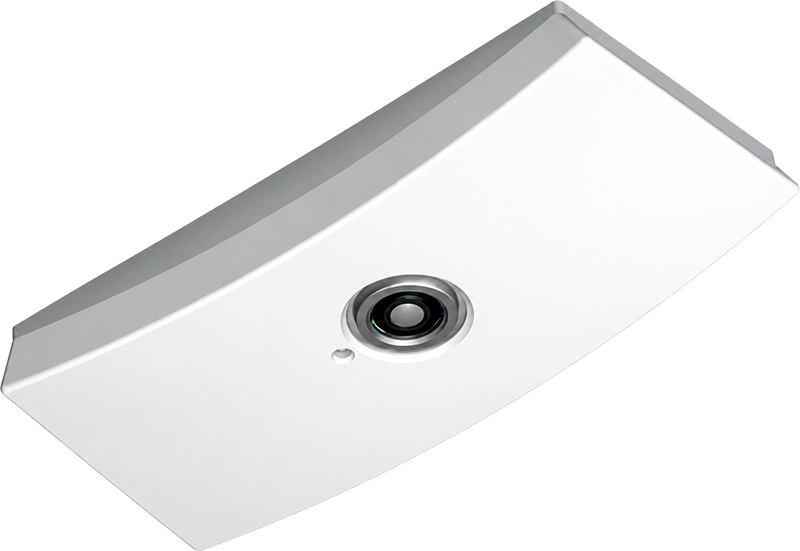
“ACCURANCE OV-102 is a ceiling-mounted sensor built to close this gap. Using proprietary human-tracking technology and vector focusing image processing, it detects people moving through the entry with a high degree of accuracy.
“When 2 or more people are detected in the zone, the OV-102 sends out a warning signal. That can trigger an alarm and warning lamp at the door and signal the electric lock control board to disable automatic unlocking, so the deterrent happens in real time.”
According to Clark, for installers the appeal lies in how easily it fits around what is already on site.
“The OV-102 interfaces with access control systems via dry relay contact,” he explains. “It’s configured through a web browser over the LAN and can then be installed in an existing building without changing the room layout.
“This really acts to strengthen an existing system and that makes for a much easier conversation when it comes to upgrades - the solution can then be scaled to the site's security level requirements and a client’s budget.
“Tailgating is a very specific vulnerability, and the OV-102 gives installers a precise answer to it – don’t miss it at SAGE, Realm Hotel November 19,” Clark says.
Three ways through a doorThe scenarios the OV-102 is built to catchOPTEX defines three situations that trigger an output, using two detection lines drawn across the entry. Pick one.
Diagram: OPTEX
Scenario 1Tailgating entryAn output is generated when an unauthorised person follows an authorised person across detection line A and then detection line B.In plain terms: someone badges in and a second person follows them through before the door closes. OPTEX notes this is one-way — protecting both directions needs a second set of the system.
Diagram: OPTEX
Scenario 2Cross entryAn output is generated for an unauthorised entry made while an authorised person is exiting.In plain terms: the door is open for someone leaving, and someone else slips in against the flow. Nobody presented a credential to come in, so the reader alone never sees it.
Diagram: OPTEX
Scenario 3Multiple detectionAn output is generated when multiple people remain in the detection area.In plain terms: two people are waiting at the door when the credential is presented. This is the case BGW’s Graham Clark describes — 2 or more people in the zone — and it can act before the door opens.
Line A · outer edge of the detection area, non-secured sideLine B · along the doorDetection area · adjustable after installation
System configurationHow the OV-102 sits beside your access controlOPTEX’s own system diagram, read left to right: the anti-tailgating system is a separate layer that trades signals with the access control system already on site.
Diagram: OPTEX
1
Two partsThe OV-102S(E) detection unit on the ceiling above the door, and the OV-102CB(E) control box.
2
Signals in from access controlAuthorisation, locking and opening signals, so the system knows when a credential has been accepted and the door released.
3
Signals back to access controlTailgating signals and multiple detection — per BGW, presented as a dry relay contact to the existing system.
4
Network and powerSet up through a web browser over the LAN with no special software. OPTEX’s diagram shows a PoE hub as an option.
5
Images, tooOPTEX says the system can output images captured by the detection unit — useful alongside an existing camera and DVR.
Three response levels, chosen per site
Level 1Alert / deterrence
Level 2Deterrence / simplified prevention
Level 3Prevention
SEN’s reading: the alarm and warning lamp BGW describes sit at the alert/deterrence end; disabling automatic unlocking is prevention. OPTEX also offers an escort function so a visitor without credentials can be brought in without tripping an alarm.
You can register for SAGE here, learn more about BGW Technologies here or read more SEN news here.
19Nov 2026Thursday
See it on the standOPTEX ACCURANCE OV-102 on the BGW Technologies stand at SAGE 2026Hotel Realm, 18 National Circuit, Barton ACT · exhibition floor and seminars 9:00am–4:00pm · free for registered attendees. Ask Graham Clark to walk you through the three scenarios.
Date, venue, hours and free entry are as published by SAGE (securityandgovernmentexpo.com); the countdown runs to 9:00am AEDT on the day.
OPTEX ACCURANCE OV-102 Features
OPTEX ACCURANCE OV-102 · featuresTwo questions at every secured doorAccess control answers the first. The OV-102 answers the second.
Access controlIs this credential authorised?Decides who can open the door.
OV-102How many people are going through?Sees who actually walks through it.
2+People in the zone triggers a warning
3Detection scenarios
3Response levels
10–20,000Lux operating illuminance
DetectReal-time anti-tailgating: warning signal the moment 2 or more people are in the entry zone3D human-shape modelling and tracking using proprietary human-tracking and vector focusing image processingTailgating, cross entry and multiple detection scenariosOPTEXDirection-determining: movement in a set direction, people lingering in an area, multidirectional countingOPTEX
RespondOn-site deterrent: alarm and warning lamp output at the doorLock control: signals the electric lock control board to disable automatic unlockingThree response levels from alert/deterrence to preventionOPTEXEscort function for visitors without credentialsOPTEX
Install & configureCeiling mount above the entry, no change to the room layoutInstalls on an existing door; door cancel ignores door movement on the sensor sideOPTEXDry relay contact to existing access controlWeb browser over LAN, no special software; area and sensitivity adjustable after installationOPTEX
Where it fitsRetrofit-friendly: makes the most of existing facilities and reduces capital investmentScalable to the site’s security level, installation environment and budgetHead counting and traffic flow as secondary usesOPTEX
Government facilitiesData centresLaboratoriesInformation storage rooms
Untagged lines are as stated by BGW Technologies; lines tagged OPTEX are as published by OPTEX (optex-europe.com). Not stated in either source: mounting height, detection area dimensions, a detection accuracy figure, power draw, relay ratings, operating temperature, IP rating or certifications. Confirm against the OPTEX datasheet or with BGW before specifying.
“OPTEX ACCURANCE OV-102 Solves Tailgating – See It At SAGE On The BGW Technologies Stand!”
OPTEX ACCURANCE OV-102 Solves Tailgating 3
Questions & AnswersOPTEX ACCURANCE OV-102: what installers are askingHow does the OPTEX ACCURANCE OV-102 detect tailgating?
A ceiling-mounted detection unit tracks people through the entry using 3D human-shape modelling. OPTEX describes a tailgating entry as an unauthorised person following an authorised person across detection line A and then detection line B; the OV-102 generates an output when that happens.
What is the difference between tailgating, cross entry and multiple detection?
Tailgating is a second person following an authorised person in. Cross entry is someone entering while an authorised person is leaving. Multiple detection is two or more people remaining in the detection area — the case BGW describes, where the warning fires before the door opens.
What happens when the OV-102 detects a tailgate?
It sends a warning signal that can trigger an alarm and warning lamp at the door, and can tell the electric lock control board to disable automatic unlocking. OPTEX offers three response levels, from alert/deterrence to prevention, chosen to suit the site.
Will it work with my existing access control system?
BGW says it interfaces with access control via dry relay contact and installs in an existing building without changing the room layout. OPTEX adds that it fits an existing door and exchanges authorisation, locking, opening and tailgating signals with the access control system.
How is the OV-102 configured?
Through a web browser over the LAN, with no special setup software. OPTEX says the detection area and sensitivity can both be adjusted after installation.
Does one OV-102 protect a door in both directions?
No. OPTEX states that tailgating detection is one-way and that two-way entry needs a second set of the system. Plan for one set per direction you need to protect.
Can visitors without a credential be let in without triggering an alarm?
OPTEX lists an escort function that allows a visitor without authorised credentials to enter the secured area. How it is triggered on site is not described, so confirm the operation with BGW.
What mounting height and detection area size does the OV-102 support?
Neither BGW’s release nor OPTEX’s product overview states the mounting height, detection area dimensions, power requirements or relay ratings. Check the OPTEX datasheet or ask BGW Technologies before specifying.
”
Join the conversation
What’s your read on this?
SEN readers are the people doing the work — installers, integrators, engineers, specifiers and end users. If you’ve got hands-on experience, a correction, or a view worth arguing, put it below.
Security & Electronics Networks - Leading the Security Industry with News and Latest Events. Providing information and pre-release updates on the latest tech and bringing it all to you daily. SEN News has been in print for over 20 years and has grown strong as a worldwide resource in digital media.
ASIAL Awards Night Celebrates Industry's Highest Achievers In Melbourne.ASIAL Awards Night Celebrates Industry's Highest Achievers - Organised by the...
Wangaratta Seeks Security Service And Maintenance Contractor To Support Alarms, Access Control, CCTV And Associated Systems.Wangaratta Seeks Security Service...