




Why Australian Workplaces Need Identity Convergence Of Physical And Network Security.
Why Australian Workplaces Need Identity Convergence – Many Australian workplaces are now permanently hybrid, mobile and distributed, with employees moving between corporate offices, home workspaces, customer sites and cloud platforms throughout the working day.
This mobility empowers productivity but demands secure, robust and frictionless credentialing across every touchpoint.
Today’s workers demand instant, adaptive authentication that blends biometrics, tokens and passwords into a single, trusted credential. Meanwhile, employers prioritise resilience against escalating threats, such as phishing and AI-driven attacks, while building unified technology platforms that integrate physical and digital systems.
This convergence of physical and digital identities is gaining greater momentum. According to the HID 2026 State of Security and Identity Report, a global survey of more than 1500 end users and industry partners, 75 per cent of organisations have either deployed or are evaluating integrated identity solutions.
For Australian businesses, that shift is becoming increasingly urgent as cyber threats intensify and compliance expectations rise. The Australian Cyber Security Centre continues to report increases in malicious cyber activity, including an 83 per cent increase in the 2024–25 financial year alone.
Convergence unifies disparate systems into a single, resilient framework, eliminating silos and reducing vulnerabilities at their source. It positions organisations to operate securely in an environment of ongoing cyber threat, while meeting the expectations of a modern workforce.
In many organisations, physical and network security operate separately, typically backed by different vendors and credentials. An employee might swipe a badge to enter the building, enter a password for their workstation, and use another method to access cloud applications. These disconnected systems increase vulnerabilities, complicate audits, and add cost and effort to managing identity across the enterprise.
Managing multiple credentials across dispersed workforces also creates operational complexity and expands the attack surface for cybercriminals.
For identity and access management leaders, the business case increasingly comes down to governance, evidence and operations. Convergence applies consistent policies and assurance levels across every access point. Evidence provides auditable proof of who had access and why. Operations reduce manual effort while making identity management more scalable across the employee lifecycle.
Converged credentials that unify physical badges, passwords and digital tokens into a single layer reduce points of failure created by siloed systems. This approach enables centralised policy enforcement, real-time threat detection across domains, and more efficient auditing, supporting improved resilience against evolving threats.
As identity management takes on increased importance, organisations are exploring the integration of physical and digital systems through converged technologies, according to the HID report.
Organisations are prioritising seamless integration to simplify security operations, with 73 per cent of survey respondents identifying this as a leading trend. This reflects a broader shift towards consolidated platforms that bring fragmented systems into a unified framework.
Managing multiple systems remains a key challenge, cited by 52 per cent of respondents, prompting 60 per cent to increase investment in more streamlined solutions. Many organisations are seeking to reduce vendor complexity by adopting platforms that support employee credentials, visitor access, multi-factor authentication and physical identity and access management within a single environment.
These platforms are also expected to support consistent governance across the joiner, mover and leaver lifecycle, ensuring access is granted, adjusted and removed in line with organisational requirements.
At the same time, constraints remain. Limited budgets, user friction, compliance requirements and cloud integration challenges continue to impact deployment. However, consolidation offers potential gains in reduced overhead, improved security and a more consistent user experience.
Physical and digital identity convergence is accelerating, with 75 per cent of organisations either deploying or evaluating unified solutions. The use of a single credential across buildings, networks and cloud applications reduces complexity while strengthening overall system resilience. Increasingly, organisations are moving beyond the question of whether to adopt convergence and are focusing on how best to implement it.
Converged credentials provide a single authentication layer for both physical and logical access. By leveraging phishing-resistant standards such as FIDO2 and PKI, this approach reduces exposure to credential-based attacks and supports a more secure identity framework.
Key advantages include improved visibility across access points, simplified compliance through consolidated auditing, and more efficient provisioning and revocation across systems.
This approach also improves operational efficiency. New staff can be provisioned with access to facilities, devices and applications at onboarding, while access can be removed immediately when no longer required. Zero-trust principles can also be applied, supporting continuous verification regardless of location or device.
In the Asia Pacific region, 84 per cent of organisations report that they have either deployed or are evaluating convergence technologies, according to the HID survey.
What ae the converged credential features to look for? When evaluating credential solutions, organisations should look for platforms that support a unified lifecycle across physical and digital access. This includes stronger authentication, simplified operations, consistent user experience, and clear audit and compliance capability.
Effective solutions should also support multiple form factors to suit different environments and user requirements, including:
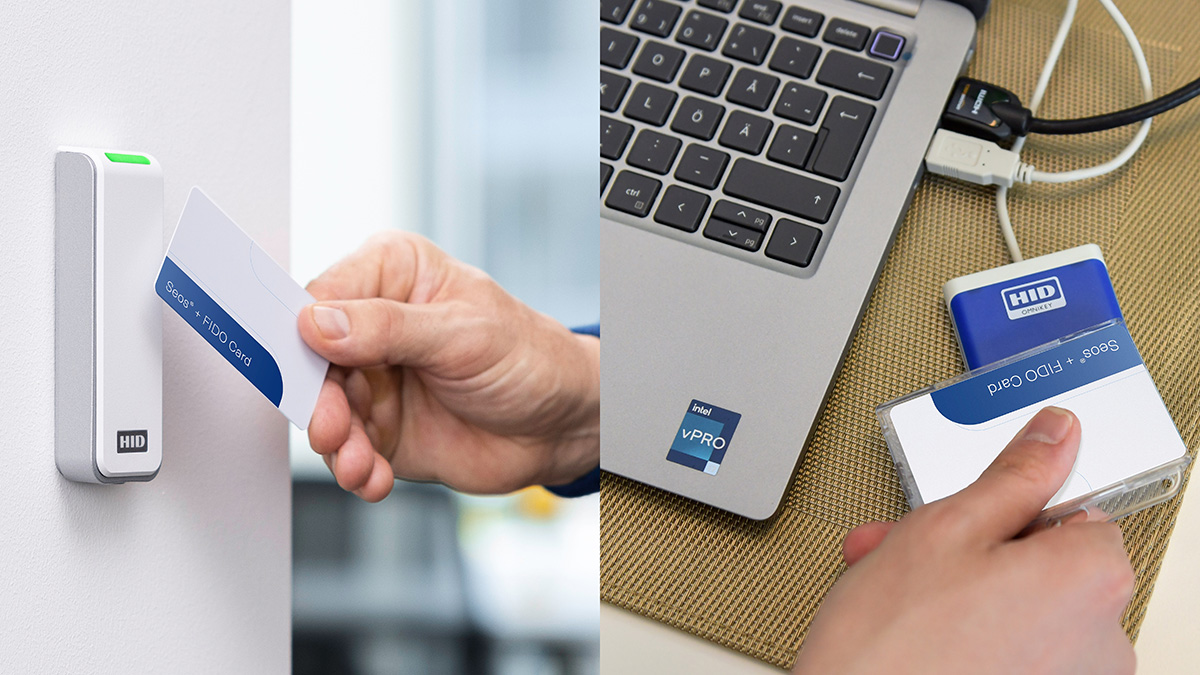
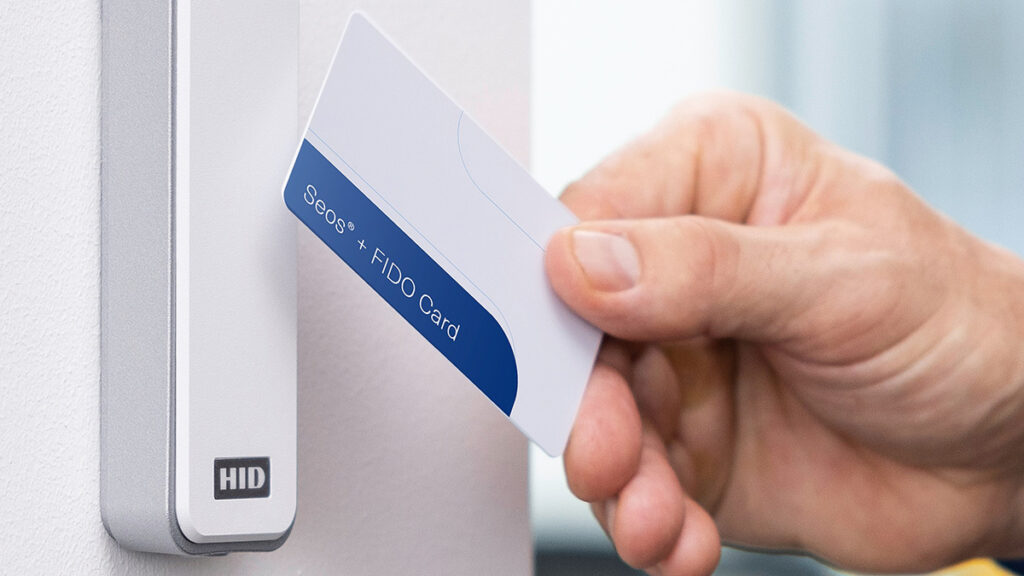
A single credential supporting both physical access and phishing-resistant digital authentication using FIDO2, PKI and OATH
Portable authenticators for secure access to workstations and cloud applications
NFC-enabled readers to support environments where mobile devices are not practical.
These options allow organisations to deploy appropriate credentials for different use cases while maintaining a unified identity framework.
As hybrid work continues to expand across Australia, organisations can no longer manage physical and logical access as separate systems. Converged credentials address this by enabling a single, secure credential across buildings, workstations and cloud environments.
This approach reduces complexity, improves security, simplifies compliance and supports a more consistent user experience.
By consolidating identity into a single framework, organisations can strengthen security, streamline operations and provide users with reliable access across a distributed working environment.
You can learn more about HID here or read more SEN news here.
“Why Australian Workplaces Need Identity Convergence Of Physical And Network Security.”