



Do microwave beams always have a symmetrical cigar-shaped patterns? Also, if a detection zone is right at the limit of the sensor’s range, will there be more chance of false alarms?
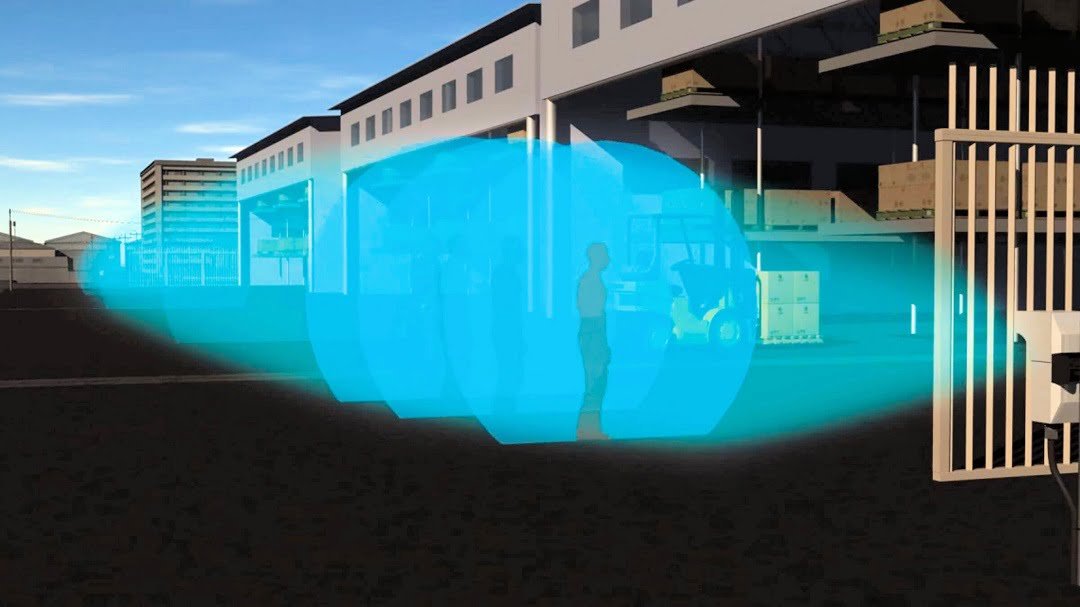
A: Microwave detection zones are more or less symmetrical, though something to bear in mind when planning microwave sensor installations is that while theoretical detection patterns are symmetrical, in reality they will be distorted by ground, walls, buildings and other objects adjacent to the target area. Typically, microwave beams are as wide as they are high towards the centre, which is halfway between transmitter and receiver. The further transmitter and receiver are apart, the wider the pattern will be.
We’d say that any security sensor operating at its limits could have more chance of false alarms but it’s likely these limits have been factored in by the manufacturer – microwave is a mature perimeter security technology. Importantly, a microwave detector will be modulated to enhance signal processing to improve sensitivity while reducing the possibility of false alarms. The receiver will demodulate a microwave signal from the transmitter and, during this process, will tweak signal level in relation to the circuit threshold for an alarm using an auto gain control. A particular advantage is that microwave detectors with auto gain typically don’t require sensitivity adjustment in the field.
We’d recommend you talk to experts in the field when planning a microwave application like this – there’s plenty to think about, including range, overlap, regulations and much more.
#securityelectronicsandnetworks.com