



S-Transistors Driving Faster AI, Sensing And Quantum Computing.
S-Transistors Driving Faster AI – One of the fundamentals of technological breakthroughs is that they are lateral, with integration of development leading to paradigm shift.
It’s in the light of accelerating AI development that the concurrent, slower, and much less heralded development of quantum computers should be seen.
S-Transistors superconducting transistor is built around the Josephson field-effect transistor, or JoFET, in which electrostatic gate voltage controls a superconducting current.
The key aspect here is that the S-Transistor delivers electrical control of superconducting current through related electrical paths at very high speed with almost no resistive loss – no resistive heat.
The use case for an S-Transistor would be to switch and route control signals inside a cryogenic quantum computer system where a quantum processor handles processing via qubits.
Superconducting quantum computers require cryogenic cooling, while much of the electronics controlling their qubits – weird state-less beasts that expand the binary nature of current transistors in all directions – remains outside the cryostat and are at room temperature.
This separation of modules means that individual qubits require wiring between related modules, making quantum computers expensive to build and run, especially at scale.
In these applications S-Transistors would potentially eliminate the need for the vast wiring loom that dives down from room temperature electronics into the cryogenic processing chamber. Instead processing and switching could occur in the cryostat at room temperature and generate almost no heat.
According to the S-Transistors team, the capabilities of the technology extend beyond quantum computers. Potential applications include artificial intelligence, high-performance classical computing, advanced sensing and particle detection, spacecraft electronics and quantum computing.
In security, these capabilities could eventually contribute to faster AI processing, sophisticated sensor systems and the analysis of very large quantities of data at extremely low power.
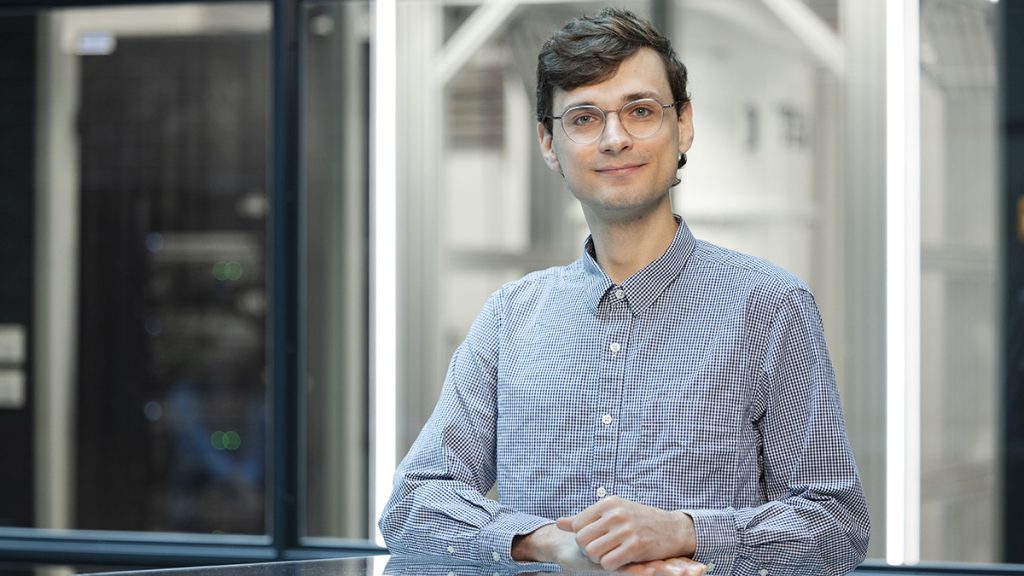
“Today's efforts in scaling cryogenic quantum computers have delivered tremendous progress, with several practical use cases already demonstrated,” said S-Transistors co-founder and CEO Dr Heorhii Bohuslavskyi.
“Superconducting transistors are exactly that missing piece of hardware for large-scale, energy-efficient quantum computing.”
S-Transistor’s technology is notable in the context of AI because technological change is always enhanced when technologies are combined. Future AI capability will involve concurrent developments in processors, semiconductor architectures, memory, networking, sensing, energy efficiency - and quantum computing.
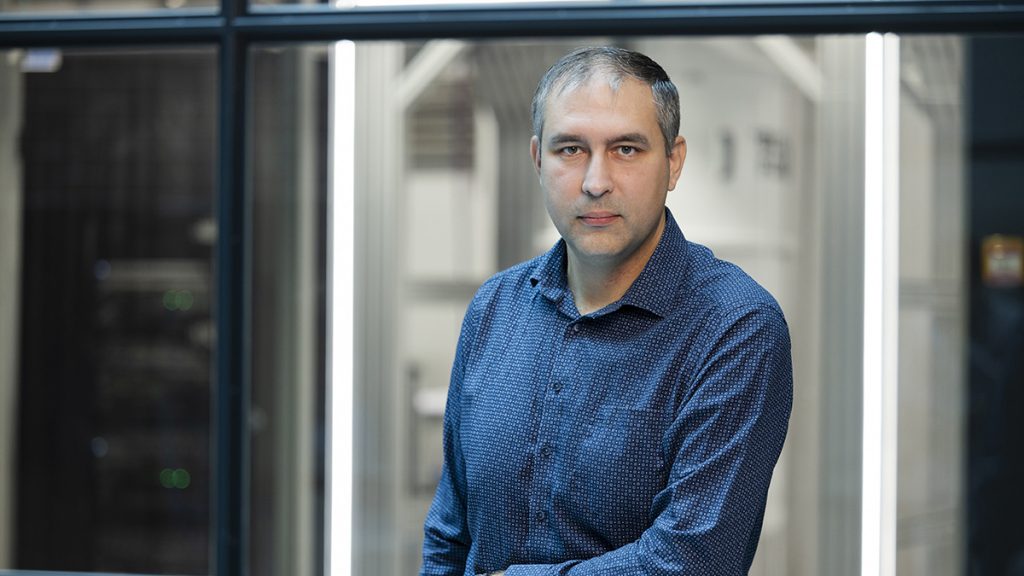
"When you think about it, the transistor is the most mass-manufactured device in human history,” said S-Transistors co-founder and CTO Dr Andrey Generalov.
“By combining the transistor functionality, with its unparalleled computing potential, and the superconducting property of near-zero power dissipation in a single device, we can reach a completely new level of energy-efficient cryogenic computing.”
You can follow S-Transistors here for further updates or read more SEN news here.
“S-Transistors Driving Faster AI, Sensing And Quantum Computing.”