




Insignia Financial Standardises Access With Protege GX Across National Footprint.
Insignia Financial Standardises Access With Protege GX – When Insignia Financial separated from NAB and consolidated its national property portfolio under a single security platform, it faced a combination of legacy systems, mixed card technologies and a large network of sites across Australia.
Working with ICT partner, Electronic Security Technologies (EST), Insignia Financial has standardised its access control environment on the Protege GX SaaS platform, ultimately bringing more than 15 sites onto a single system.

The programme introduced more than 5000 dual technology cards, migrated a 5-level, 36-door Parramatta site in 4 days with no major downtime, and delivered integrations with Active Directory and Yellowbox workplace management software.
The Protege GX web client also removed the need for dedicated on-site management hardware, while automated weekly card activity reporting supports real estate occupancy decisions. A dedicated, branded access portal provides a streamlined entry point for authorised users.
“It started as a really small project – 1 door in Newcastle,” explains Nathan Cayirylys, managing director Electronic Security Technologies.
“We put Insignia Financial onto our SaaS platform and from that one door, we’ve rolled out a national programme across 15 sites – never underestimate the size of a project!”
According to Cayirylys, the initial deployment acted as a proof of concept before the programme expanded into a national access control deployment supporting Insignia’s property portfolio and migration to a single enterprise-wide security platform.
EST was referred by Insignia Financial’s Facilities team to deliver access control services across 4 regional offices in Newcastle, Canberra, Albury and Wollongong. Each site was migrated to EST’s hosted Protege GX SaaS platform, creating a centrally managed security environment.
The engagement expanded as Insignia relocated its national headquarters from Kent Street to Parkline Place in Sydney and separated its technology environment from former parent company NAB. This required multiple sites, including Docklands in Victoria and Parramatta in New South Wales, to be transitioned rapidly from NAB’s legacy security infrastructure while maintaining business continuity.
An early discussion with Insignia’s property and technology teams centred on which access control platform should be standardised across the organisation.
A Wide Access Control Strategy
Rather than focusing solely on the platform, EST encouraged the team to consider the wider access strategy. Cayirylys said EST introduced card interoperability, using the Australian Defence Force’s Defence Common Access Card (DCAC) programme as an example of how a single credential can provide access across multiple sites regardless of the underlying access control platform.
After consideration, Insignia ultimately standardised on Protege GX as its national management platform, while the broader strategy remained focused on flexibility, scalability and user experience.
“The Protege GX web client was a huge win for Insignia,” Cayirylys said. “They didn’t need to install software on dedicated machines, and administrators could manage the whole estate from a browser.“
The application is even more complex that it first appears. Insignia’s portfolio included buildings managed by different base-build operators, each using proprietary card systems. The access solution needed to operate within those environments without requiring building managers to change their infrastructure.
EST deployed dual-technology cards using HID’s 13.56-bit iClass component for base-build access, compatible with existing iClass DESFire card reader technology, with the DESFire EV3 component for Insignia’s corporate access control carrying its dedicated corporate key set. This approach allowed a single credential to provide tenancy and building access at the vast majority of sites.

In Hobart, where the base-build system was Challenger-based, EST engineered a bespoke card overlay solution for approximately 100 users. More than 5000 cards had been issued across the national estate by the time the programme reached full momentum.
Rapid Migration Across Live Sites
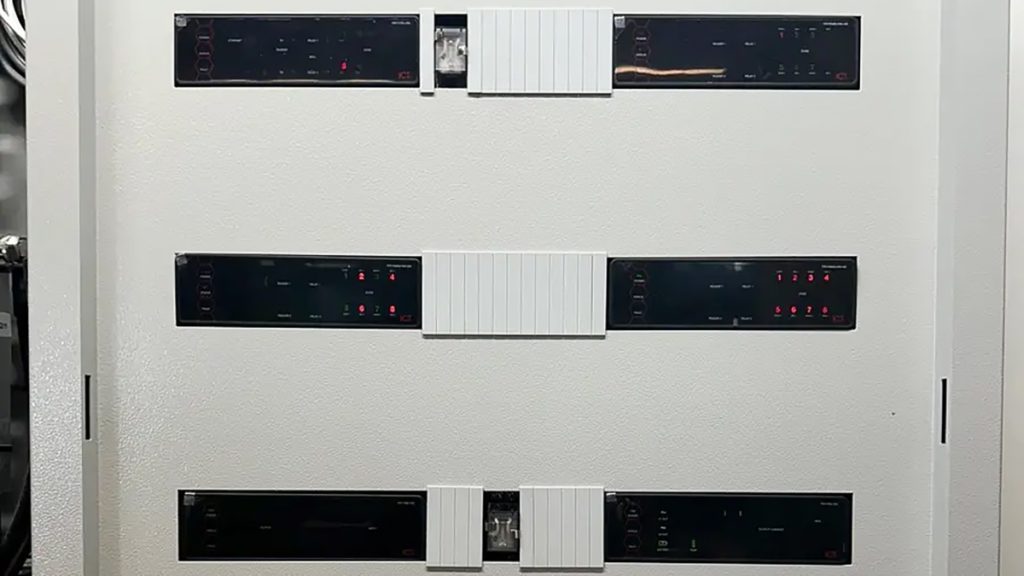
Delivering the national access control programme across a live financial services environment required compressed implementation timeframes, with security, availability and operational continuity treated as non-negotiable requirements.
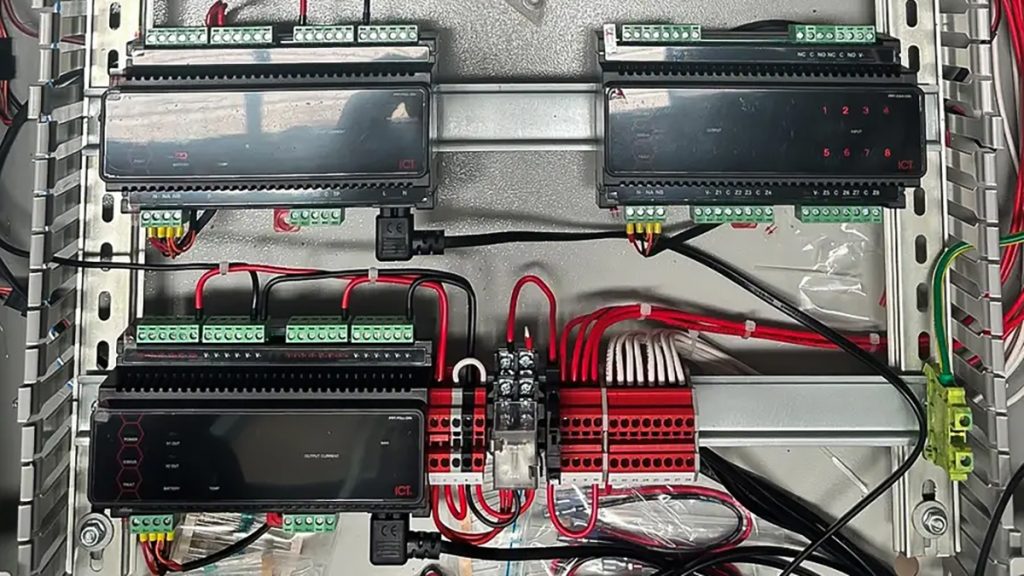
EST adopted a pre-deployment methodology in which every controller was assembled, programmed and witness-tested in its workshop before deployment. Inputs, outputs and reader assignments were configured in advance, allowing installation teams to concentrate on installation, commissioning and validation while minimising programming in the field.
At Insignia’s Melbourne headquarters, more than 50 doors across 3 levels were migrated in under 2 weeks. Meanwhile, at Parramatta, a 5-level office with 36 doors was transitioned in 4 days.
Importantly, each migration was staged during planned maintenance windows. Security personnel were briefed in advance, contingency arrangements were confirmed, and existing systems remained operational until the new environment had been validated.
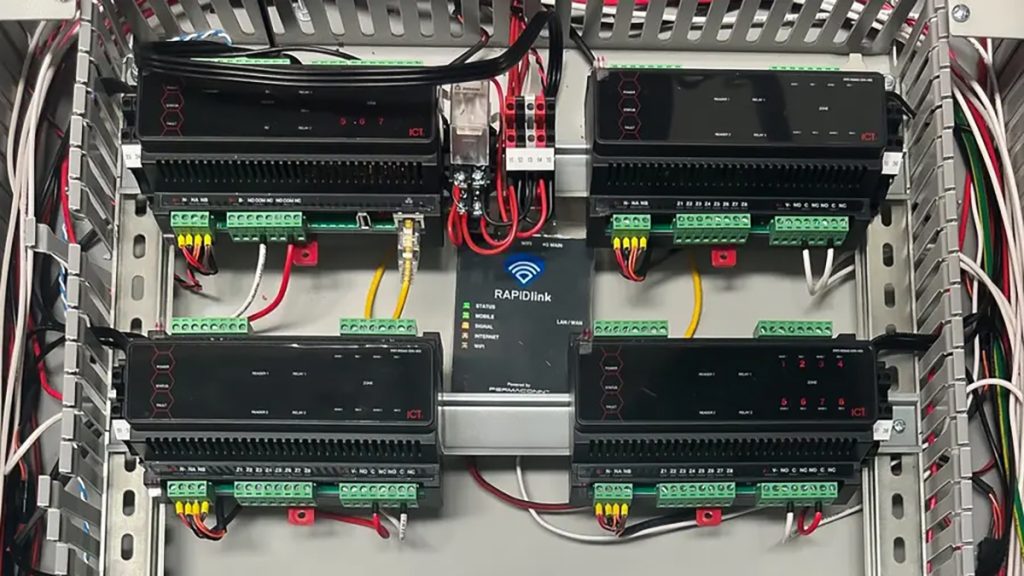
Each major site required approximately 40 to 50 hours of engineering and planning before installation. That preparation supported efficient delivery, limited disruption to business operations and provided a controlled transition with reduced implementation risk.
“For a client operating in financial services, there was no room for trial and error,” Cayirylys says. “The engineering, documentation and testing had to be completed before we arrived on site. That preparation gave everyone confidence that each migration could be completed safely, efficiently and with minimal disruption to the business.“
Integration With Business Systems
The Insignia deployment extended beyond access control, with 3 significant integrations built around the Protege GX platform. Firstly, Protege GX was connected to Insignia’s corporate Active Directory infrastructure, providing single sign-on for system administrators and reducing the overhead associated with user provisioning across the national estate.
Next, EST developed a custom integration between Protege GX and Yellowbox, Insignia’s hot-desk booking and floor management platform. The integration correlates badge-in events, Wi-Fi logins and desk booking data to generate occupancy intelligence.
This allows Insignia to assess whether leasing 6 levels of a building is justified or whether space can be consolidated, with the resulting decision having a direct financial consequence.
Weekly card activity and user reports are generated and distributed automatically from Protege GX, feeding operational and compliance workflows without manual extraction.
And the Yellowbox integration means access control data is now being used to inform real estate decisions, rather than simply controlling doors.
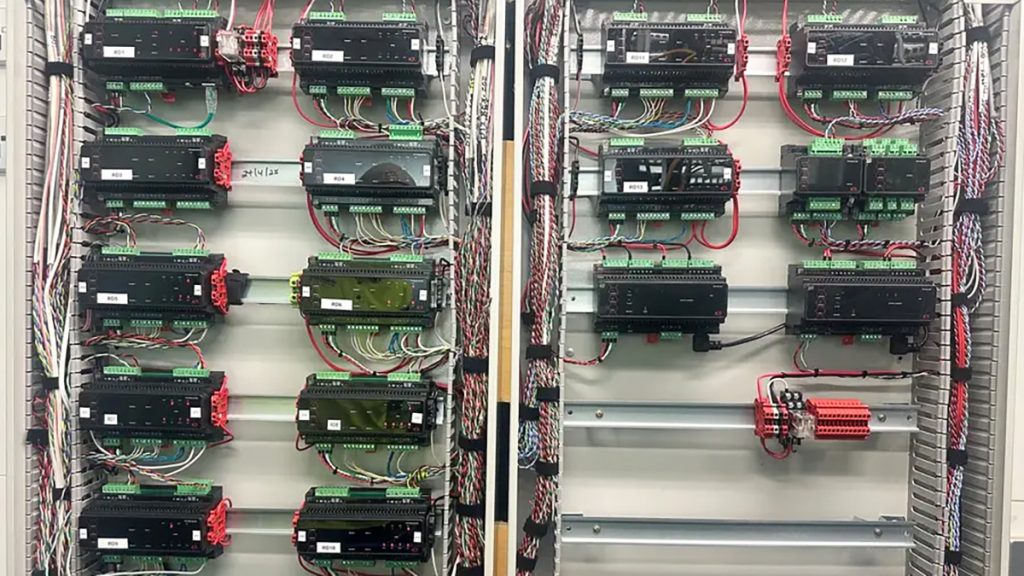
For EST, the project has reinforced an approach based on pre-installation planning, consistent programming conventions and long-term customer relationships.
“It’s the best project I’ve ever worked on,” Cayirylys says. “Everything went so well because of the planning, the documentation, the conventions, the pre-testing. When we went to site, it just worked.”
You can learn more about Electronic Security Technologies here, discover ICT’s access control solutions here or read more SEN news here.
Products & Services Deployed For Insignia
“Insignia Financial Standardises With Protege GX Across National Footprint.”