



DroneShield Q3 Release Targets Faster More Evasive Drone Threats Thanks To Improvements In RF Detection Performance.
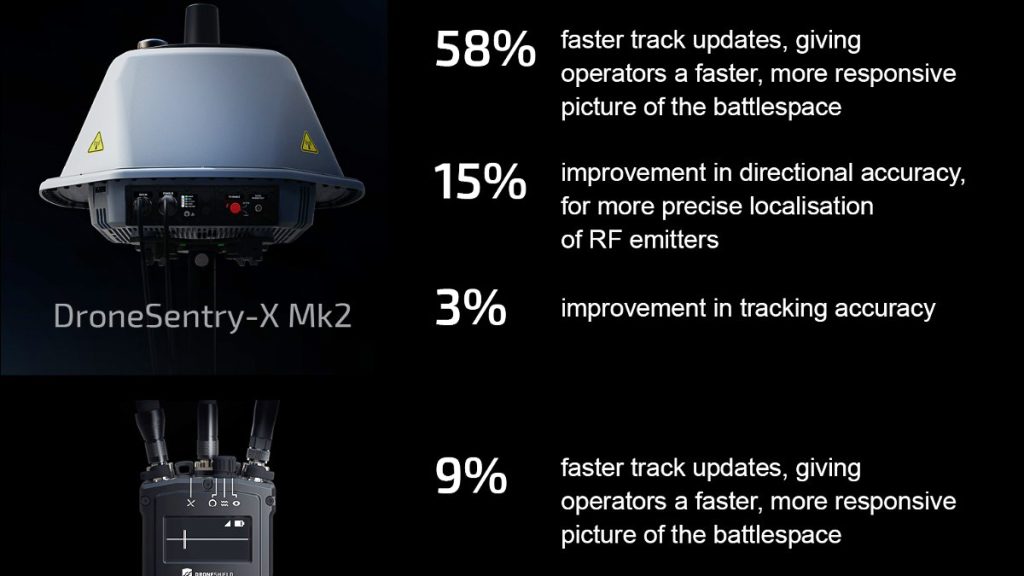
DroneShield Q3 Release Targets Faster More Evasive Drone – DroneShield has released its Q3 2026 software update, delivering improvements in RF detection performance, tracking responsiveness and operational capability across deployed counter-UAS systems.
According to the company, the release is a direct response to changes in the threat environment, including faster and more agile FPV drones, coordinated multi-drone activity, and the use of frequency-agile, low-power transmitters designed to evade detection.
Operationally, these developments are reducing the time available for detection and response, while increasing the importance of localisation accuracy for cueing effectors, cameras and supporting sensors.
The update includes improvements across DroneShield’s RF sensing portfolio, with testing against the previous Q2 release indicating measurable gains in performance, depending on drone type and operating frequency.
“Our software roadmap is driven by operational outcomes,” said Angus Harris, chief technology officer at DroneShield.
“Our quarterly releases focus on measurable engineering improvements that operators can put to work immediately. Whether it’s faster tracking, greater localisation accuracy or new operational capabilities, each release strengthens the performance of deployed systems while building on the improvements delivered in previous quarters.”
The release also introduces enhancements to the DroneSentry-C2 platform, including support for air-gapped updates using removable media, allowing systems deployed in secure or disconnected environments to be maintained without reliance on remote access.
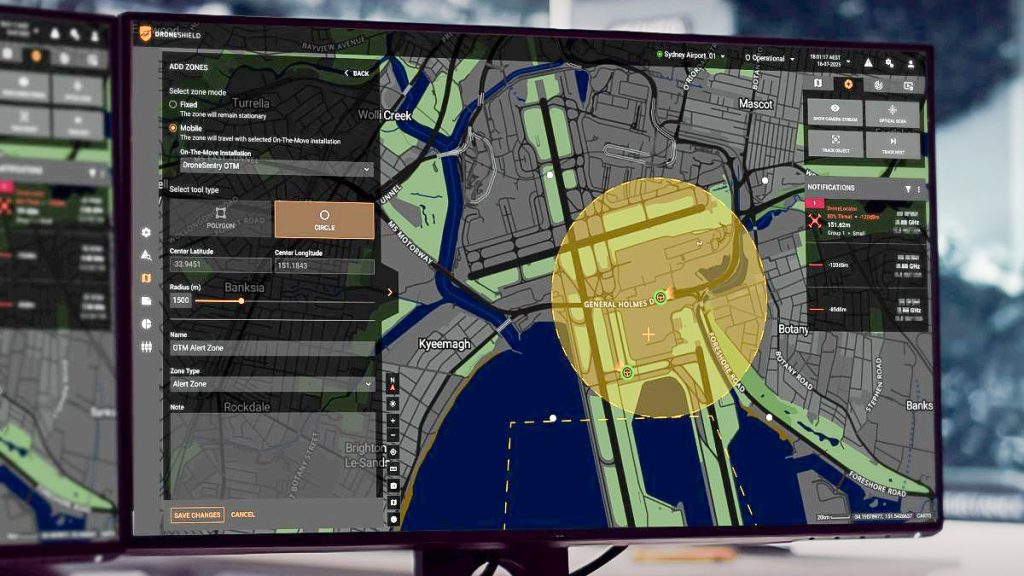
Additional capability includes support for offline mapping through cloud-optimised GeoTIFF formats, expanded interoperability with third-party systems and sensors, and integration with mobile and resilient positioning technologies.
New integrations include support for SentryCompass dual GNSS receivers with inertial navigation fallback, Robin Radar IRIS on-the-move deployments and Evica PinPoint searchlight systems, along with broader third-party sensor compatibility via the platform’s generic sensor framework.
DroneShield said the update is also intended to extend the operational life and capability of existing deployed systems while improving performance in contested, GNSS-degraded and remote environments.
The Q3 2026 software release is available through the DroneShield Access Portal for customers with active subscriptions.
You can learn more here or read more SEN news here.
“DroneShield Q3 Release Targets Faster More Evasive Drone Threats Thanks To Improvements In RF Detection Performance.”