



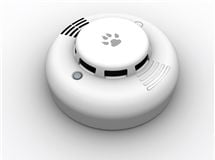


IF you thought all smoke alarms were equally effective,
think again. According to a recent study by researchers from the Harborview
Injury Prevention and Research Center (HIPRC) and the University of Washington
in Seattle, photoelectric smoke alarms are much more likely to remain
functioning after installation than are ionization alarms. Ionization alarms
are the most common type found in U.S. households.
The study, which looked at more than 750 households in
Washington State, found that nine months after a smoke alarm was installed, 20%
of the ionized alarms did not function, compared to just 5% of the
photoelectric alarms. Researchers checked the same alarms six months later and
found similar results. The most common cause of a non-functioning alarm was the
removal or disconnection of the battery.
Researchers found that ionization detectors were more
prone to nuisance alarms, often caused by cooking. Nuisance alarms are the most
cited reason by residents for removing or disconnecting an alarm battery. “Many
fires in the house start in or around the kitchen, so we know that it is
critical to have functioning smoke alarms on the first level, adjacent to the
kitchen,” said Dr. Beth Mueller, the study principal investigator and
epidemiologist at the HIPRC.
“Clearly, photoelectric detectors performed much better
in this part of the house.”
Alarms sold for home use in the U.S. are ionization,
photoelectric, or combination designs. Photoelectric and ionization alarms
operate differently. While both detect particles from combustion, photoelectric
alarms use optical sensors and are more sensitive to slow, smoldering
conditions. Ionization alarms are responsive to flames by detecting particles
from rapid combustion.
“The study results are significant,” said Dr. David
Grossman, a pediatrician and study co-investigator who is now medical director
for preventive care at Group Health in Seattle. “Though the U.S. has made great
strides in getting these life-saving smoke alarms in people’s homes, we still
have a long way to go to make sure that they remain operational. Photoelectric
alarms may be a key answer to providing longer term protection.”