



UNV OwlView First Impressions Suggest This Camera Really Is A Low Light Demon – Especially With Foot Traffic.
UNV OwlView First Impressions – After spending about 60 years battling to align IP ranges on the office network I was delighted to stand up the UNV OwlView the other day.
Testing products is a lot of fun and it’s especially fun when the reality lives up to the hype. The OwlView model I’m testing is the IPC3634SE-ADZKMC-WP-I1. Remember, this camera came to SEN via the BGW Technologies and Uniview demo event at Secuity & Integrate last year.
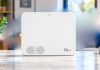
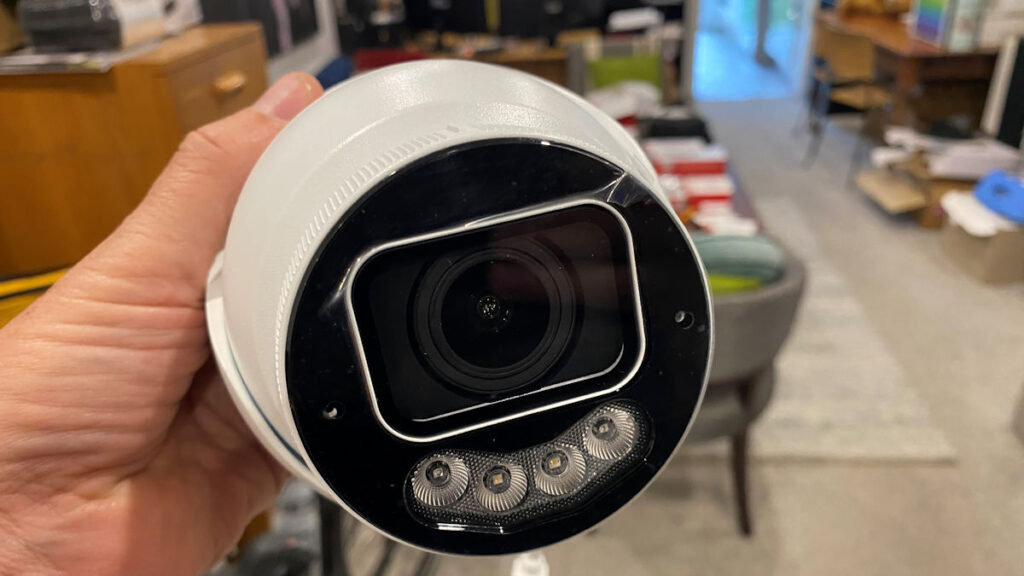
This 4MP OwlView Plus Tri-Guard turret network camera is built around a 1/1.8-inch CMOS sensor, delivering image resolution up to 2688 x 1520 at 25 images per second. Build quality is solid and the IP67-rating gives plenty of confidence. But it’s the performance on the street as the sun sinks that matters most.
The camera uses an F1.2 large-aperture varifocal lens – that’s more than usually fast – and supports Ultra 265, H.265, H.264 and MJPEG compression. I used H.265 and H.264 in my initial testing. You also get ColorHunter with Wise-ISP technology to deliver full-colour imaging across a 24-hour operating cycle. Dynamic range is supported by 130 dB true WDR.
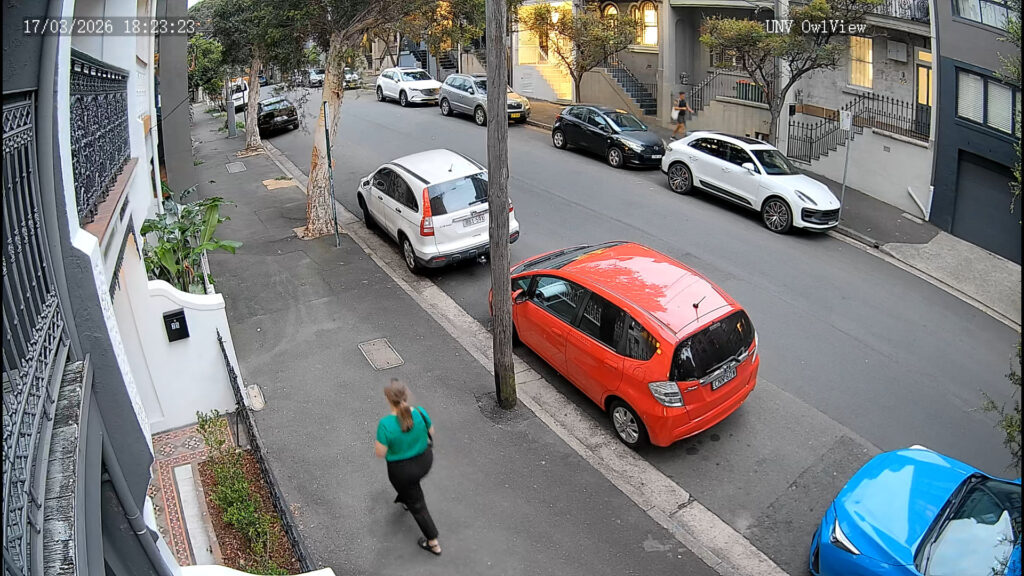
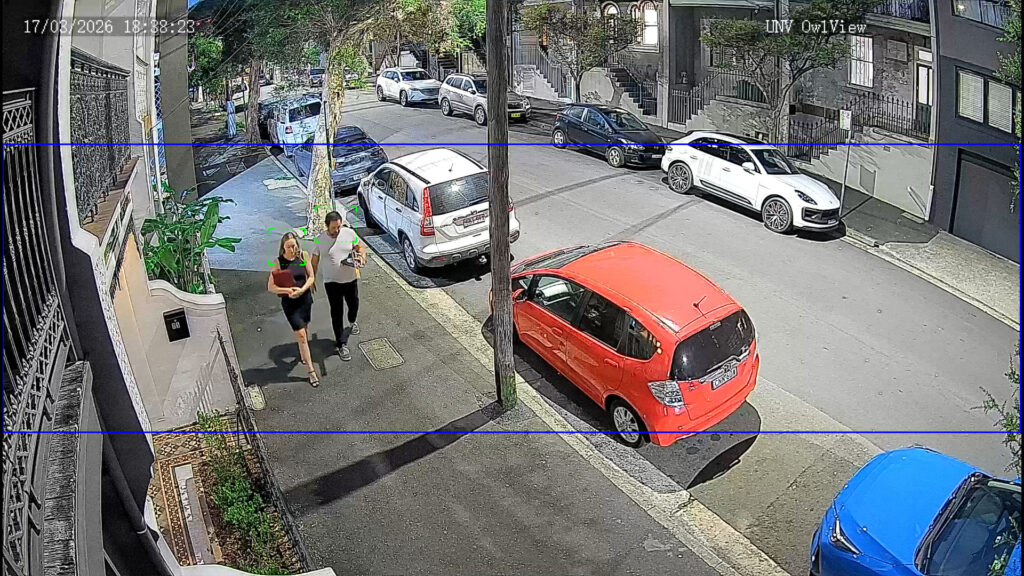
While I set up the camera in daylight, I was having too much fun to go home – instead I spent most the evening the UNV OwlView 4MP camera in low and then very low light conditions – my first impressions are positive. At all times the scene was significantly darker than the images here suggest – OwlView’s image stream was completely divorced from reality.
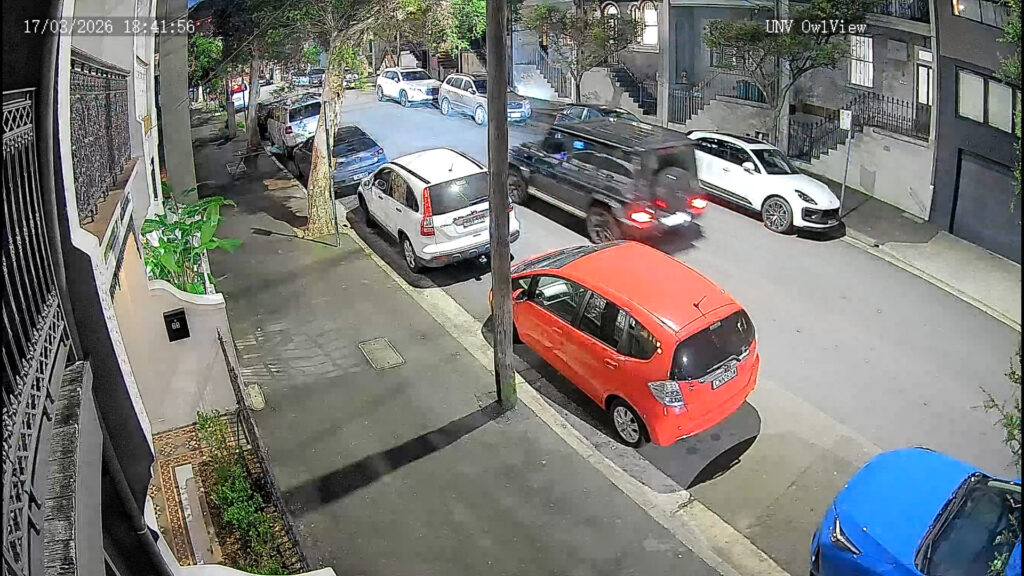
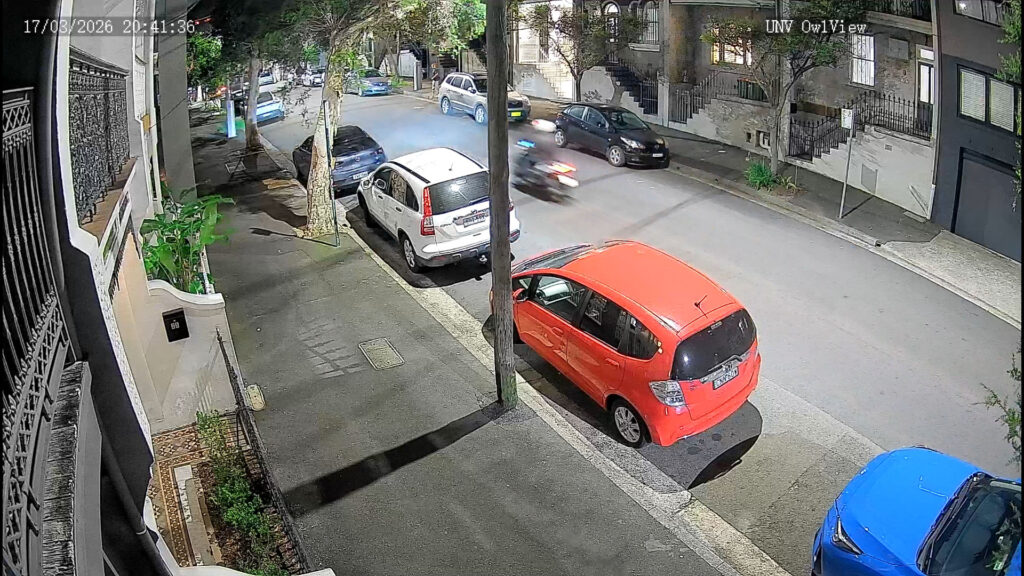
At around 7.25pm in mid-March, ambient light levels were below 10 lux on the Sekonic and dropping fast towards 2 lux at the lens, yet the camera delivered a bright, usable image that did not even begin to reflect how dark the scene was the naked eye. As the scene darkened to its sub 2 lux minimum things got more challenging – this is a tough street scene – but OwlView rose to the occasion.
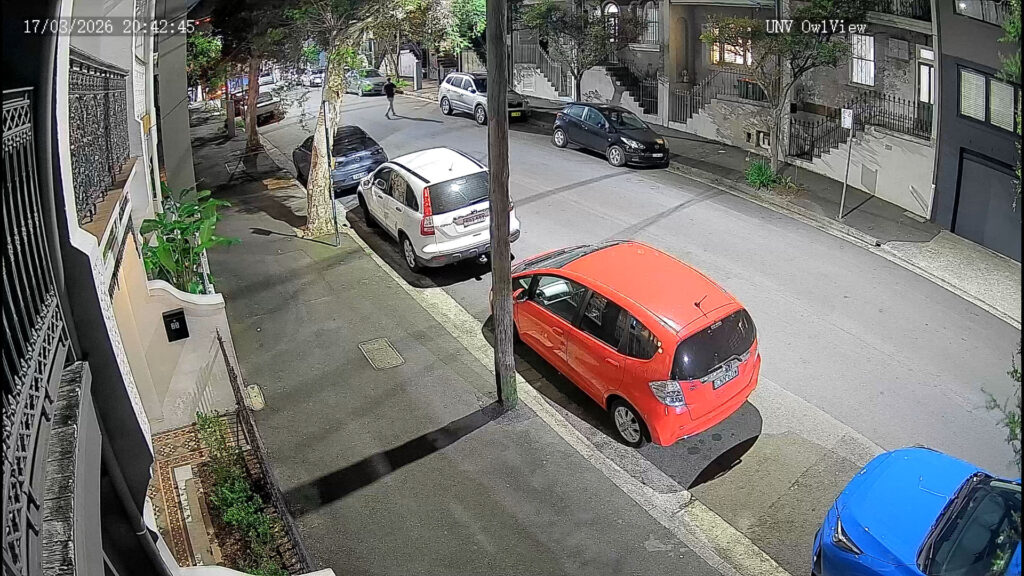
In sub 2 lux there is some visible processing at work in my scene. Moving subjects introduce some tone mapping and digital artefacts, which is typical in low light scenes where the camera is working hard to balance exposure, amplification, noise artefacts and a shutter speed in free-fall.
Even so, the image held together well. With vehicles moving at around 30km/h, I may not have been getting plate detail, but was consistently getting make, model and colour. For slower or static scenes, performance improves markedly – it always does – but with OwlView it does even more.
Pedestrian performance is very strong. Within about 10 metres there is clear admissible detail, even when subjects are moving, and the camera maintains excellent recognition-identification characteristics out towards 15 metres. Static image quality is eye-opening, with good overall colour rendition and excellent depth of field for the 2.8mm lens setting I was using.
You can learn more about OwlView from the BGW Technologies team here or find more SEN news here – stand by for the full review coming up shortly in SEN!
“UNV OwlView First Impressions Suggest This Camera Really Is A Low Light Demon – Especially With Foot Traffic.”