


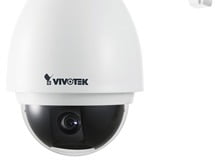


IP PTZ dome
cameras offer some serious functionality, combining the strengths of IP cameras
and the best features of mechanical PTZs in a single powerful and dynamic
package. As always, making decisions depends on variables like budget and
application, but there’s no doubt analogue PTZs are no longer the no-brainer
they once were. These latest IP PTZs deserve very careful attention.
According to Pacific
Communications’ product manager Kieren McDonough there are a number of vital
features installers and end users should be looking for in an IP PTZ.
“Smooth control
of the PTZ functions is crucial for the user,” McDonough says. “A responsive
camera allows an operator to easily follow a person with a PTZ camera – that’s
vital. The feature, ‘Proportional Pan/tilt’ slows down Pan/tilt movements as
you zoom in, therefore giving finer control. You want this feature in an
IP PTZ.”
McDonough says he
finds that he finds users like their ‘camera tours’ and the auto pan’ features.
“A camera running
a number of preset scenes allows greater coverage of a site,” he explains. “The
auto pan feature causes the camera to slowly pan back and forth in an automatic
tour.
“And the ‘Self
return’ feature is also useful as it allows a camera to return to a preset
scene automatically. It happens after the operator has relinquished control
after say, 1 minute. There is nothing worse than recording a camera that is
pointing at nothing in particular!”
According to
McDonough, auto tracking features can now recognize the human shape
and follow a person around a site. The zoom will automatically adjust so the
person occupies a certain percentage of the picture. Because the camera
can identify the human form, it is not distracted by non-human moving objects.
McDonough says
that aside from their IP connectivity there are other reasons you’d opt for IP
PTZ cameras over their analogue stablemates.
“Picture quality
– that’s the big thing,” McDonough says. “The fact the video signal remains in
the digital domain through recording right up to display, keeps the quality of
the image high.
“In an analogue
solution, the camera output has to be converted to digital for recording, then
back to analogue to display on an analogue monitor.”
MacDonough says
that along with these advantages, progressive scan improves picture quality
removing any interlace jitter.
“There are
benefits to end-to-end digital vs. multiple conversions from analogue to
digital to analogue,” he says. “There’s also the benefit of megapixel
high-resolution cameras, with intelligence at the camera giving
functionality like local storage and intelligent video algorithm.”
McDonough says the i-Pro SD3
PTZ cameras compare to strongly to the analogue SD3 PTZ cameras when full
ownership costs are taken into account.
“The IP PTZ
cameras are around 20-30 per cent higher in cost,” he says. “When
factoring in the overall system, ease of cabling and the use of an Ethernet
network total cost of ownership can be lower. The new
POE standard 802.3at will only further improve TCO for PTZ’s in the
future.”
According to
McDonough, key features of Pacific Communications’ IP PTZs include ease of integration
to most head end software packages, progressive output, full Digital IP Camera,
codec and camera all in ‘one box’.
“Best of all
these IP PTZs come with all the best analogue functionality including Day/night,
Super DIII technology, auto tracking, high sensitivity 0.5lux (colour), 0.04
(B/W), built-in video motion detection, scene change detection, full duplex
audio and analogue output for camera setup.
“There’s also the
use of a traditional style CCTV keyboard such as the Panasonic IP keyboard to assist
those operators who prefer to use traditional control methods to PTZ their
cameras,” McDonough says.
Axis
Communications’ Wai King Wong says the Axis 233D is the company’s flagship IP
PTZ camera.
“It’s a powerful
PTZ which strong features including 5x optical zoom, Wide Dynamic range, Area
Zoom to provide immediate zoom of a particular scene, electronic image
stabiliser and high precision, low speed movement of 0.05 degrees per second
makes it possible to an object from a long distance,” explains Wong.
“Maximum speed for
the 233D is an impressive 450 degrees second for fast pan and tilt and the
camera also has progressive scan provide moving images without distortion,” he
says.
“Other advantages
include simultaneous MPEG-4 and Motion JPEG, as well as Quality of Service
(QoS) which enable reservation of network capacity and prioritisation of
mission critical surveillance components in a network environment.
“There’s also open
Application Programming Interface (API) for customised software solution, auto
tracking and HD resolutions meeting SMPTE certification for HD video.”
Wong says that
the 233D IP PTZ domes are as easy to install as all Axis IP cameras.
“Installation of
the 233D is similar to all our Axis camera range,” he explains. “You setup the
IP address and all camera parameters with our Axis Camera Management Software –
commissioning could not be easier.”
Meanwhile, Bosch’s
Sean Borg says that installing Bosch’s hybrid G4 IP Autodome gives significant
advantages.
“Installing a
Hybrid PTZ like the G4 Autodome gives the end user flexibility of
utilising existing analogue DVRs but then as the DVRs change, the site is
future proofed for IP,” he explains. “The other benefit is while having an
analogue system due to on site analogue DVRs the end-user can still gain access
to the IP PTZ cameras from home via the Internet.
Borg says that aside
from their ability to carry video onto an IP network do Bosch’s IP PTZ cameras
offer greater access to the video via the internet.
“The G4 has dual
streaming capability which can deliver a lower cost bandwidth stream to
the live view but deliver a $0 cost of 4 CIF images at 25IPS to a local
NVR, or raid storage,” he explains.
“Another strength
is the ability to utilise Video Content Analytics to make the PTZ more
proactive in a time poor quick response time required scenario.”
According to
Borg, the G4 IP Autodome’s key features include tri-streaming capability, with 2X
streams of M-peg 4 + 1X stream of Mjpeg, video content analytics on 5 preset
locations, ability to manage Bandwidth costs using dual streaming, can view 18
degrees above the horizon, can be mounted inverted for under vehicle viewing
whilst maintaining the IP66 integrity.
“The Bosch G4 IP
PTZ also has new features that make installation and retrofits very quick and easy,
saving the installer and end-user money on install time,” Borg says. “The wall
mount has a hinge system that allows a quick connect feature to allow the
installer to connect the unit to a pole or wall.
“The G4 system is
the only truly modular PTZ unit in the market – this system has a CPU module, a
comms module, a PSU module and a camera module,” he explains.
“If, for
arguments sake, the PTZ needs to be upgraded from colour to Day/Night, or the
analogue unit needs to be upgraded to IP, or even if a head goes faulty due to
a spike, each module but the CPU can be changed without losing
presets, zone masking, or any other programmed feature of the system.
“The unit also
comes pre loomed with connectors saving much time in running cables through
wall mounts, while the recessed dome has a new quick latch feature that quickly
allows for installation or dismounting of the housing.”
Vivotek’s
director of product marketing, William Ku, says the SD7151 is Vivotek’s leading
IP PTZ.
“The key feature
of the SD7151 include a Sony progressive scan CCD sensor with VGA Resolution, 18x
zoom lens, removable IR-cut filter for day and night function, 360-degree
Continuous Pan and 0° ~ 90° Flip Tilt, as well as vandal and weather-proofing,”
says Ku.
“There’s also real-time
MPEG-4 and MJPEG compression (Dual Codec) supporting dual streams simultaneously,
3GPP mobile surveillance, easy, fast, accurate PTZ control by joystick, two-way
Audio via SIP Protocol and digital I/O for External Sensor and Alarm.”
Ku says that the
SD7151 IP PTZ is superior to analog in a number of ways.
“The camera
offers remote monitoring and storage capability, since video data can be
transmitted to remote networked devices over Ethernet networks, users can view
camera images in any place where IP network connection is available.
“There are also cost
efficiencies because video surveillance systems can leverage existing IP
network infrastructure, significantly reducing overall installation costs,” Ku
explains.
“Adding new
network cameras or other networked devices in an IP surveillance system is easy
because you can simply connect them to a router.”
According to Ku a
core strength of the SD7151 is its superior image quality.
“Network cameras
provide high image quality; many of them even offer megapixel resolutions,” he
says. “In addition, IP surveillance has no signal degradation problems during
transmission, and thus can ensure steady image quality.
“In traditional
CCTV systems, the maximum resolution is 720×480 for NTSC and 720×576 for PAL,”
says Ku. “A network camera can provide megapixel resolution which is at least 3
times larger than an analog camera.
“This means in
applications where accurate identification is required, a megapixel camera
image can provide detailed information that is obscure when using an analog
camera.
“For example, VIVOTEK’s
new 2-megapixel network camera IP7161 can not only deliver extremely clear and
detailed images, but also capture much larger scenes that CCTV cameras cannot.
Consequently, users can significantly reduce deployment costs by using a
megapixel camera instead of multiple VGA models.
Ku says that
while it has generally been thought that network cameras are harder to install
than analog cameras, this is not the case.
“To make
installation of network cameras as easy as that of analog cameras, VIVOTEK
developed many useful software platforms and devices including Installation
Wizard 2,” he explains.
“This
new-generation installation software can detect cameras automatically and
provides many intelligent functions to help users install and set up the entire
system with just a few clicks.”