



TRIACETONE triperoxide (TATP) is a high-powered explosive that in recent years has been used in several bombing attempts. TATP is easy to prepare from readily available components and has been difficult to detect. It defies most standard methods of chemical sensing: It doesn’t fluoresce, absorb ultraviolet light or readily ionize.The few methods available to screen for TATP aren’t feasible for on-the-ground use in airports, as they require large, expensive equipment, extensive sample preparation, or relatively high concentrations of TATP in solid or liquid form. There is no simple way to detect TATP vapor.Kenneth Suslick, the Schmidt Professor of Chemistry at the U. of I., and postdoctoral researcher Hengwei Lin have developed a colorimetric sensor array that can quantitatively detect even very low levels of TATP vapor – down to a mere 2 parts per billion. To create the sensor array, the researchers print a series of 16 tiny colored dots – each a different pigment – on an inert plastic film. A solid acid catalyst breaks down TATP into detectable components that cause the pigments to change color, like litmus paper.Each pigment changes colors depending on the concentration of TATP in the air. The array is digitally imaged with an ordinary flatbed scanner or an inexpensive electronic camera before and after exposure to the air.”Imagine a polka-dotted postage stamp sensor that can sniff out the shoe-bomber explosive simply by using a digital camera to measure the changing colors of the sensor’s spots,” Suslick said. “The pattern of the color change is a unique molecular fingerprint for TATP at any given concentration and we can identify it in a matter of seconds.”The array is uniquely sensitive to TATP. Unlike many other chemical sensors, Suslick and Lin’s array is unaffected by changes in humidity or exposure to other chemicals, such as personal hygiene products or laundry detergents. It also has a long shelf life, so airport security and other users can keep a supply on hand.In addition to demonstrating their sensing technique with an ordinary flatbed scanner, the researchers also developed a functional prototype hand-held device. The portable instrument, designed to easily screen luggage or shoes, uses inexpensive white LED illumination and an ordinary digital camera similar to a cell-phone camera.”The hand-held device makes the whole process portable, sensitive, fast and inexpensive,” Suslick said. The hand-held sensor now is being commercialized by iSense, a senior manufacturer based in Palo Alto, Calif.
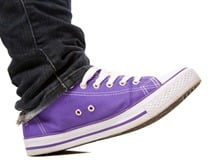
Sniffing Out Shoe Bombs
TRIACETONE triperoxide (TATP) is a high-powered explosive that in recent years has been used in several bombing attempts. TATP is easy to prepare from readily available components and has been difficult to detect. It defies most standard methods of chemical sensing: It doesn’t fluoresce, absorb ultraviolet light or readily ionize.The few methods available to screen […]
sen>SEN.news
Tracking
Bookmark
Page is Bookmarked
RECOMMENDED

WEATHER
Sydney
few clouds
11.1
°
C
11.1
°
11.1
°
76%
3.1m/s
14%
Wed
14
°
Thu
19
°
Fri
18
°
Sat
19
°
Sun
19
°
RECOMMENDED
AUTHOR


Related Articles
All
- All
- Access Control
- Access management
- AI
- Alarm Monitoring
- Alarm Systems
- Alarms
- Analysis
- Appointment
- Articles
- Artificial Intelligence
- Authentication
- Automation
- Biometrics
- Bollards
- Business
- Business For Sale
- Case Studies
- CCTV
- Charity
- Cloud
- Communications
- Computers Networking
- Computing
- Corrections
- Cyber Security
- Defence
- Detection Systems
- Drones
- Duress Alarms
- Electric locks
- Electrical
- Electronics
- Events
- Face Recognition
- Featured
- Fence
- Fire
- Gadgets
- Gates
- Government Security
- Guards
- Home Automation
- Industry
- Information Technology
- Installs
- IoT
- IVA
- Jobs
- Law Enforcement
- Locks
- Management Software
- Mergers and Acquisitions
- Monitoring
- Networks
- New Products
- News
- Patrols
- Perimeter Security
- Reviews
- Robotics
- Safe city
- Safety
- SAGE
- Sale
- SecTech
- SecTech NZ
- Security
- Security Cameras
- Security Consulting
- Security Distribution
- Security Installer
- Security Integration
- Security Management
- Security Management Systems
- Security Manufacturers
- Security Networks
- Security Services
- Sensors
- Smart City
- Smart Homes
- Tech Talk
- Technology
- Telecommunications
- TEMP
- Tenders
- Thermal
- Ticker
- Tools
- Training
- Uncategorized
- Video Analytics
- Video Intercoms
- Video Surveillance
- VMS
- Whitepapers
- Wireless