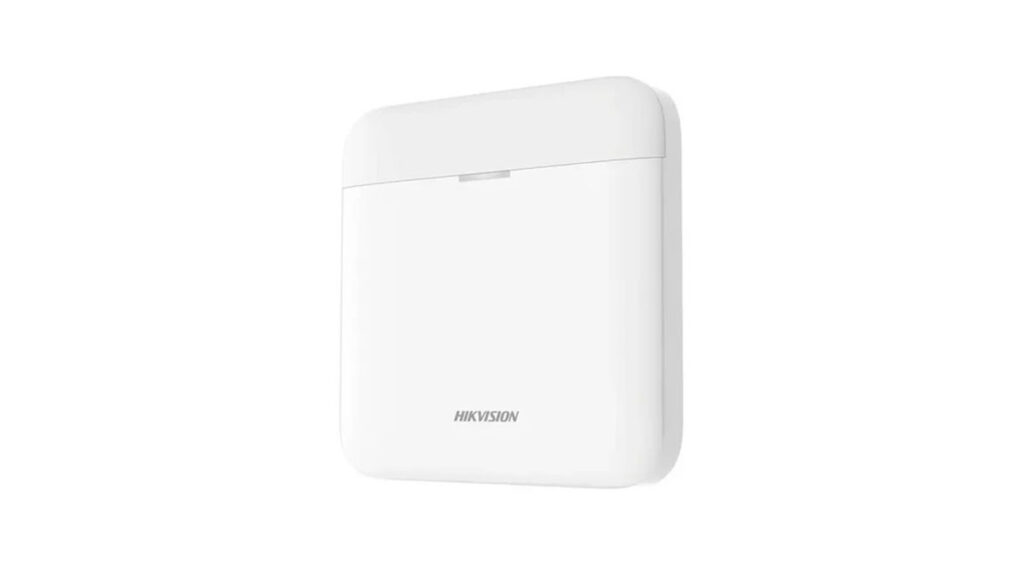




When To Deploy Wireless Repeaters In Alarm Installations.
When To Deploy Wireless Repeaters – Anyone installing large wireless alarm systems eventually runs into a pointy question – at what point do you stop trusting the stated range and start deploying repeaters?
On paper, most wireless alarm systems offer strong transmission distances of up to 2500 metres. In practice, these figures assume ideal conditions and line of sight that rarely exists in the field.
The issue for installers is that the moment a sensor is operating near the edge of its range, system stability begins to degrade, and that degradation is almost never obvious during system commissioning.
From an operational perspective, best practice is to undershoot manufacturer range specifications from the outset. If a device is rated for 100 metres line-of-sight, a conservative working distance might be closer to 50–60 metres once walls, interference and environmental factors are factored in.
Beyond that cautious range, signal strength becomes inconsistent, latency can increase, and packet loss becomes more likely. The issue is not whether a signal gets through but whether it gets through in the worst conditions for wireless.
When sensors are operating at the limit of their range, a range of challenges can emerge. These include intermittent supervision loss, delayed alarm transmission, increased retries, and in some cases complete dropouts during sudden environmental changes. A system may test successfully during installation but fail under different conditions, such as heavy rain, temperature shifts or changes in site activity.
Metal structures are a common cause of performance issues. Steel framing, roofing, racking and plant equipment can reflect or absorb RF signals, creating multipath interference or shadow zones. Water has a similar effect. Large bodies of water, dense vegetation, or groups of people moving through an area can attenuate signal strength, particularly at higher frequencies.
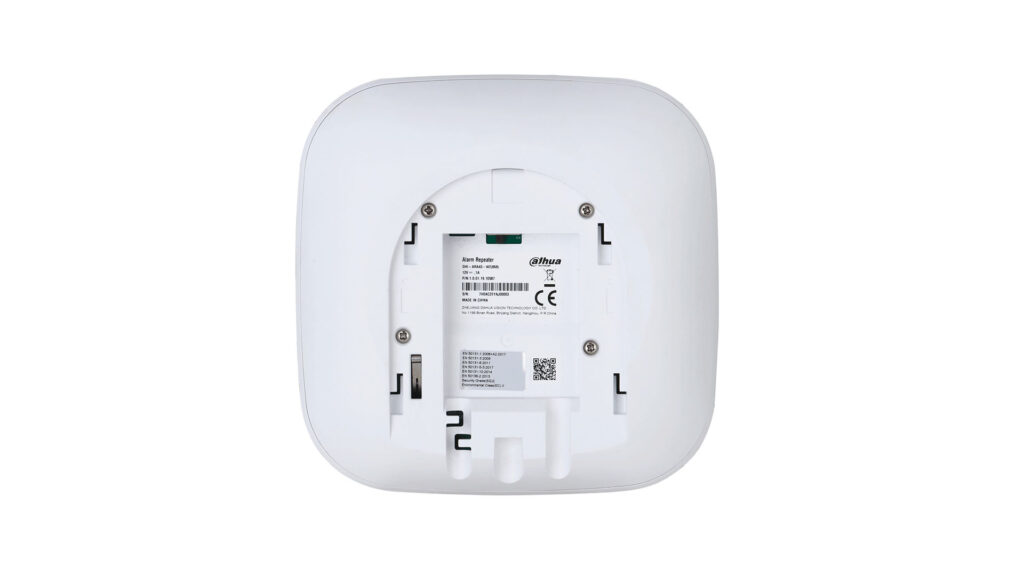
This is where repeaters become less of an option and more of a requirement. Adding to the complexity is the evolution of a site and the evolution of wireless interference – the latter in particular is neverending.
The decision to deploy a repeater should not be based solely on distance. It should also be based on signal quality, environmental complexity and risk tolerance. And if a device is critical, such as a perimeter sensor or duress input, it should not be operating anywhere near its maximum range.
Placement of repeaters is equally important. A common mistake is to position repeaters close to the control panel or in convenient locations. In practise, repeaters should be placed to bridge problem areas, not only to extend coverage. This often means locating them between the panel and the most challenging devices, or in positions that provide clear line-of-sight into difficult zones.
In many cases, the best location for a repeater is not where the most sensors are located, but where the RF environment is most hostile. This could be a transition point between buildings, a densely planted area, or a location where construction materials significantly attenuate signal strength.
Frequency also plays a role. Systems operating at 433 MHz typically offer better penetration through walls and obstacles but may be more susceptible to interference in environments where that band is crowded. Systems operating around 900 MHz generally provide a balance between range and data throughput, with improved resilience in complex environments, particularly when combined with frequency hopping or spread spectrum techniques.
Choosing spread spectrum wireless systems can improve reliability by reducing the impact of interference, but it does not eliminate physical barriers. A signal that cannot reach a device will not be recovered through modulation techniques alone.
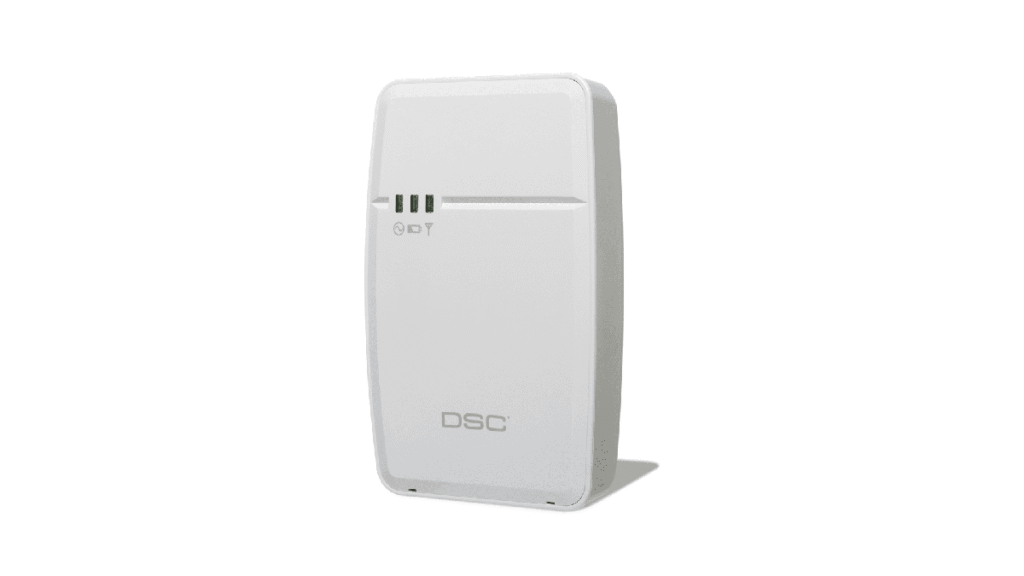
Power is another consideration. Repeaters require reliable power to maintain network integrity. In remote or distributed environments, this may require local mains supply, battery backup or solar solutions. A repeater without stable power introduces a single point of failure that can compromise multiple devices.
From a system design perspective, repeaters should be treated as infrastructure rather than add-ons. They should be planned early, positioned deliberately and tested under real-world conditions. Walk testing alone is not sufficient. Installers should observe signal behaviour over time and under varying conditions and treat RF performance as a critical part of the system, not an afterthought to be addressed when issues emerge.
You can learn more about spread spectrum wireless technology here or read more SEN news here.
When To Deploy Wireless Repeaters Considerations
- Undershooting manufacturer range specifications to build tolerance
- Avoiding edge-of-range deployment for critical devices
- Accounting for attenuation from metal structures and water
- Understanding frequency differences between 433 MHz and 900 MHz systems
- Using repeaters to bridge RF gaps, not just extend distance
- Positioning repeaters in challenging RF environments rather than high-density areas
- Ensuring reliable power supply to all repeater devices
- Validating performance under real-world environmental conditions
- Treating RF design as core system infrastructure rather than optional enhancement.
“When To Deploy Wireless Repeaters In Alarm Installations.”